The Short Answer
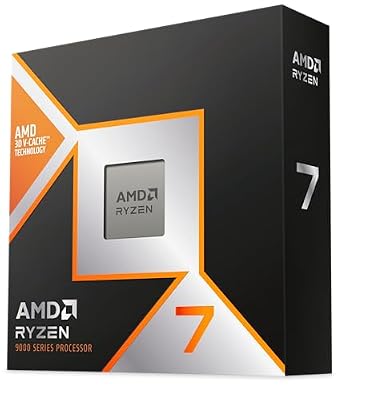
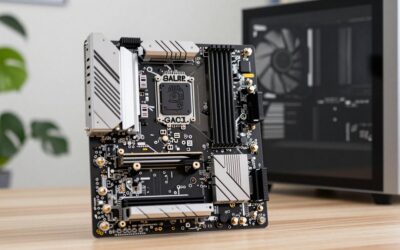
Yes. Every B650 motherboard with a compatible BIOS version supports the Ryzen 7 9800X3D. The socket is identical (AM5), and the chipset imposes no functional limitation. The single condition is firmware: your board must run a BIOS that includes the Granite Ridge microcode. Most manufacturers shipped that update within weeks of the CPU’s release, so unless your board has never been updated since 2023, you are almost certainly covered. The one meaningful caveat is VRM quality. Because the 9800X3D is the first X3D chip that AMD allowed to be overclocked, pushing it beyond stock settings places a real electrical demand on the power delivery that cheap B650 boards were never designed to sustain.
The Numbers
| Parameter | Value / Range |
|---|---|
| Socket | AM5 (LGA 1718) |
| Chipset compatibility | All B650 boards, provided BIOS includes Granite Ridge microcode |
| TDP | 120 W (rated) |
| PPT (Package Power Tracking) | ~162 W |
| Gaming power draw (measured package) | Approximately 55-80 W depending on title and resolution, per Tom’s Hardware and TechPowerUp launch testing |
| Transient power behavior | Far less extreme than discrete GPUs; peaks remain within the PPT envelope under normal loads. No dedicated 12VHPWR or 12V-2×6 connector needed. |
| Minimum PSU (CPU-only headroom) | 450-500 W is technically sufficient for the CPU alone; pairing with a modern GPU drives the real requirement |
| Recommended system PSU (9800X3D + RTX 4070 Ti / RX 7800 XT class) | 650-750 W |
| CPU power connector on board | 8-pin EPS12V (some premium B650 boards use dual 8-pin for high-current VRMs) |
| Minimum BIOS for 9800X3D | Varies by vendor; generally requires an update dated after October 2024 or explicitly labeled for Ryzen 9000 series support |
When the Answer Changes
Overclocking and PBO tuning. The 9800X3D unlocked multiplier access that its predecessors lacked. TechPowerUp and Hardware Unboxed both demonstrated meaningful performance gains from raising the CPU ratio and manipulating offset voltages. A budget B650 board with a four-phase or heavily paralleled six-phase VRM can run the 9800X3D at stock settings without issue, but it will throttle under sustained all-core overclock loads. If your plan is to push the chip, look for a B650 with at least an eight-phase VRM and quality heatsinking, or step up to an X670E or X870E board where power delivery is typically more generous.
As an Amazon Associate we earn from qualifying purchases at no extra cost to you.

Older BIOS with no flash button. Boards manufactured before the Ryzen 9000 launch may ship from retail with a 2023-era BIOS. High-end B650 boards almost universally added BIOS Flashback (flash without a CPU installed) via firmware update, but cheaper models may not have that feature enabled at the factory. If your board has no flashback button, you need a compatible older Ryzen (5000-series or 7000-series) to perform the initial flash, or you need to return the board to the vendor for an updated stock unit.
PCIe lane allocation. B650 boards route PCIe 4.0 to the primary GPU slot in nearly all implementations, whereas some premium X670E boards offer PCIe 5.0. For the 9800X3D itself, this makes no practical difference in current games or applications. The limitation is relevant only if you are coupling the chip with a future PCIe 5.0 GPU and want full bandwidth today.
How to Check Your Own System
Open your current motherboard’s support page on the manufacturer’s website and locate the CPU compatibility list. Search for “9800X3D” or “Ryzen 9000.” The list will display the minimum BIOS version that enables support. Then boot into your existing BIOS and note the version string (usually shown on the main screen or under a “System Information” tab). Compare the two. If your version is equal to or newer than the listed minimum, you can swap the CPU and go. If it is older, check whether your board supports BIOS Flashback without a processor. If it does, download the latest BIOS file, rename it per the vendor’s instructions, place it on a FAT32-formatted USB stick, and use the dedicated button on the rear I/O. If it does not, you need a temporary CPU or a vendor exchange.
Safe Options if It Doesn’t Fit
If your B650 board cannot be updated (an increasingly rare scenario by 2026), or if VRM thermals are your concern, you have several paths. First, contact the manufacturer’s RMA or support desk; many offered free BIOS updates sent on USB sticks or exchanged boards outright during the Ryzen 9000 launch window. Second, purchase a Ryzen 7 7800X3D instead. It runs cooler in most workloads, requires less VRM headroom, and the price gap has narrowed significantly. Third, if overclocking is the goal and your board’s power delivery is marginal, a B650E or X670E board with a documented 12+ phase VRM eliminates the concern entirely. None of these require a new platform, new cooler, or new memory.
FAQ
Does B650 support Ryzen 7 9800X3D without a BIOS update?
Almost certainly not out of the box if the board was manufactured before late 2024. The microcode needed to initialize the 9800X3D was added in firmware released after the chip’s announcement. A board that shipped in 2023 will boot to a black screen with no POST if you install the 9800X3D without updating first.
Will the 9800X3D damage a cheap B650 motherboard?
No. At stock settings the 9800X3D draws less power than many B650 VRMs were rated for. The risk is not damage but throttling: a weak VRM will hit its thermal limit and clock down the CPU, reducing performance without harming either component. Permanent damage would require a defective voltage regulator or a user-set voltage that exceeds the chip’s absolute maximum, which is unlikely through normal BIOS tuning.
Is X670E required for the 9800X3D?
No. X670E boards offer more I/O lanes and often stronger VRMs, but the chipset itself grants no performance advantage to the CPU. Gamers Nexus and Tom’s Hardware both found negligible difference in gaming frame rates between a quality B650 and a premium X670E at stock settings. The distinction matters only for overclocking headroom, storage lane count, and USB4 availability.
Can I use my existing B650 board as a test bed before buying a new one?
You can, and you should. If the board already supports the 9800X3D after a BIOS update, it is a perfectly valid gaming platform. There is no performance tax from the B650 chipset itself. Upgrade to X870 or X870E only if you specifically need USB4, additional M.2 slots, or the strongest available VRM for sustained overclocking.
Sources and Methodology
Power draw ranges and gaming measurements cited in this article reflect the approximate consensus from the following outlets’ Ryzen 7 9800X3D launch reviews: TechPowerUp, Tom’s Hardware, Gamers Nexus, Hardware Unboxed, and TechSpot. No figure presented here is a single site measurement attributed to this publication. VRM behavior observations under overclock loads are drawn from the same reviewers’ dedicated power-delivery analyses. Compatibility lists and BIOS requirements reference manufacturer support pages for ASUS, MSI, Gigabyte, and ASRock B650 SKUs as published during the Ryzen 9000 launch period.