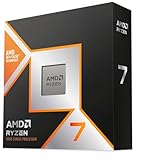
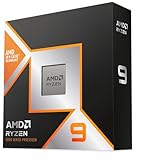
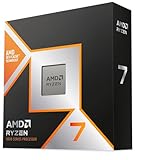
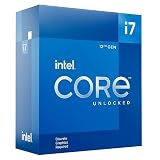
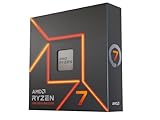
AMD’s 3D V-Cache processors have dominated the gaming CPU conversation for three straight generations, and in 2026 the decision for most builders still narrows to two parts: the AMD Ryzen 7 9800X3D and the AMD Ryzen 7 7800X3D. Both are 8-core, 16-thread AM5 chips with a stacked cache die that transforms performance in games punished by memory latency — simulators, grand strategy, open-world RPGs and competitive shooters.
The gap between them is generational rather than philosophical. The 9800X3D is a Zen 5 part built on AMD’s second-generation 3D V-Cache layout with a fully unlocked multiplier, while the 7800X3D is the Zen 4 original that created the category and has since settled into the value slot. Because AM5 is supported well beyond 2027, either chip anchors a platform you upgrade instead of replace — so the real question is what the last ten percent is worth to you.
As an Amazon Associate we earn from qualifying purchases at no extra cost to you. Product prices and availability are accurate as of the date shown and are subject to change.







⚡ Save on Your Next PC — Amazon Prime
Prime members get fast free shipping on the systems above, plus early access to Prime Day & Black Friday PC deals. New members get a 30-day free trial.
Watch: Ryzen 7 9800X3D vs 7800X3D: Upgrade in 2026? — Video Review
Quick Verdict
Buy the Ryzen 7 9800X3D if you’re pairing a high-end GPU with a high-refresh 1080p or 1440p monitor, want overclocking headroom, and occasionally stream, edit or compile. Buy the Ryzen 7 7800X3D if you’re building to a budget, gaming at 1440p or 4K, or want the coolest, quietest 3D V-Cache chip available — especially in a bundle that includes a motherboard or cooler.
Key Differences
- Architecture: The 9800X3D uses Zen 5 cores; the 7800X3D uses Zen 4. Both carry 104MB of combined cache, but Zen 5 extracts more from it per clock.
- Cache placement: AMD moved the cache die beneath the compute die on the 9800X3D, improving heat transfer and lifting clock ceilings that constrained the 7800X3D.
- Clock speeds: The 9800X3D boosts to roughly 5.2GHz against 5.0GHz on the 7800X3D, with a much higher base clock — the main source of its productivity lead.
- Gaming performance: Expect around 8–15% higher average frame rates at 1080p, shrinking toward parity at 4K where the GPU sets the ceiling.
- Overclocking: The 9800X3D is fully unlocked, a first for X3D. The 7800X3D is limited to Precision Boost Overdrive and Curve Optimizer undervolting.
- Power and cooling: The 7800X3D sips power, often under 80W in games. The 9800X3D pulls significantly more and expects a 240mm AIO or a premium tower cooler.
AMD Ryzen 7 9800X3D
The 9800X3D is the most complete gaming processor AMD has shipped. Relocating the cache die below the cores removed the thermal bottleneck that forced conservative clocks on earlier X3D parts, so it no longer trades away single-thread speed for cache. The result is a chip that wins gaming benchmarks outright while closing most of the productivity gap to standard Zen 5 desktop parts like the Ryzen 7 9700X.
That capability comes with obligations. It runs hotter and draws more power than its predecessor, so budget for serious cooling and a board with solid VRMs. If you’re chasing 240Hz or higher, run heavily modded games, or lean on your CPU for streaming, encoding and code compilation between sessions, the premium is straightforward to justify — and the unlocked multiplier gives you headroom nothing else in this class offers.
AMD Ryzen 7 7800X3D
The 7800X3D remains one of the smartest purchases in PC gaming. It still comfortably outpaces most non-X3D chips in cache-sensitive titles, and at 1440p with a mid-to-high-tier GPU the deficit to the 9800X3D frequently collapses into single-digit percentages you’d never notice in play. Its efficiency is genuinely exceptional, making it ideal for compact builds and quiet systems.
Bundles sharpen the argument further. The Micro Center 7800X3D with GIGABYTE B850 Gaming WF motherboard kit removes platform guesswork on a modern chipset, while the 7800X3D paired with a Cooler Master Hyper Spectrum V3 120mm PWM air cooler is more than enough thermal capacity for this chip. Either route frees budget for a better GPU — usually the smarter upgrade for frame rates.