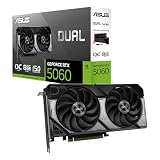
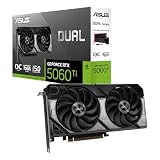
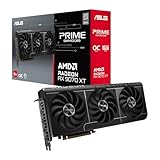
- Top Pick: ASUS TUF Gaming GeForce RTX™ 5080 16GB GDDR7 OC Edition Graphics Card
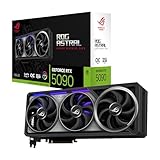
- Best Value: ASUS ROG Astral NVIDIA GeForce RTX™ 5080 16GB GDDR7 OC Edition Gaming Graphics Card (PCIe® 5.0, HDMI®/DP 2.1, 3.8-Slot, 4-Fan Design, Axial-tech Fans, Patented Vapor Chamber), 3 Year Warranty
- Premium Choice: PNY NVIDIA GeForce RTX™ 5080 Epic-X RGB™ OC Triple-Fan Graphics Card
Two years into the Blackwell generation, the GeForce RTX 5080 and RTX 5070 Ti have become the default answer for anyone building a high-end gaming PC without stepping up to flagship pricing. They share the same GB203 silicon, the same 16GB of GDDR7 on a 256-bit bus, and the same DLSS 4 feature set — which makes the choice between them unusually close, and unusually easy to get wrong.
The gap comes down to how much of that chip is switched on, how fast the memory runs, and how much cooling and power the board partners have thrown at it. In 2026, with 4K high-refresh monitors mainstream and path tracing showing up in more releases every quarter, that difference matters more at the top of the resolution ladder than it does at 1440p. Here’s how the two actually compare, and which one belongs in your build.
As an Amazon Associate we earn from qualifying purchases at no extra cost to you. Product prices and availability are accurate as of the date shown and are subject to change.


⚡ Save on Your Next PC — Amazon Prime
Prime members get fast free shipping on the systems above, plus early access to Prime Day & Black Friday PC deals. New members get a 30-day free trial.
Watch: RTX 5080 vs 5070 Ti: Worth It in 2026? — Video Review
Quick Verdict
The RTX 5080 is the card to buy if you game at 4K, run ray tracing or path tracing at high settings, or want a GPU that will still feel comfortable three or four years from now — it delivers roughly 15–20% more performance and pairs it with beefier cooling designs like the ASUS ROG Astral RTX 5080. The RTX 5070 Ti is the smarter buy for 1440p and 1440p ultrawide players, or anyone building to a budget, because it captures the large majority of the 5080’s real-world frame rate for meaningfully less money.
Key Differences
- Shader hardware: The RTX 5080 runs 10,752 CUDA cores versus 8,960 on the RTX 5070 Ti — about 20% more compute, along with proportionally more RT and Tensor cores.
- Memory speed: Both carry 16GB of GDDR7 on a 256-bit bus, but the 5080’s faster 30Gbps modules push roughly 960GB/s against the 5070 Ti’s 896GB/s.
- Real-world performance: Expect a 15–20% lead for the 5080 at 4K, narrowing to around 10–15% at 1440p where the CPU starts to matter more.
- Power and PSU: The 5080 draws 360W board power and wants an 850W supply; the 5070 Ti sits at 300W and is comfortable on a quality 750W unit. Both use the 12V-2×6 connector.
- Cooler size: 5080 partner cards skew larger — the ROG Astral is a 3.8-slot, four-fan design — while 5070 Ti models are more consistently two-slot-friendly.
- Value per frame: The 5070 Ti wins clearly on cost per frame; the 5080 wins on absolute performance and longevity.
GeForce RTX 5080
The RTX 5080 is the first card in this generation that consistently holds above 60fps at native 4K with ray tracing enabled in demanding titles, and with DLSS 4 Multi Frame Generation it comfortably feeds 144Hz and 240Hz 4K panels. That extra headroom is what you’re paying for: it’s not transformative in raster-only games, but in path-traced scenes and heavy UE5 workloads the margin widens noticeably. It also carries a second NVDEC unit, which matters if you do serious video work alongside gaming.
Partner designs vary more than usual here. The ASUS TUF Gaming RTX 5080 OC is the sensible all-rounder — quiet, well-built, and easy to fit. The ROG Astral RTX 5080 OC pushes further with a patented vapour chamber and four Axial-tech fans for the lowest temperatures and highest sustained clocks, backed by a three-year warranty, though it needs real case clearance. The GIGABYTE RTX 5080 Gaming OC 16G and PNY RTX 5080 Epic-X RGB OC sit in the middle on cooling and lighting, while the MSI Ventus 3X OC White is the pick for light-themed builds. For compact cases, the GIGABYTE RTX 5080 WINDFORCE OC SFF is the standout, fitting the full chip into a short PCB.
GeForce RTX 5070 Ti
The RTX 5070 Ti is arguably the better-balanced product. It shares the 5080’s architecture, its 16GB frame buffer, and every software feature including DLSS 4, Reflex 2 and the full NVENC encoder block — so nothing is missing, there’s simply less of it. At 1440p and 3440×1440 it’s effectively a 5080 with a slightly lower ceiling, and at 4K with DLSS Quality it still clears 60fps in almost everything.
Its 300W draw also makes it the easier card to build around. It runs cooler and quieter, drops into mid-tower cases without clearance anxiety, and doesn’t force a PSU upgrade on anyone already running a decent 750W unit. If your monitor is 1440p, or you upgrade GPUs every couple of generations rather than holding for five years, the money saved is better spent on a faster CPU or a second SSD.
Which Should You Buy?
- For 4K gaming at 120Hz+: Pick the RTX 5080 — the extra bandwidth and shader count are what keep frame times stable.
- For 1440p or 1440p ultrawide: Pick the RTX 5070 Ti; you’ll rarely feel the difference outside benchmarks.
- For path tracing and heavy ray tracing: Pick the RTX 5080, ideally a high-clock model like the ROG Astral or TUF Gaming OC.
- For small form factor builds: Pick the GIGABYTE RTX 5080 WINDFORCE OC SFF, or a compact 5070 Ti if your PSU is under 750W.
- For best value per frame: Pick the RTX 5070 Ti and put the savings toward a better display.
Frequently Asked Questions
Is the RTX 5080 worth the extra over the 5070 Ti?
At 4K, yes — the performance gain roughly tracks the price gap, and the 5080 will stay above key frame rate thresholds longer. At 1440p, the value case is much weaker.
Is 16GB of VRAM enough in 2026?
For 4K gaming with ray tracing, 16GB remains sufficient in current titles, though a handful of heavily modded games and 4K texture packs can approach the limit. Both cards are identical here.
Do I need a new power supply?
Plan on a quality 850W unit for the RTX 5080 and 750W for the RTX 5070 Ti. Both use the 12V-2×6 connector; ATX 3.1 supplies with a native cable are the cleanest option.
Which is better for streaming and content creation?
Both include dual NVENC encoders with 4: