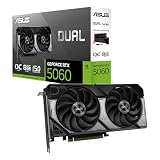
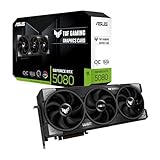
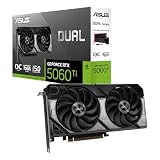
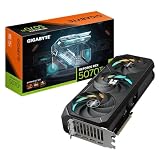
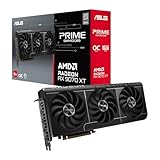
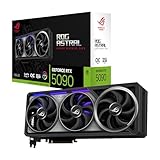
- Top Pick: GIGABYTE Radeon RX 9070 XT Gaming OC 16G Graphics Card, PCIe 5.0, 16GB GDDR6, GV-R9070XTGAMING OC-16GD Video Card
- Best Value: ASRock Radeon RX 9070 XT Challenger 16GB OC Graphics Card – AMD RDNA 4 Architecture, 2970 MHz Boost Clock, GDDR6, PCIe 5.0, DisplayPort 2.1a, HDMI 2.1b, Triple Fan Cooling 800W
- Premium Choice: GIGABYTE Radeon™ RX 9070 XT Gaming OC ICE 16G Graphics Card (16GB GDDR6, 256-bit, PCIe 5.0, HDMI/DP 2.1, 2.7 Slot, Hawk Fan, Server-Grade Thermal Gel, Reinforced Structure)
The mid-to-upper mainstream GPU segment has never been more contested than it is in 2026, and two cards sit right at the centre of it: AMD’s Radeon RX 9070 XT and NVIDIA’s GeForce RTX 5070. Both target the same buyer — someone building or upgrading a 1440p gaming rig with ambitions toward 4K — yet they get there through very different engineering philosophies.
That difference matters more than raw frame counts suggest. One card leans on a wide memory configuration and brute-force rasterisation; the other leans on upscaling, frame generation, and a mature software ecosystem. With modern titles routinely exceeding 12GB of VRAM at high settings, the decision you make today will shape how comfortably your system ages over the next three or four years.
As an Amazon Associate we earn from qualifying purchases at no extra cost to you. Product prices and availability are accurate as of the date shown and are subject to change.


⚡ Save on Your Next PC — Amazon Prime
Prime members get fast free shipping on the systems above, plus early access to Prime Day & Black Friday PC deals. New members get a 30-day free trial.
Watch: RX 9070 XT vs RTX 5070: 2026 Comparison — Video Review
Quick Verdict
The RX 9070 XT is the stronger choice for pure gaming value. It delivers noticeably higher rasterisation performance at 1440p and 4K, carries 16GB of VRAM, and competes far more credibly in ray tracing than previous Radeon generations. The RTX 5070 is the better pick if you rely on DLSS 4 with multi-frame generation, use CUDA-accelerated creative or AI applications, or want the lowest power draw and smallest physical footprint. For most gamers on a fixed budget, the 9070 XT wins on hardware; for hybrid work-and-play systems, the 5070 remains hard to displace.
Key Differences
- Memory capacity: The RX 9070 XT ships with 16GB of GDDR6 on a 256-bit bus, while the RTX 5070 has 12GB of faster GDDR7 on a narrower 192-bit bus. AMD wins on headroom; NVIDIA wins on per-pin bandwidth.
- Rasterisation: Across most modern engines the 9070 XT holds a clear lead at 1440p and stretches it at 4K, where the 5070’s memory configuration starts to bottleneck.
- Ray tracing: RDNA 4 closed most of the gap. The two cards now trade blows in RT workloads rather than the 5070 dominating outright, though NVIDIA retains an edge in path-traced titles.
- Upscaling and frame generation: FSR 4 is a genuine leap for AMD, but DLSS 4 with multi-frame generation still has broader game support and slightly better image stability in motion.
- Power and thermals: The RTX 5070 draws meaningfully less power and fits comfortably in compact builds. Most 9070 XT models are 2.5 to 3 slots and want a 750W or better supply.
- Productivity: CUDA, NVENC, and broad AI-tooling support keep the 5070 ahead for rendering, streaming, and local model work.
AMD Radeon RX 9070 XT
Built on RDNA 4, the 9070 XT is the card AMD needed. The 16GB frame buffer means you can enable ultra textures and heavy ray tracing at 1440p without the stutter that afflicts 12GB cards in titles like modern open-world releases. Board partners have been unusually generous here: the Sapphire Nitro+ RX 9070 XT is the premium option with the most aggressive cooling and clock headroom, while the GIGABYTE RX 9070 XT Gaming OC 16G offers similar performance with a more conventional triple-fan design.
If value is the priority, the ASRock RX 9070 XT Challenger 16GB OC keeps a 2970 MHz boost clock and triple-fan cooling at the leaner end of the range, and the XFX Swift RX 9070 XT is a similarly no-nonsense choice. Builders who care about aesthetics or need a slimmer card should look at the GIGABYTE Gaming OC ICE for white-themed systems or the ASUS Prime RX 9070 XT OC Edition, whose 2.5-slot design and dual BIOS make it the most flexible fit for mid-tower cases.
NVIDIA GeForce RTX 5070
The RTX 5070 is the more efficient, more compact, and more software-rich option. Blackwell’s fourth-generation Tensor cores enable DLSS 4 multi-frame generation, which can transform frame rates in supported titles — and support is now extensive. In practice, a 5070 running DLSS 4 Quality with frame generation can feel smoother than a 9070 XT running native, provided you’re comfortable with generated frames and the small latency cost they carry.
Its weakness is the 12GB frame buffer. At 1440p with sensible settings it’s fine today, but 4K texture packs and heavy ray tracing will push it. Where the 5070 justifies itself is beyond gaming: CUDA acceleration in Blender, DaVinci Resolve, and Adobe applications, plus the superior NVENC encoder for streaming, make it the sensible pick for anyone whose PC earns its keep between gaming sessions.
Which Should You Buy?
- For 1440p high-refresh gaming: pick the RX 9070 XT — more raw frames per dollar and VRAM to spare.
- For occasional 4K: pick the RX 9070 XT; the 16GB buffer is decisive at higher resolutions.
- For streaming, editing, or local AI work: pick the RTX 5070 for CUDA and NVENC.
- For small-form-factor or low-wattage builds: pick the RTX 5070, or the ASUS Prime 9070 XT if you want Radeon in a tighter case.
- For maximum frame smoothness in supported titles: pick the RTX 5070 and lean on DLSS 4 multi-frame generation.
Frequently Asked Questions
Is 12GB of VRAM still enough in 2026?
For 1440p at high settings, generally yes — but you’ll increasingly need to moderate texture quality in the most demanding releases. At 4K, or with ray tracing enabled alongside ultra textures, 12GB becomes a real constraint, which is where the 9070 XT’s 16GB pays off.
How close is FSR 4 to DLSS 4?
Much closer than previous generations. FSR 4’s machine-learning approach delivers a large jump in image stability, and in many titles the difference is only visible under close inspection. DLSS 4 retains an advantage in game coverage and in fine-detail reconstruction during fast motion.
What power supply do I need?
Plan on a quality 750W unit for the RX 9070 XT, particularly for factory-overclocked models like the Sapphire Nitro+. The RTX 5070 is comfortable on a good 650W supply. In both cases, transient spikes make a reputable PSU more important than raw wattage.
Which card will age better?
On hardware alone, the 9070 XT — extra VRAM and rasterisation headroom age gracefully. On software, the 5070 benefits from NVIDIA’s faster feature rollout. If you upgrade every two years, that favours NVIDIA; if you hold four years or more, AMD’s memory advantage matters more.
Final Verdict
For gaming-first builds, the Radeon RX 9070 XT is the stronger buy in 2026: more VRAM, better rasterisation, and competitive ray tracing. Choose the Sapphire Nitro+ or GIGABYTE Gaming OC for headroom, the ASRock Challenger or XFX Swift for value, and the ASUS Prime for tighter cases. Choose the RTX 5070 instead if efficiency, compact size, DLSS 4 coverage, or CUDA-accelerated creative work sit high on your list.