- Top Pick: Samsung 27” Odyssey G5 (G50F) Series QHD Gaming Monitor
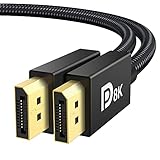
- Best Value: Capshi 8K 4K DisplayPort Cable 1.4, VESA Certified DP Cord 6.6ft
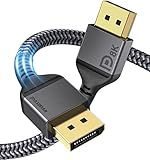
- Premium Choice: Ubluker 10K 8K DisplayPort 2.1 Cable 54Gbps 3.3 FT, Certified DP to DP Cord 4K 240Hz 165Hz 144Hz 120Hz 10K 8K 120Hz Nylon Braided UHBR HDCP2.3 FreeSync G-Sync RTX5090 Gaming Monitor PC Projector
FreeSync and G-Sync both solve the same problem, screen tearing and stutter, by syncing your monitor’s refresh rate to your GPU’s frame output. But they take different approaches, and in 2026 the practical differences have narrowed to the point where the label matters far less than the specific monitor you buy. Understanding which is which still helps you shop smart.
This comparison explains how each works, where they differ, and which to choose based on your GPU and budget. Whether you are looking at an AMD FreeSync panel like the Samsung Odyssey G5, a G-Sync Compatible display like the LG 27GS75Q-B UltraGear, or an ASUS TUF VG27AQ3A, the key is matching the tech to your setup.
As an Amazon Associate we earn from qualifying purchases at no extra cost to you.




⚡ Save on Your Next PC — Amazon Prime
Prime members get fast free shipping on the systems above, plus early access to Prime Day & Black Friday PC deals. New members get a 30-day free trial.
Watch: FreeSync vs G-Sync: Which Is Better? — Video Review
Quick Verdict
For most people, a good FreeSync (G-Sync Compatible) monitor is the smart buy: it costs less, works with both AMD and NVIDIA GPUs, and delivers tear-free motion that is indistinguishable from a dedicated G-Sync module in normal use. Choose a native G-Sync Ultimate panel only if you want the tightest variable-refresh behavior and premium HDR, and do not mind paying for it.
Key Differences
- Cost: FreeSync panels are cheaper because they use an open standard with no proprietary module.
- Compatibility: FreeSync works with AMD and, in G-Sync Compatible mode, most NVIDIA GPUs.
- Refresh range: Native G-Sync guarantees VRR down to very low frame rates; cheap FreeSync panels may have a narrower range.
- HDR and features: G-Sync Ultimate certifies premium HDR and low latency; FreeSync Premium Pro matches much of it.
- Quality control: G-Sync certification is stricter, so results are more consistent panel to panel.
- Connection: FreeSync runs over HDMI and DisplayPort; G-Sync Compatible generally needs DisplayPort.
FreeSync
FreeSync is AMD’s open, royalty-free standard, which is why it appears on affordable panels like the Samsung Odyssey G5 and countless others. Because it costs manufacturers nothing to implement, you get variable refresh at every price point, and NVIDIA GPUs can use most FreeSync monitors in “G-Sync Compatible” mode, making it the more flexible choice for mixed setups.
The catch is variability. Not every FreeSync panel is certified or tested, so the low-end refresh range and flicker behavior can differ. Look for “FreeSync Premium” or “Premium Pro” and check the supported refresh range; a well-implemented FreeSync monitor is every bit as good as G-Sync for the vast majority of gamers.
G-Sync
Native G-Sync uses a dedicated hardware module in the monitor, which guarantees a wide variable-refresh range down to very low frame rates and passes strict NVIDIA certification. Panels like premium G-Sync Ultimate displays deliver the most consistent, flicker-free VRR and top-tier HDR, which is why they command a premium price.
The downsides are cost and lock-in. The module adds to the price, and native G-Sync historically favored NVIDIA GPUs. For most gamers the real-world benefit over a good G-Sync Compatible FreeSync panel is small, so native G-Sync makes sense mainly for enthusiasts who want the absolute best VRR consistency and premium HDR.
Which Should You Buy?
- Buy a FreeSync / G-Sync Compatible panel for the best value with either GPU brand.
- Look for FreeSync Premium and a wide refresh range for the smoothest low-FPS behavior.
- Buy native G-Sync Ultimate only for premium HDR and the tightest VRR consistency.
- Match the panel to your GPU brand, but know most FreeSync monitors work with NVIDIA too.
- Prioritize refresh rate, panel type, and response time over the sync label itself.
Frequently Asked Questions
Does FreeSync work with NVIDIA GPUs?
Yes, most FreeSync monitors are certified or usable as “G-Sync Compatible” with NVIDIA cards over DisplayPort. Enable it in both the monitor OSD and the NVIDIA control panel.
Is G-Sync worth the extra money?
For most gamers, no. A good FreeSync panel delivers nearly identical tear-free motion. Native G-Sync is worth it only if you want premium HDR and the most consistent low-FPS VRR.
Which has less input lag?
Both add negligible latency and are far lower-lag than traditional V-Sync. Differences between quality FreeSync and G-Sync panels are too small to notice in play.
Why does my FreeSync monitor flicker?
Flicker usually happens when frame rates swing through the bottom of the VRR range, more common on cheaper panels. A steadier frame cap and choosing a FreeSync Premium panel with a wide range reduce it.
Final Verdict
The sync-label war is largely over: a quality FreeSync / G-Sync Compatible monitor gives you tear-free gaming with either GPU brand at a lower price. Reserve native G-Sync Ultimate for enthusiasts chasing premium HDR and the tightest VRR consistency. Focus your money on refresh rate, panel quality, and response time, and the sync will take care of itself.