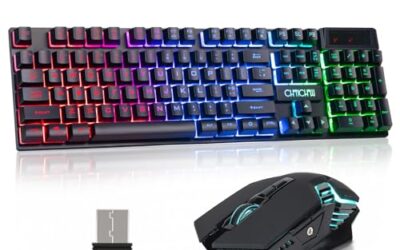
- Top Pick: iBUYPOWER Element SE Gaming PC Desktop Computer AMD Ryzen 5 8400F CPU, NVIDIA GeForce RTX 3050 6GB GPU, 16GB DDR5 RAM, 1TB NVMe SSD, Windows 11 Home, Gamer Keyboard and Mouse – ESA5N3501
- Best Value: iBUYPOWER Element Gaming PC Desktop Computer AMD Ryzen 9 7900X CPU, NVIDIA GeForce RTX 5070 12GB GPU, 32GB DDR5 RAM, 1TB NVMe SSD, Windows 11 Home, Gamer Keyboard and Mouse – EWA9N5702
- Premium Choice: ZOTAC MEK Gaming PC Desktop, NVIDIA GeForce RTX 5080 Apocalypse OC 16GB GDDR7, AMD Ryzen 7 9800X3D Up to 5.2GHz, 32GB DDR5, 2TB NVMe SSD, 850W Gold PSU, WiFi 6E, Bluetooth 5.3, Windows 11 Pro, White
The NVIDIA versus AMD GPU debate is more competitive in 2026 than it has been in years. NVIDIA’s RTX 50-series leads on ray tracing and AI upscaling, while AMD’s RX 9000-series delivers more raw rasterization performance per dollar. For most gamers, the right choice comes down to which features you actually use and how much you are willing to pay for them.
Whether you buy a discrete card or a prebuilt like the iBUYPOWER Element with a Ryzen CPU and RTX GPU, or the ZOTAC MEK with an RTX 5080, this comparison breaks down where each brand wins so you can pick with confidence.
As an Amazon Associate we earn from qualifying purchases at no extra cost to you.




⚡ Save on Your Next PC — Amazon Prime
Prime members get fast free shipping on the systems above, plus early access to Prime Day & Black Friday PC deals. New members get a 30-day free trial.
Watch: NVIDIA vs AMD GPUs in 2026 — Video Review
Quick Verdict
Buy NVIDIA if you want the best ray tracing, DLSS upscaling and frame generation, and content-creation performance. Buy AMD if you want more rasterization frames per dollar and larger VRAM buffers at each price tier. For pure high-refresh esports, either brand is excellent; for path-traced single-player games, NVIDIA still has a clear edge.
Key Differences
- Ray tracing: NVIDIA leads by a meaningful margin, especially in path-traced titles.
- Upscaling: DLSS 4 with multi-frame generation is more mature than AMD’s FSR, though FSR keeps closing the gap.
- Rasterization value: AMD typically offers more native FPS per dollar in traditional rendering.
- VRAM: AMD often ships more memory at a given price, useful for 1440p and 4K longevity.
- Power and efficiency: NVIDIA’s current architecture is slightly more efficient per frame in most titles.
- Software: NVIDIA’s Broadcast and app ecosystem is broader; AMD’s Adrenalin is a clean, feature-rich all-in-one.
NVIDIA GeForce RTX 50-Series
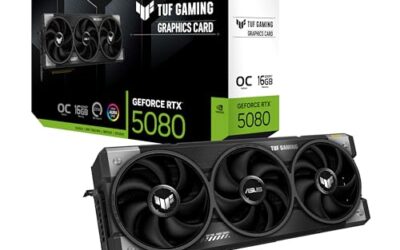
NVIDIA’s strength is its feature stack. DLSS 4 upscaling and frame generation can multiply performance in supported games, making a card like the RTX 5080 in a ZOTAC MEK prebuilt feel far faster than its raw numbers suggest. Ray tracing and path tracing run best on NVIDIA hardware, so if you play cinematic single-player games with the eye candy maxed, this is the platform to beat.
The trade-offs are price and VRAM. NVIDIA cards usually cost more at each tier and sometimes ship with less memory than the AMD competitor. For creators, though, CUDA acceleration and NVENC encoding make NVIDIA the default for streaming and video editing, which is why so many prebuilts pair an RTX GPU with a Ryzen or Intel CPU.
AMD Radeon RX 9000-Series
AMD’s pitch is value. At most price points the Radeon card delivers more traditional rasterization frames and a bigger VRAM buffer, which ages better for high-resolution gaming. FSR upscaling has improved substantially and closes much of the gap with DLSS in supported titles, and AMD’s driver suite bundles recording, tuning, and monitoring in one clean app.
Where AMD trails is heavy ray tracing and the very newest AI features, though the latest generation narrowed that gap considerably. If you play mostly competitive or rasterized titles and want the most frames for your money, AMD is the smarter buy, and it pairs naturally with a Ryzen CPU for an all-AMD build.
Which Should You Buy?
- Choose NVIDIA for ray tracing, DLSS, and streaming or content creation.
- Choose AMD for maximum rasterization FPS per dollar and larger VRAM.
- Pick either for high-refresh 1080p and 1440p esports; both crush those workloads.
- Buy the specific model with the best price and cooler at your budget, not just the brand.
- Prebuilts let you get either GPU alongside a strong CPU without sourcing parts individually.
Frequently Asked Questions
Is NVIDIA or AMD better for ray tracing?
NVIDIA, clearly. Its RT cores and DLSS frame generation give it a large lead in path-traced games. AMD is usable for ray tracing but falls behind in the most demanding titles.
Does AMD offer better value?
Generally yes in rasterization. AMD tends to deliver more native frames and VRAM per dollar, which is why it is popular for high-refresh and 1440p gaming on a budget.
Which is better for streaming?
NVIDIA, thanks to its NVENC encoder and Broadcast tools, is the streaming default. AMD’s encoder has improved but NVENC remains the smoother, higher-quality option.
Can I mix an AMD CPU with an NVIDIA GPU?
Absolutely. CPU and GPU brands are independent. A Ryzen CPU with an NVIDIA GPU, as seen in many prebuilts, is one of the most common and well-supported combinations.
Final Verdict
There is no universal winner; there is only the right card for your games. NVIDIA owns ray tracing, upscaling, and content creation, while AMD owns rasterization value and VRAM. Decide which features you actually use, set a budget, and buy the best-cooled model, whether as a discrete card or inside a ready-to-go prebuilt.