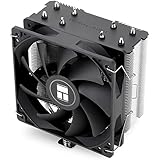
- Top Pick: Thermalright Peerless Assassin 120 SE CPU Cooler, 6 Heat Pipes AGHP Technology, Dual 120mm PWM Fans, 1550RPM Speed, for AMD:AM4 AM5/Intel LGA 1700/1150/1151/1200/1851,PC Cooler
- Best Value: Thermalright Assassin X120 Refined SE CPU Air Cooler, 4 Heat Pipes, TL-C12C PWM Fan, Aluminium Heatsink Cover, AGHP Technology, for AMD AM4/AM5/Intel LGA 1150/1151/1155/1200/1700/1851(AX120 R SE)
- Premium Choice: Thermalright Peerless Assassin 120 SE ARGB CPU Air Cooler,6 Heat Pipes CPU Cooler, Dual TL-C12C-S PWM Fan, Aluminium Heatsink Cover,AGHP Technology,for AMD AM4/AM5/Intel LGA1700/115X/1155/1200/1851
A decade ago, choosing between an all-in-one liquid cooler and a tower air cooler was mostly a question of budget and nerve. In 2026 it is a question of thermal density. Modern desktop CPUs push enormous transient power into very small hotspots, and boost algorithms will happily consume every watt of cooling headroom you hand them before backing off. The cooler bolted to your socket no longer just prevents throttling — it decides sustained clocks, load noise, and whether your machine stays civil during a four-hour session.
The good news is that both categories have matured to the point where there are no bad choices, only mismatched ones. Air cooling has become absurd value, with six- and seven-heatpipe dual-tower designs absorbing loads that once demanded water. AIOs, meanwhile, have grown thicker radiators, quieter pumps and far better out-of-the-box fan curves. Below is a straight comparison of the two approaches and which specific models actually deserve your money.
As an Amazon Associate we earn from qualifying purchases at no extra cost to you.


⚡ Save on Your Next PC — Amazon Prime
Prime members get fast free shipping on the systems above, plus early access to Prime Day & Black Friday PC deals. New members get a 30-day free trial.
Watch: AIO vs Air Cooler: Which Is Best in 2026? — Video Review
Quick Verdict
For the overwhelming majority of gaming builds, a premium dual-tower air cooler such as the Thermalright Phantom Spirit 120 SE or Peerless Assassin 120 SE is the smarter buy: near-AIO performance, no pump to fail, and a fraction of the cost. Choose a 360 mm AIO like the ARCTIC Liquid Freezer III Pro 360 if you are running a genuinely power-hungry flagship CPU, want the lowest possible noise at high sustained loads, or need to clear the area above your motherboard for tall RAM, a large GPU backplate, or a clean showcase build.
Key Differences
- Cooling headroom: A good 360 mm AIO holds an advantage on sustained multi-core loads above roughly 220 W; below that, a top dual-tower air cooler is usually within a few degrees.
- Noise behaviour: Air coolers are silent apart from their fans. AIOs spread heat across more radiator surface, so fans spin slower — but you add pump noise that never stops.
- Installation and maintenance: Air coolers mount once and are done. AIOs require radiator screws, tube routing, and attention to pump placement so air does not collect in the block.
- Clearance: Tall towers can conflict with tall RAM and small-case side panels; radiators demand case support for 240 mm or 360 mm mounts plus room for fan thickness.
- Longevity: Heat pipes have no moving parts beyond the fans. Pumps are a wear item and the practical lifespan limit of any AIO.
- Aesthetics: Radiators keep the socket area clean, though models like the Peerless Assassin 120 Vision MAX ARGB now put a five-inch IPS display where the heatsink used to be plain metal.
AIO Liquid Coolers
The pitch for liquid is simple: move the heat somewhere with more surface area. A 360 mm radiator presents roughly triple the dissipation area of a tower heatsink, so the fans can idle at low RPM and still shift the same wattage. The ARCTIC Liquid Freezer III Pro 360 is the reference point here, pairing a thick radiator with a VRM fan on the pump block — genuinely useful on hot-running boards under long all-core loads.
The trade-offs are real. You are adding a pump, a fill of coolant, and flexible tubing to a machine that will run for years. Radiator placement also matters more than buyers expect: front-mounted radiators warm the air feeding your GPU, while top-mounted ones need clearance above the motherboard. Budget for a case that genuinely supports 360 mm before committing.
Air Coolers
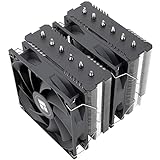
Thermalright reset expectations for this category and has not looked back. The Peerless Assassin 120 SE runs six heat pipes and two 120 mm PWM fans; the Phantom Spirit 120 SE adds a seventh pipe and AGHP 4.0 for a measurable edge on hotter chips. Either will keep a mainstream gaming CPU comfortably in its boost window without any drama, and both mount on current AM5 and LGA 1851 sockets.
If space or budget is tight, the single-tower Assassin X120 Refined SE handles mid-range CPUs in compact builds. If the build is on display, the Peerless Assassin 120 SE ARGB adds lighting without changing the cooling formula, while the Peerless Assassin 120 Vision MAX ARGB Black turns the top of the heatsink into a 480×854 IPS screen for temperatures, telemetry or artwork.
Which Should You Buy?
- For a mainstream gaming build: pick the Peerless Assassin 120 SE — the best performance-per-dollar in cooling, full stop.
- For a hot flagship CPU or heavy streaming/rendering: pick the ARCTIC Liquid Freezer III Pro 360.
- For a budget or compact build: pick the Assassin X120 Refined SE and spend the savings on your GPU.
- For maximum air-cooled headroom: pick the Phantom Spirit 120 SE, the closest air comes to matching a 360.
- For a showcase rig: pick the Peerless Assassin 120 Vision MAX ARGB or the Peerless Assassin 120 SE ARGB.
Frequently Asked Questions
Do AIO coolers need refilling or maintenance?
No. Consumer AIOs are sealed units and cannot be topped up. Maintenance is limited to cleaning dust from the radiator fins and fans every few months.
Will an air cooler throttle a high-end CPU?
Rarely in games, which load only a handful of cores. Sustained all-core workloads are where a dual-tower cooler starts to lose ground to a thick 360 mm radiator.
Are AIOs actually quieter?
Under heavy sustained load, usually yes, because the fans work less hard. At idle and in light gaming, a good air cooler is often quieter since there is no pump running.
Will a tower cooler block my RAM?
Thermalright’s 120 mm-class towers clear most standard-height kits, though you may need to raise the front fan slightly for tall RGB modules. Check your case’s CPU cooler height limit first.
Final Verdict
Buy air unless you have a specific reason not to. The Peerless Assassin 120 SE and Phantom Spirit 120 SE deliver most of a 360 mm AIO’s performance with none of its failure points, and they make gaming builds quieter and cheaper at the same time. Step up to the ARCTIC Liquid Freezer III Pro 360 only when your CPU, workload or build aesthetic genuinely demands it — at which point it is an excellent cooler and worth every penny.
Top picks from this guide
 ThermalrightThermalright Peerless Assassin 120 Vision MAX ARGB Black CPU Air…$58 \xc2\xb7 99/100
 ThermalrightThermalright Phantom Spirit 120SE CPU Air Cooler, 7 Heat Pipes…$36 \xc2\xb7 98/100
 ThermalrightThermalright Peerless Assassin 120 SE CPU Cooler, 6 Heat Pipes…$31 \xc2\xb7 96/100
 ThermalrightThermalright Peerless Assassin 120 SE ARGB CPU Air Cooler,6 Heat…$33 \xc2\xb7 96/100