- Top Pick: CORSAIR Vengeance RGB DDR5 RAM 32GB (2x16GB) Up to 6000MHz CL36-44-44-96 1.35V Intel XMP 3.0 Desktop Computer Memory – White (CMH32GX5M2E6000C36W)
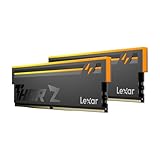
- Best Value: Lexar Thor Z RGB DDR5 RAM 32GB Kit (2x16GB) 6000MHz CL38 DRAM 288-Pin UDIMM
- Premium Choice: Crucial 32GB DDR5 RAM Kit (2x16GB), 5600MHz (or 5200MHz or 4800MHz) Laptop Memory 262-Pin SODIMM, Compatible with Intel Core and AMD Ryzen 7000, Black – CT2K16G56C46S5
For most of the last decade, DDR4 was the only sensible answer. It was cheap, plentiful, and fast enough that nobody lost frames over it. That era is over. In 2026, DDR5 is the default memory standard on every current gaming platform — AMD’s AM5 socket, Intel’s latest Core Ultra desktop chips, and virtually every new gaming laptop shipping today. DDR4 now lives on almost entirely as a legacy option for people still running AM4 or older Intel LGA1700 boards.
That makes the DDR5-vs-DDR4 decision less about raw benchmarks and more about which platform you’re buying into — and how long you plan to keep it. Complicating things further, major manufacturers have been winding down DDR4 production, which has quietly flipped the old price advantage on its head. Below we break down where each standard actually stands for gaming in 2026, and which kits are worth your money.
As an Amazon Associate we earn from qualifying purchases at no extra cost to you. Product prices and availability are accurate as of the date shown and are subject to change.



⚡ Save on Your Next PC — Amazon Prime
Prime members get fast free shipping on the systems above, plus early access to Prime Day & Black Friday PC deals. New members get a 30-day free trial.
Watch: DDR5 vs DDR4 RAM: Does It Matter in 2026? — Video Review
Quick Verdict
DDR5 is the correct choice for any new build or any system bought in the last two years — it offers roughly double the bandwidth, far better capacity headroom, and it’s the only option current CPUs accept. A 32GB (2x16GB) DDR5-6000 kit like the CORSAIR Vengeance DDR5 6000MHz or TEAMGROUP T-Force Vulcan DDR5-6000 CL38 is the sweet spot for gaming. DDR4 only makes sense if you already own a DDR4 motherboard and are adding capacity to an otherwise healthy system — and even then, check prices first, because the savings may no longer be there.
Key Differences
- Bandwidth: DDR4 gaming kits typically topped out around 3200–3600MT/s, while mainstream DDR5 kits start at 4800MT/s and run comfortably at 6000–6400MT/s, delivering roughly twice the theoretical throughput.
- Latency: DDR4 wins on raw CAS numbers — CL16 versus CL36–CL38 is not close on paper. But because DDR5 cycles so much faster, real-world nanosecond latency is broadly comparable, and DDR5’s bandwidth advantage more than compensates.
- Capacity per stick: DDR4 realistically caps at 32GB per module; DDR5 scales to 64GB and beyond, making 96GB and 128GB dual-stick configs practical for streamers and creators.
- Power and voltage: DDR5 runs at 1.1V nominal (1.35V for XMP/EXPO profiles) and moves voltage regulation onto the module itself via an integrated PMIC, which improves signal stability at high frequencies.
- Compatibility: The two are physically and electrically incompatible. DDR5 uses a different notch position on the 288-pin DIMM, and laptop DDR5 SODIMMs use 262 pins versus DDR4’s 260 — no adapters exist, and none will.
- Pricing in 2026: DDR4 is in end-of-life production. Supply is thinning, prices have firmed up, and the once-obvious budget win has largely evaporated.
DDR5: The Standard for Every Current Gaming Platform
DDR5’s advantage shows up most clearly where memory bandwidth is the bottleneck: 1080p competitive titles with high refresh targets, open-world games with heavy streaming and traversal stutter, simulation titles with large CPU-side workloads, and any system leaning on integrated graphics. On AMD’s Ryzen 7000 and 9000 series, a DDR5-6000 kit is the well-documented sweet spot because it keeps the memory controller running in sync at a 1:1 ratio. The CORSAIR Vengeance DDR5 32GB (2x16GB) 6000MHz kit hits that target with minimal fuss, and the TEAMGROUP T-Force Vulcan DDR5 6000MHz CL38 is a strong low-profile alternative for builds with bulky air coolers.
If you want RGB or a specific aesthetic, the CORSAIR Vengeance RGB DDR5 32GB CL36 in white is a tighter-timed kit that suits light-themed builds, while the Lexar Thor Z RGB DDR5-6000 CL38 offers similar lighting at a more aggressive price. Intel builders with headroom in their memory controller can push further with the CORSAIR Vengeance DDR5 6400MHz kit. Laptop owners aren’t left out either — the Crucial 32GB DDR5 SODIMM kit at 5600MHz is the straightforward upgrade for Ryzen 7000-series and modern Intel notebooks that ship with cramped 8GB or 16GB configurations.
DDR4: Still Serviceable, No Longer Sensible for New Builds
DDR4 is not obsolete in any practical sense. A Ryzen 5800X3D or an Intel 12700K paired with 32GB of DDR4-3600 CL16 will still push high frame rates in essentially every 2026 title, and the X3D chips in particular are unusually insensitive to memory speed thanks to their enormous L3 cache. If that describes your system, there is no performance argument for a platform migration on memory grounds alone.
The problem is forward motion. No current CPU socket accepts DDR4, so any kit you buy today is a dead-end purchase tied to hardware you’ll likely replace within a few years. Combine that with shrinking retail supply and rising per-gigabyte pricing, and spending £70–£90 on a DDR4 kit in 2026 is often worse value than putting that money toward a DDR5-capable platform upgrade.
Which Should You Buy?
- For a new gaming PC in 2026: DDR5, without hesitation — 32GB at 6000MHz, such as the CORSAIR Vengeance DDR5 6000 or T-Force Vulcan DDR5-6000.
- For an AMD AM5 build: Pick a 6000MHz kit with an EXPO profile to stay at a 1:1 memory controller ratio; the T-Force Vulcan and Vengeance 6000 both qualify.
- For a high-end Intel build: The CORSAIR Vengeance DDR5 6400MHz kit gives you extra bandwidth headroom for CPU-bound esports titles.
- For a themed or RGB build: The CORSAIR Vengeance RGB DDR5 CL36 in white for tighter timings, or the Lexar Thor Z RGB for better value per gigabyte.
- For a gaming laptop upgrade: The Crucial 32GB DDR5 SODIMM kit — just confirm your machine has accessible slots rather than soldered memory.
- For an existing AM4 or LGA1700 DDR4 rig: Stick with DDR4 and add capacity only if you’re genuinely running short; save the rest toward your next platform.
Frequently Asked Questions
Can I install DDR5 in a DDR4 motherboard?
No. The standards use different notch positions and different pin counts, so a DDR5 module physically will not seat in a DDR4 slot. Memory type is determined by your motherboard chipset and CPU socket, and no adapter can bridge the two.
Does faster RAM actually increase FPS in games?
Yes, though the size of the gain depends heavily on your setup. Moving from DDR4-3200 to DDR5-6000 typically yields single-digit to low-double-digit percentage improvements in CPU-bound scenarios — most visible at 1080p with a strong GPU, and least visible at 4K where the graphics card is the limiting factor. Improvements to 1% lows and frame pacing are often more noticeable than the average FPS number.
Is 32GB of RAM enough for gaming in 2026?
For gaming alone, yes — 32GB comfortably covers current titles with room for a browser, Discord, and background apps. 16GB is now genuinely limiting in some open-world releases. Consider 64GB only if you stream while gaming, run local AI models, or work in video editing and 3D applications.
Why do DDR5 kits have such high CAS latency numbers?
CAS latency counts clock cycles, not time, and DDR5 clocks far faster than DDR4. A DDR5-6000 CL36 kit and a DDR4-3200 CL16 kit land at roughly the same real-world latency in nanoseconds — but the DDR5 kit moves close to twice the data while doing it.