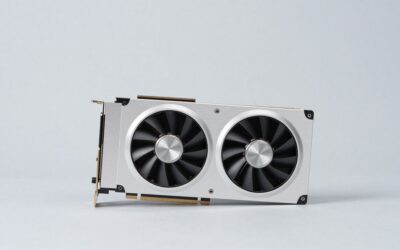
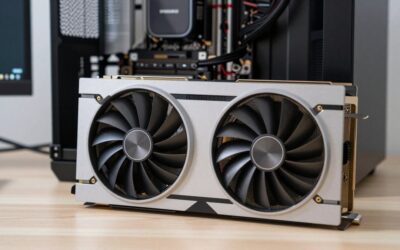
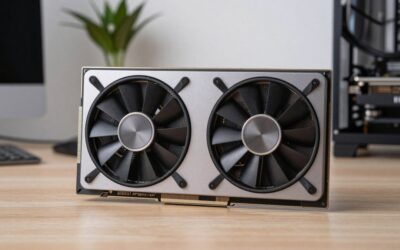
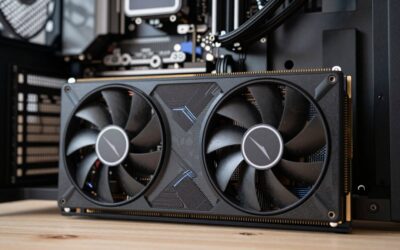
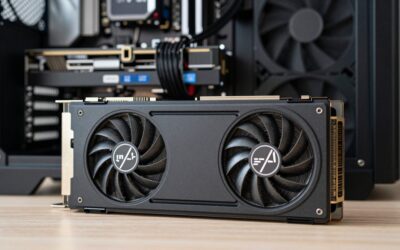
The best mid range graphics card in 2026 is the Radeon RX 9070, which combines 16GB of VRAM with strong 1440p performance in the $550–$620 bracket; the GeForce RTX 5070 is the best mid-tier alternative for ray tracing and DLSS, and the 16GB RX 9060 XT and RTX 5060 Ti cover the lower end of the mid range. Which of these four fits you comes down to resolution, VRAM needs and how much you value NVIDIA’s software features.
Quick answer: For most people in 2026, the best mid range graphics card is the Architecture — our #1 rated choice. See the full ranked comparison, alternatives and buying advice below.
What counts as mid range in 2026?
Price brackets shifted upward over the last few generations. Today the mid range realistically spans about $350 to $650, sitting between budget 8GB cards and the $750+ high-end tier that starts with the RTX 5070 Ti and RX 9070 XT. Inside that span there are two distinct classes:
- Lower mid range ($350–$500): RX 9060 XT 16GB and RTX 5060 Ti 16GB. Strong at 1080p, capable at 1440p with upscaling.
- Upper mid range ($550–$650): RX 9070 and RTX 5070. Built for 1440p at high refresh rates.
Head-to-head specs
| Spec | RX 9060 XT 16GB | RTX 5060 Ti 16GB | RTX 5070 | RX 9070 |
|---|---|---|---|---|
| Architecture | RDNA 4 | Blackwell | Blackwell | RDNA 4 |
| Shader units | 32 CUs (2,048 SPs) | 4,608 CUDA | 6,144 CUDA | 56 CUs (3,584 SPs) |
| VRAM | 16GB GDDR6 | 16GB GDDR7 | 12GB GDDR7 | 16GB GDDR6 |
| Memory bus | 128-bit | 128-bit | 192-bit | 256-bit |
| Memory bandwidth | ~320 GB/s | ~448 GB/s | ~672 GB/s | ~640 GB/s |
| PCIe link | 5.0 x16 | 5.0 x8 | 5.0 x16 | 5.0 x16 |
| Board power | ~160W | ~180W | ~250W | ~220W |
| Upscaling | FSR 4 | DLSS 4 | DLSS 4 | FSR 4 |
| Typical price range | $350–$400 | $430–$500 | $550–$620 | $550–$620 |
Upper mid range: RX 9070 vs RTX 5070
These two sell at nearly identical prices, so the choice is about trade-offs rather than budget.
Where the RX 9070 wins
- VRAM: 16GB versus 12GB. At 1440p with maximum textures and ray tracing, some current games already approach 12GB of usage.
- Raster performance: generally a few percent ahead in games without heavy ray tracing.
- Efficiency: about 30W less board power, which means less heat and noise in a mid-tower.
Where the RTX 5070 wins
- Ray tracing: ahead in heavy RT and especially in path-traced games.
- Upscaling support: DLSS is available in far more existing games than FSR 4, and DLSS 4 multi frame generation can multiply frame rates on high-refresh monitors.
- Creator workloads: NVENC encoding and CUDA acceleration in editing, 3D and AI tools.
If you mainly play competitive and raster-heavy games, buy the RX 9070. If you play single-player showcase titles with ray tracing turned up, or stream, buy the RTX 5070.
Lower mid range: RX 9060 XT 16GB vs RTX 5060 Ti 16GB
The RTX 5060 Ti is the faster card overall, by roughly 5–10% in raster and more in ray tracing, and its GDDR7 memory gives it a bandwidth advantage. The RX 9060 XT counters with a lower price, a full x16 PCIe link and slightly lower power draw.
The PCIe detail matters if you are upgrading an older system. On a PCIe 3.0 motherboard, the 5060 Ti’s x8 link runs at roughly 8 GB/s, while the 9060 XT’s x16 link runs at about 16 GB/s. When a game spills past VRAM, the narrower link stutters sooner. With 16GB of VRAM that rarely happens, but it is one more reason to avoid the 8GB versions of either card.
Worked example: VRAM headroom at 1440p
To see why VRAM is the deciding factor in the mid range, consider a demanding 2026 AAA game at 1440p with high textures and ray tracing enabled. A typical memory breakdown looks something like this:
| Memory consumer | Approximate usage |
|---|---|
| Textures (high preset) | 5.5–7GB |
| Geometry, shaders, game buffers | 1.5–2GB |
| Ray tracing acceleration structures | 1–1.5GB |
| Render targets at 1440p | 0.5–1GB |
| Frame generation overhead | 0.5–1GB |
| Driver and OS reservation | 0.5GB |
| Total | 9.5–13GB |
On a 16GB card, even the top of that range leaves about 3GB spare. On a 12GB card, the upper end exceeds capacity, so you would lower textures one notch. On an 8GB card, you would have to drop texture quality significantly or turn off ray tracing. This is the practical reason the 16GB mid-range cards age better than their raw benchmarks suggest.
Which mid range video card fits your setup
| Your situation | Recommended card | Power supply |
|---|---|---|
| 1080p 144–240Hz, budget focus | RX 9060 XT 16GB | 550W |
| 1080p with ray tracing, or streaming | RTX 5060 Ti 16GB | 550–650W |
| 1440p 144Hz+, raster-focused | RX 9070 | 650W |
| 1440p with ray tracing and DLSS | RTX 5070 | 650W |
| Older PCIe 3.0 platform | RX 9060 XT 16GB or RX 9070 (full x16) | 550–650W |
| Compact ITX case | Two-fan RX 9060 XT or RTX 5060 Ti | SFX 650W |
When to step up out of the mid range
If you game at 4K or want 1440p at 165Hz+ with ray tracing, the RX 9070 XT and RTX 5070 Ti justify their extra $100–$250. The 9070 XT in particular is often only modestly more expensive than the 9070 and delivers roughly 10–15% more performance. Conversely, if you are on a CPU like a Ryzen 5 3600 or Core i5-9400F, a faster card than the mid range will be held back, and the money is better spent on the processor.
Partner card tips for mid-range GPUs
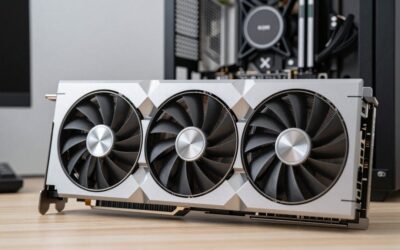
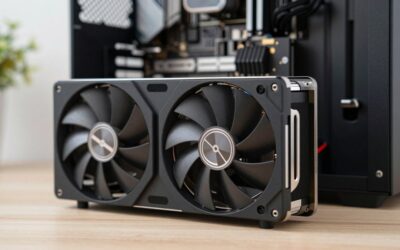
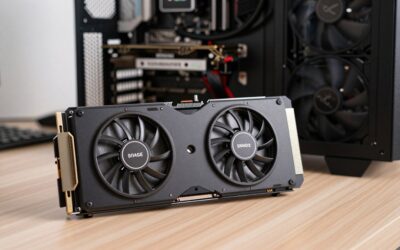
Within one GPU model, partner cards differ mainly in cooler size, noise and factory overclock. For 160–250W cards, a solid dual-fan design is enough in most cases; triple-fan models run quieter but may not fit compact cases. Factory overclocks usually add only 1–3% performance, so prioritize cooler quality, length and warranty over boost clock numbers.
Ready to decide? Our #1 pick for 2026 is the Architecture.
Live price & availability on Amazon.