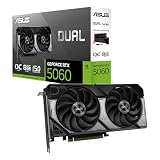
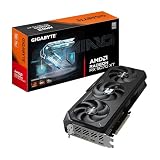
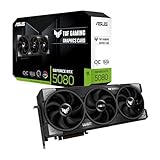
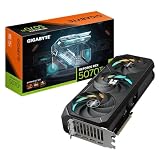
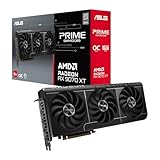
- Top Pick: ASUS Dual NVIDIA GeForce RTX 5060 Ti 16GB GDDR7 OC Edition Graphics Card, (PCIe 5.0, DLSS 4, HDMI 2.1b, DisplayPort 2.1b, 2.5-Slot, Axial-tech Fan, 0dB Technology), 3 Year Warranty
- Best Value: ASUS SFF-Ready Prime NVIDIA GeForce RTX 5060 Ti 16GB GDDR7 OC Edition Graphics Card (PCIe 5.0, 16GB GDDR7, HDMI/DP 2.1, 2.5-Slot, Axial-tech Fans, Dual BIOS), 3 Year Warranty
- Premium Choice: ASUS Dual NVIDIA GeForce RTX 5060 Ti 8GB GDDR7 OC Edition Graphics Card (PCIe 5.0, DLSS 4, HDMI 2.1b, DisplayPort 2.1b, 2.5-Slot, Axial-tech Fan, 0dB Technology), 3 Year Warranty
NVIDIA’s mid-range stack has settled into a familiar shape by 2026: the GeForce RTX 5060 Ti anchors the affordable end of the Blackwell line-up, while the RTX 5070 sits one clear rung above it. Both run DLSS 4 with Multi Frame Generation, both use GDDR7 memory, and both drop into a PCIe 5.0 board without fuss. On paper they look like neighbours. In practice, the gap between them decides whether you’re building a 1080p machine that stretches to 1440p, or a native 1440p card with genuine headroom.
The decision matters more this generation than it used to, because memory capacity has become the single best predictor of how long a GPU stays comfortable. The 5060 Ti ships in 8GB and 16GB versions that are otherwise identical, and the 16GB card actually carries more VRAM than the 5070 — while the 5070 answers with substantially more shading power and roughly 50% more memory bandwidth. Capacity versus horsepower: that trade-off is the entire argument.
As an Amazon Associate we earn from qualifying purchases at no extra cost to you. Product prices and availability are accurate as of the date shown and are subject to change.




⚡ Save on Your Next PC — Amazon Prime
Prime members get fast free shipping on the systems above, plus early access to Prime Day & Black Friday PC deals. New members get a 30-day free trial.
Watch: RTX 5060 Ti vs 5070: Which Wins in 2026? — Video Review
Quick Verdict
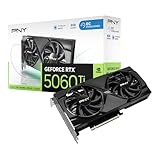
Choose the RTX 5060 Ti 16GB if you play at 1080p or 1440p with textures cranked and want the cheapest route to a card that won’t hit a memory wall in three years — the ASUS Dual 5060 Ti 16GB OC covers standard towers, while the SFF-Ready Prime version is the pick for compact builds. Choose the RTX 5070 if high-refresh 1440p is the goal, you lean heavily on ray tracing, or you simply want more frames today and are happy with 12GB as the ceiling. The 8GB models — the ASUS Dual 8GB or PNY’s dual-fan card — are 1080p purchases and should be bought at 1080p money.
Key Differences
- GPU and core count: The 5060 Ti uses GB206 with 4,608 CUDA cores; the 5070 steps up to GB205 with 6,144 — roughly a third more raw shading throughput.
- Memory capacity: The 5060 Ti comes in 8GB or 16GB configurations, while the 5070 is fixed at 12GB. The 16GB 5060 Ti is the only card here with a genuine VRAM surplus.
- Memory bandwidth: A 128-bit bus on the 5060 Ti versus 192-bit on the 5070, which translates to about 50% more bandwidth for the bigger card — the main reason it pulls ahead at higher resolutions.
- Power and PSU needs: Around 180W for the 5060 Ti versus roughly 250W for the 5070. Most 5060 Ti cards run happily on a single 8-pin connector and a modest PSU; the 5070 wants more headroom.
- PCIe interface: The 5060 Ti runs an x8 link, the 5070 a full x16. Irrelevant on a modern PCIe 4.0 or 5.0 board, but worth knowing if you’re dropping into an older PCIe 3.0 system.
- Real-world performance: Expect roughly 25–35% higher frame rates from the 5070 at 1440p. The lead
Explore Our Guides & Free Tools