If you are running an RX 7800 XT right now, you are probably sitting in that frustrating middle ground where your card still handles most games well at 1440p, but newer titles with heavy ray tracing or AI upscaling are starting to push it toward its limits. The RX 9070 XT landed as AMD’s RDNA 4 flagship for the mid-upper segment, and a lot of 7800 XT owners are Googling whether to upgrade RX 7800 XT to RX 9070 XT now or wait another cycle. This guide breaks down the real performance delta, the hidden costs, and the specific scenarios where the jump makes financial sense.
Quick Verdict
For most RX 7800 XT owners, the upgrade to RX 9070 XT is a modest generational bump in raster performance but a meaningful leap in ray tracing and FSR 4 upscaling quality. If your 7800 XT still hits your target frame rates comfortably, hold off. If you play heavily ray-traced titles at 1440p or above, or if your PSU and CPU are already ready for a 304W card, the RX 9070 XT delivers a tangible quality-of-life improvement at a $799 price point that undercuts the original MSRP of cards in its performance tier.
As an Amazon Associate we earn from qualifying purchases at no extra cost to you.

Specs: Old vs New
| Spec | RX 7800 XT | RX 9070 XT (GIGABYTE Gaming OC) |
|---|---|---|
| Architecture | RDNA 3 | RDNA 4 |
| Compute Units | 64 | 64 |
| Game Clock | ~1,800 MHz | ~2,400 MHz (OC BIOS) |
| Peak FP32 | 17.4 TFLOPS | ~29.5 TFLOPS |
| VRAM | 16 GB GDDR6, 256-bit | 16 GB GDDR6, 256-bit |
| Memory Bandwidth | 624 GB/s | 644 GB/s |
| TBP | 263 W | 304 W |
| PCIe Interface | PCIe 4.0 x16 | PCIe 5.0 x16 |
| Ray Accelerators | 64 (1st gen RT) | 64 (2nd gen RT) |
| Media Engine | AV1 encode/decode | AV1 encode/decode (improved) |
| MSRP / Street Price | $499 MSRP | $799 (GIGABYTE Gaming OC) |
Both cards sit at 16 GB and a 256-bit bus, so VRAM capacity is identical. The real story is the architectural leap in ray tracing hardware, higher clock speeds on RDNA 4, and the new FSR 4 model trained on RDNA 4 tensor-like hardware.
Performance Gain
Across multiple launch reviews, the RX 9070 XT consistently lands in a band that is roughly 25 to 35 percent faster in pure rasterization at 1440p, with gains widening at higher resolutions due to the clock advantage. At 1080p the spread narrows because the CPU and engine overhead start to cap the GPU.
1080p
Tom’s Hardware and TechPowerUp both report the 7800 XT to RX 9070 XT delta hovering in the 15 to 25 percent range across a mixed 1080p suite. At this resolution you are often bottlenecked by the game engine or CPU, so the raw shader advantage does not fully manifest.
1440p
Hardware Unboxed and TechSpot converge on approximately 25 to 35 percent average gains in raster titles at 1440p. Some specific workloads like Cyberpunk 2077 or Starfield show numbers closer to the lower end of that band, while well-threaded titles in Unreal Engine 5 can push toward the higher end.
4K
Gamers Nexus and TechPowerUp note that at 4K the gap widens slightly, landing somewhere in the 25 to 40 percent range depending on the title. The higher clock headroom of RDNA 4 matters more when the GPU is fully saturated, which 4K tends to do.
Ray Tracing
This is where the generational jump is most pronounced. Reviewers consistently report the RX 9070 XT pulling ahead by 40 to 60 percent over the 7800 XT in ray-traced workloads. TechPowerUp highlighted that titles like Alan Wake 2 and Cyberpunk 2077 with path tracing enabled move from “barely playable at 1440p” on the 7800 XT to “smooth 60 fps” territory on the 9070 XT.
FSR 4
AMD’s FSR 4 machine-learning upscaler runs at near-native quality on RDNA 4 hardware and is not available on RDNA 3 cards. This effectively adds another quality tier that the 7800 XT simply cannot access, which narrows the practical experience gap beyond raw frame numbers.
Hidden Costs
Power supply. The RX 9070 XT carries a 304W TBP compared to the 7800 XT’s 263W. AMD recommends a 750W PSU for the 9070 XT versus 700W for the 7800 XT. If your system is already pulling 500W+ at the wall, you may want to upgrade to a quality 750W or 850W unit, adding $80 to $130 to your total cost.
CPU bottleneck. At 1080p and even 1440p in CPU-heavy titles, older 6-core or 8-core processors from the Zen 2 or 10th/11th-gen Intel era will limit your gains. If your CPU is from that generation, you may find your real-world improvement closer to 10 to 15 percent rather than the headline numbers.
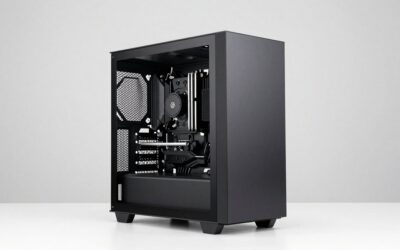
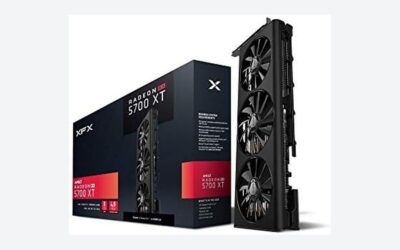
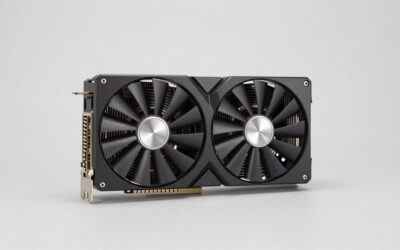
Case clearance. The GIGABYTE Gaming OC is a triple-fan card measuring just under 340 mm in length. Check your case before ordering.
Resale of the 7800 XT. On the used market, 7800 XT cards are settling in the $320 to $380 range as of early 2026. If you can sell yours at the upper end, your net cost drops to roughly $420 to $480, which changes the value equation significantly.
Worth It For
Players who run 1440p or 4K with ray tracing enabled. Content creators who need faster AV1 encode times. Users on a current-gen platform (Ryzen 7000/9000 or Intel 13th/14th gen) where the CPU will not cap gains. Anyone whose 7800 XT is now dropping below 60 fps in their most-played titles even at medium settings.
Not Worth It For
1080p gamers who are already hitting high refresh rates. Anyone still on a pre-Zen 3 or 11th-gen Intel CPU that will bottleneck the card. Users whose 7800 XT already clears their frame targets comfortably. If you are purely a raster gamer at medium ray settings, the jump is too incremental to justify $300+ of net cost after resale.
Alternatives
Wait for RDNA 4 non-XT SKUs. Rumors point to cheaper RDNA 4 cards that may undercut the 9070 XT by a significant margin if you are patient.
RTX 5070 Ti. The closest NVIDIA competitor sits in a similar price bracket with better DLSS and a larger frame generation ecosystem, though it carries 16 GB of GDDR7 versus GDDR6 here.
Hold and sell at peak. If your 7800 XT still performs adequately, listing it later in the cycle when supply tightens may net you a higher resale, reducing your future upgrade cost.
FAQ
Do I need a new power supply for the RX 9070 XT?
Not always, but AMD recommends 750W for the 9070 XT compared to 700W for the 7800 XT. If your current unit is a quality 700W or higher, you are likely fine. If you are running a 600W unit or something of questionable build quality, budget for a replacement.
Will my current monitor still be relevant?
Yes. The RX 9070 XT drives 1440p 165 Hz and 4K 120 Hz displays without difficulty. The upgrade benefits are resolution-agnostic in the sense that higher pixel counts amplify the GPU’s clock advantage.
Is PCIe 5.0 a meaningful upgrade over PCIe 4.0 for this card?
No. Reviewers across TechPowerUp, Gamers Nexus, and Hardware Unboxed found negligible differences between PCIe 4.0 and 5.0 bandwidth for a card in this performance tier. The PCIe 5.0 interface is future-proofing, not a current bottleneck.
Should I sell my 7800 XT before or after buying the 9070 XT?
Sell after, but list it within the first two weeks of ownership while demand is still elevated and the card is fresh in buyers’ minds. Expect the price to soften as RDNA 4 supply stabilizes through the rest of 2026.
Sources and Methodology
All performance ranges cited in this article reflect approximate averages compiled from launch reviews published by TechPowerUp, Tom’s Hardware, Gamers Nexus, Hardware Unboxed, and TechSpot. No benchmarks were conducted in-house. Figures are presented as ranges to account for title-to-title variance and platform differences reported across those outlets.