
The newer RTX 4070 Super is not faster than the RTX 3090 Ti: the two are roughly tied at 1080p, the 3090 Ti leads modestly at 1440p and by around 20-25% at 4K, and it has double the VRAM, so the 3090 Ti is the pick for 4K and for VRAM-heavy work if your PSU and case can handle a 450 W, 3-slot card, while the RTX 4070 Super is the better choice for most 1440p gamers thanks to half the power draw, a far smaller footprint and DLSS frame generation.
This matchup sets NVIDIA’s last Ampere flagship against a mid-range Ada Lovelace refresh. The RTX 3090 Ti launched in January 2022 at $1,999, the fastest consumer card of its generation. The RTX 4070 Super followed in January 2024 at $599. Both are now previous-generation parts behind the RTX 50 series, and both are mostly found used or as remaining stock, which is why buyers compare a used flagship to a newer mid-range card at overlapping prices.

ZOTAC Gaming GeForce RTX™ 3090 Ti AMP Extreme Holo 24GB GDDR6X 384-bit 21 Gbps PCIE 4.0 Gaming Graphics Card, HoloBlack, IceStorm 2.0 Advanced Cooling, Spectra 2.0 RGB Lighting, ZT-A30910B-10P
Included for 'RTX 3090 Ti vs RTX 4070 Super: Which Graphics Card Should You Buy?' because the listing specifies HoloBlack and IceStorm 2.0 Advanced Cooling, details this guide uses to compare options.
View on Amazon
Nvidia RTX 3090 TI Founders Edition (Renewed) Founder Video Graphics Card
Included for 'RTX 3090 Ti vs RTX 4070 Super: Which Graphics Card Should You Buy?' as a relevant option in this category; details come from the product listing.
View on Amazon
GIGABYTE GeForce RTX 4070 Super WINDFORCE OC 12G Graphics Card, 3X WINDFORCE Fans, 12GB 192-bit GDDR6X, GV-N407SWF3OC-12GD Video Card
Included for 'RTX 3090 Ti vs RTX 4070 Super: Which Graphics Card Should You Buy?' because the listing specifies 3X WINDFORCE Fans and 12GB 192-bit GDDR6X, details this guide uses to compare options.
View on Amazon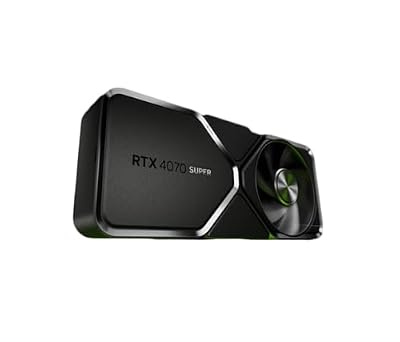
NVIDIA - GeForce RTX 4070 Super 12GB GDDR6X Graphics Card - Titanium/Black
Included for 'RTX 3090 Ti vs RTX 4070 Super: Which Graphics Card Should You Buy?' because the listing specifies GeForce RTX 4070 Super 12GB GDDR6X Graphics Card and Titanium/Black, details this guide uses to compare options.
View on AmazonQuick answer: Our top pick in 2026 is the Architecture — our #1 rated choice. See the full ranked comparison, alternatives and buying advice below.
Spec Sheet
| Spec | RTX 3090 Ti | RTX 4070 Super |
|---|---|---|
| Architecture | Ampere | Ada Lovelace |
| Release date | 27 January 2022 | 8 January 2024 |
| Launch MSRP | $1,999 | $599 |
| CUDA cores | 10752 | 7168 |
| Boost clock | 1860 MHz | 2475 MHz |
| Process | 8 nm | 5 nm |
| TDP | 450 W | 220 W |
| Memory | 24 GB GDDR6X | 12 GB GDDR6X |
| Memory bus | 384-bit | 192-bit |
| Bandwidth | 1.01 TB/s | 504.2 GB/s |
| L2 cache | 6 MB | 48 MB |
| Interface | PCIe 4.0 x16 | PCIe 4.0 x16 |
| Power connectors | 1x 16-pin | 1x 16-pin |
| Length / width | 336 mm, 3-slot | 267 mm, 2-slot |
| Display outputs | 1x HDMI 2.1, 3x DP 1.4a | 1x HDMI 2.1, 3x DP 1.4a |
The 3090 Ti has twice the memory, twice the bus width and twice the bandwidth. The 4070 Super answers with an eight-times-larger L2 cache, much higher clocks and a far more efficient 5 nm process. That cache is why the newer card keeps pace at lower resolutions; the raw bandwidth is why the old flagship pulls away at 4K.
Performance by Resolution
Direct head-to-head reviews of this exact pair are scarce, so the picture comes from combining sources. Aggregated benchmark data shows the two essentially tied at 1080p, the RTX 3090 Ti about 7% ahead at 1440p, and about 25% ahead at 4K, with single games such as The Witcher 3 at 4K reaching around 30%. That pattern matches TechPowerUp’s placement of the 4070 Super near the non-Ti RTX 3090 at 1440p, with the 3090 Ti sitting a step above.
- 1080p: a tie in practice; both cards are often CPU-limited.
- 1440p: the 3090 Ti leads by roughly 5-10%. A game at around 120 FPS on the 4070 Super might reach about 128-132 FPS on the 3090 Ti, a difference few players notice. Figures vary with settings, CPU and patch.
- 4K: the 3090 Ti is roughly 20-25% faster, which can be the difference between 50 and 60+ FPS in demanding games.
Ray Tracing, DLSS and Frame Generation
In ray-traced games, the 4070 Super’s newer RT cores close much of the hardware gap, and at 1440p the two are broadly comparable, with the 3090 Ti keeping an edge at 4K. The software stack is where the 4070 Super gains a meaningful practical advantage:
- DLSS super resolution and ray reconstruction, including the DLSS 4 transformer model, run on both cards.
- DLSS Frame Generation is RTX 40 and newer, so only the 4070 Super has it. In supported games it can push perceived smoothness well past what the 3090 Ti renders natively.
- Multi Frame Generation is RTX 50 only and available on neither card.
- The 3090 Ti can still use FSR 3 frame generation in games that include it.
With frame generation enabled in supported titles, the 4070 Super often delivers higher displayed frame rates than the 3090 Ti at 1440p, though with slightly higher input latency than native rendering. Reflex helps offset that.
24 GB vs 12 GB
For gaming at 1440p, 12 GB is enough for nearly every current title. At 4K with maximum textures, ray tracing and frame generation together, a few games approach or exceed 12 GB, and that is where the 3090 Ti’s 24 GB keeps frame times stable. Outside gaming, 24 GB is a major asset for local AI models, 3D rendering and large video projects, which is also why used 3090-class cards hold their value. Anyone who runs local language models or heavy creative workloads should weigh the 24 GB above any gaming difference.
Power, PSU and the Size Problem
This is the 3090 Ti’s biggest drawback. Using GPU TDP plus CPU plus about 150 W headroom with a 150 W high-end CPU:
- RTX 3090 Ti: 450 + 150 + 150 = 750 W, and because this card is known for large transient spikes, a quality 850-1000 W unit is the safer target.
- RTX 4070 Super: 220 + 150 + 150 = 520 W, so a quality 650 W unit is comfortable.
Both reference specs use a single 16-pin (12VHPWR-style) connector, so a modern ATX 3.x PSU or the supplied adapter is needed; make sure the connector is fully seated. Physically, the 3090 Ti reference listing is 336 mm long and 3 slots thick, and many partner models are larger still. Plenty of mid-tower cases cannot fit it, and it needs strong airflow to remove 450 W of heat. The 4070 Super, at 267 mm and 2 slots, fits most mid-tower and many small-form-factor cases.
Running cost also differs. A 230 W gap over 20 hours of gaming per week adds up to roughly 240 kWh per year, which is noticeable on high electricity tariffs.
Price and Value Math
At launch, the comparison is lopsided. With the 4070 Super as 100 and the 3090 Ti about 107 at 1440p:
- RTX 3090 Ti: $1,999 / 107 = about $18.70 per point.
- RTX 4070 Super: $599 / 100 = about $6.00 per point.
Used prices narrow but do not erase the gap. Used RTX 3090 Ti cards are frequently $700-$900, propped up by demand from local-AI users, while used 4070 Super cards commonly sit around $450-$550. For 1440p gaming alone, paying a large premium for roughly 7% more performance plus higher power bills rarely makes sense. For 4K and 24 GB workloads, the 3090 Ti’s premium buys real capability.
Used 3090 Ti cards are high-wattage boards that may have seen heavy compute use, so check memory temperatures, fan health and the condition of the 16-pin connector before buying.
Pick X If, Pick Y If
| Use case | Better card |
|---|---|
| 1440p gaming, high refresh | RTX 4070 Super |
| 4K gaming at high settings | RTX 3090 Ti |
| Local AI, 3D rendering, large video projects | RTX 3090 Ti (24 GB) |
| 650-750 W PSU or mid-size case | RTX 4070 Super |
| Games with DLSS Frame Generation support | RTX 4070 Super |
| Want current features and warranty | Consider an RTX 5070 or RTX 5070 Ti instead |
RTX 3090 Ti owners have no reason to switch to an RTX 4070 Super for performance; it would be a sidegrade at 1440p and a downgrade at 4K. The only gains would be lower power, a smaller card and frame generation.
Frequently Asked Questions
Is the RTX 4070 Super faster than the RTX 3090 Ti?
No. They are about even at 1080p, the 3090 Ti is roughly 5-10% faster at 1440p, and it is around 20-25% faster at 4K according to aggregated benchmark data. The 4070 Super can show higher frame rates only with DLSS frame generation enabled.
What PSU does the RTX 3090 Ti need?
A quality 850-1000 W unit is the safe target. The card has a 450 W TDP and is known for brief power spikes above that. It uses a 16-pin connector, so an ATX 3.x PSU or the supplied adapter is required.
Is 12 GB of VRAM on the RTX 4070 Super enough?
For 1440p gaming it is enough in almost all current games. At 4K with maximum settings and frame generation, a few titles approach the limit, and for AI or heavy creative work the 3090 Ti’s 24 GB is far more useful.
Does the RTX 3090 Ti support DLSS 4?
It supports the DLSS 4 transformer model for super resolution and ray reconstruction. It does not support DLSS Frame Generation, which requires RTX 40 or newer, or Multi Frame Generation, which requires RTX 50.
Should I upgrade from an RTX 3090 Ti to an RTX 4070 Super?
Not for performance. The 4070 Super is a sidegrade at 1440p and slower at 4K. A meaningful upgrade from a 3090 Ti starts at an RTX 5070 Ti or higher.
Ready to decide? Our #1 pick for 2026 is the Architecture.
Live price & availability on Amazon.









