
Pick the RX 6800 XT if you game at 1440p high refresh or 4K and can afford the price gap, because it is roughly 12-20% faster; pick the RX 6800 if you want almost the same 16 GB experience with 50 W less power draw, an easier PSU requirement and better value per dollar. Both share the same memory system and feature set, so this is purely a question of how much extra speed is worth to you.
AMD launched both cards on 28 October 2020 on the same Navi 21 silicon. The RX 6800 is a cut-down version with fewer compute units and lower clocks, and it launched at $579 against $649 for the XT. Because they share 16 GB of GDDR6, a 256-bit bus and 128 MB of Infinity Cache, the differences are cleaner than in most GPU comparisons.

GIGABYTE AORUS Radeon RX 6800 Master 16G Graphics Card, MAX-Covered Cooling, 16GB 256-bit GDDR6, GV-R68AORUS M-16GD Video Card
Included for 'RX 6800 vs RX 6800 XT: Key Differences Explained' because the listing specifies MAX-Covered Cooling and 16GB 256-bit GDDR6, details this guide uses to compare options.
View on Amazon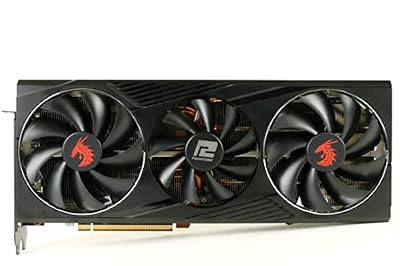
PowerColor Red Dragon AMD Radeon RX 6800 Gaming Graphics Card with 16GB GDDR6 Memory, Powered by AMD RDNA 2, Raytracing, PCI Express 4.0, HDMI 2.1, AMD Infinity Cache (Renewed)
Included for 'RX 6800 vs RX 6800 XT: Key Differences Explained' because the listing specifies Powered by AMD RDNA 2 and Raytracing, details this guide uses to compare options.
View on Amazon
GIGABYTE AMD Radeon RX 6800 XT Gaming OC 16G Graphics Card, 16GB of GDDR6 Memory, Powered by AMD RDNA 2, HDMI 2.1, WINDFORCE 3X Cooling System, GV-R68XTGAMING OC-16GD (Renewed)
Included for 'RX 6800 vs RX 6800 XT: Key Differences Explained' because the listing specifies 16GB of GDDR6 Memory and Powered by AMD RDNA 2, details this guide uses to compare options.
View on AmazonPowerColor AMD Radeon RX 6800 XT Gaming Graphics Card with 16GB GDDR6, Raytracing, PCIe 4.0, HDMI 2.1, AMD Infinity Cache (Renewed)
Included for 'RX 6800 vs RX 6800 XT: Key Differences Explained' because the listing specifies Raytracing and PCIe 4.0, details this guide uses to compare options.
View on AmazonQuick answer: Our top pick in 2026 is the Architecture — our #1 rated choice. See the full ranked comparison, alternatives and buying advice below.
Same Chip, Different Configuration
| Specification | Radeon RX 6800 | Radeon RX 6800 XT |
|---|---|---|
| Architecture | RDNA 2.0 | RDNA 2.0 |
| Release date | 28 October 2020 | 28 October 2020 |
| Launch MSRP | $579 | $649 |
| Stream processors | 3840 | 4608 |
| Boost clock | 2105 MHz | 2250 MHz |
| Process | 7 nm | 7 nm |
| TDP | 250 W | 300 W |
| VRAM | 16 GB GDDR6 | 16 GB GDDR6 |
| Memory bus / bandwidth | 256-bit / 512.0 GB/s | 256-bit / 512.0 GB/s |
| Cache | 4 MB L2 + 128 MB Infinity Cache | 4 MB L2 + 128 MB Infinity Cache |
| Interface | PCIe 4.0 x16 | PCIe 4.0 x16 |
| Power connectors | 2x 8-pin | 2x 8-pin |
| Length / width (reference) | 267 mm, 2-slot | 267 mm, 2-slot |
| Display outputs | 1x HDMI, 2x DisplayPort, 1x USB Type-C | 1x HDMI, 2x DisplayPort, 1x USB Type-C |
The XT has 20% more stream processors and a higher boost clock. Memory is identical, which is why the real-world gap is smaller than the shader difference suggests: in memory-limited scenes both cards are fed the same way.
Performance Gap in Games
Across published reviews and benchmark aggregates, the RX 6800 XT is typically 12-20% faster than the RX 6800. Larger multi-game comparisons tend to land around 15-18%, and per-game differences range from around 10% in lighter or CPU-bound titles to over 20% in GPU-heavy games. At launch, PCWorld found the RX 6800 about 13% faster than the RTX 3070 while the RX 6800 XT traded blows with the RTX 3080, which illustrates the class difference between them.
Rough expectations, varying with settings, CPU and patch:
- 1080p: both are often CPU-limited, especially with mid-range processors, so the gap shrinks to single digits in many games. The XT is overkill for most 1080p 60 Hz setups.
- 1440p: the sweet spot for both. Demanding AAA titles at high settings commonly run in an 80-120 fps range on the XT, with the RX 6800 a step behind.
- 4K: the XT’s lead is most consistent here. Many games land in a 50-70 fps band on the XT at high settings, with the RX 6800 needing upscaling or lower settings more often.
Ray Tracing
Both use RDNA 2’s first-generation ray accelerators, scaling with compute unit count. The XT is faster in ray tracing by a similar proportion to its raster lead, but both trail Nvidia’s RTX 30-series counterparts by a wide margin with RT enabled; PCWorld measured both around 38-40% behind their GeForce rivals at 1440p with ray tracing on. Light RT effects at 1440p with FSR are practical; heavy ray tracing or path tracing is not a strength of either.
Upscaling and Frame Generation
Features are identical:
- FSR 2 and FSR 3 upscaling, plus FSR 3 frame generation in supported games.
- AMD Fluid Motion Frames (AFMF) at the driver level, which adds frame generation to many DirectX 11 and 12 games without game integration.
- No official FSR 4 support; AMD’s machine-learning upscaler targets RX 9000 (RDNA 4) cards.
- XeSS also runs on both through its DP4a path in games that offer it.
VRAM: A Tie at 16 GB
Neither card has to worry about VRAM in current games. 16 GB covers 1440p ultra and most 4K scenarios with room to spare. This is the main reason both cards remain attractive used buys in 2026, ahead of several newer 8 GB cards. If you plan to keep the card several years or use high-resolution texture packs, either will hold up equally well on memory; the XT just has more shader power to use it.
Power and PSU: The Real Difference
The 50 W gap is the most practical trade-off. Both use two 8-pin connectors, but the XT’s 300 W rating calls for a stronger power supply. PSU sizing with a typical gaming CPU:
- RX 6800: 250 W + ~125 W CPU + ~150 W headroom = about 525 W, so a quality 600-650 W unit.
- RX 6800 XT: 300 W + ~125 W + ~150 W = about 575 W, so a quality 650-750 W unit, especially for factory-overclocked models.
Lower power also means less heat and quieter cooling. The RX 6800 is the better fit for compact cases or systems with marginal airflow. Reference designs share the same 267 mm, dual-slot footprint, but many partner RX 6800 XT cards are 2.5- to 3-slot designs over 300 mm, so measure clearance for the specific model.
Value: Running the Numbers
Using launch MSRP and an index of RX 6800 XT = 100 and RX 6800 = about 85 (a midpoint of the 12-20% gap):
- RX 6800: $579 / 85 = about $6.81 per performance point
- RX 6800 XT: $649 / 100 = about $6.49 per performance point
At launch MSRP the XT was slightly better value, because its 12% price premium bought around 15-18% more performance. The used market changes that. A used RX 6800 usually sells for roughly $250-$320 and a used RX 6800 XT for roughly $300-$370. If the XT costs more than about 18% extra, the RX 6800 becomes the better deal per frame.
Decision Guide by Resolution and Budget
| Your setup | Better choice | Why |
|---|---|---|
| 1080p, mid-range CPU | RX 6800 | CPU limits hide most of the XT’s lead |
| 1440p 144 Hz, competitive budget | RX 6800 | Best value, still very fast |
| 1440p high refresh with high-end CPU | RX 6800 XT | Extra 15%+ shows up clearly |
| 4K gaming | RX 6800 XT | Largest consistent lead at high resolution |
| 550-600 W PSU or small case | RX 6800 | 50 W less heat and load |
| Price gap above ~18% | RX 6800 | Better cost per frame |
Before buying either used, compare against current cards such as the Radeon RX 9070 and RX 9070 XT, which add FSR 4, much stronger ray tracing and full warranty, and the RTX 5070 for buyers who want DLSS Multi Frame Generation.
Overclocking and Tuning Headroom
Because both cards use the same Navi 21 chip and the same memory system, tuning can narrow the gap a little. An RX 6800 with a mild overclock and a raised power limit in AMD’s Adrenalin software can close part of the distance to a stock RX 6800 XT, although it cannot make up for the 20% shader deficit. Going the other way, undervolting is popular on both cards: lowering voltage slightly often keeps clocks nearly the same while cutting power and heat, which is especially useful on the hotter-running XT in compact cases.
Partner cards also vary more than the specification table suggests. Factory-overclocked RX 6800 XT models typically draw more than the 300 W reference rating, and premium RX 6800 models can land closer to an entry-level XT. When comparing two specific used listings, the exact model matters about as much as the XT badge.
Used-Market Notes
Both cards were popular for cryptocurrency mining in 2021. Ask for load temperatures, especially memory junction and hotspot readings, and listen for fan bearing noise. Thermal paste on five-year-old cards may need replacing, which can be a simple fix that restores cooling performance. Partner models with larger coolers usually run cooler and quieter than reference designs.
Frequently Asked Questions
How much faster is the RX 6800 XT than the RX 6800?
Typically around 12-20% depending on game and resolution. The gap is smallest at 1080p, where CPU limits are common, and largest at 4K. Many multi-game comparisons put it around 15-18%.
Is the RX 6800 enough for 4K gaming?
It can run many games at 4K with medium-high settings or with FSR upscaling. The RX 6800 XT is the more comfortable 4K card. Both have 16 GB of VRAM, so memory is not the limiting factor.
What PSU do I need for an RX 6800 XT?
A quality 650-750 W power supply with two 8-pin PCIe connectors is the safe choice. The RX 6800 works well with a quality 600-650 W unit.
Do the RX 6800 and RX 6800 XT support FSR 4?
Not officially. FSR 4 targets Radeon RX 9000 cards. Both RDNA 2 cards support FSR 2, FSR 3 with frame generation, and AMD Fluid Motion Frames.
Is the RX 6800 still a good buy in 2026?
At the right used price, yes. Its 16 GB of VRAM and strong 1440p performance hold up well against newer 8 GB cards. Ray tracing and upscaling quality are its weak spots compared with current generations.
Ready to decide? Our #1 pick for 2026 is the Architecture.
Live price & availability on Amazon.


