
The RX 7800 XT is the better graphics card for a 1440p build: it is roughly 20-35% faster than the RTX 2080 Ti in rasterized games, has 16 GB instead of 11 GB of VRAM, supports AMD’s FSR 4.1 upscaling, and is five years newer. The RTX 2080 Ti only makes sense as a used bargain priced well below a 7800 XT, or for buyers who specifically want DLSS support in older games or CUDA for creative software.
The two cards share some surprising similarities: both have a 267 mm reference length, a 2-slot cooler, two 8-pin power connectors and around 600 GB/s of memory bandwidth. Yet they come from very different eras, and that shows in performance, features and how they will age.

EVGA GeForce RTX 2080 Ti Black Edition Gaming, 11GB GDDR6, Dual HDB Fans & RGB LED Graphics Card 11G-P4-2281-KR (Renewed)
Included for 'RTX 2080 Ti vs RX 7800 XT: Key Differences Explained' because the listing specifies 11GB GDDR6, details this guide uses to compare options.
View on Amazon
GIGABYTE GeForce RTX 2080 Ti Gaming OC 11GB Graphic Cards GV-N208TGAMING OC-11GC (Renewed)
Included for 'RTX 2080 Ti vs RX 7800 XT: Key Differences Explained' as a relevant option in this category; details come from the product listing.
View on Amazon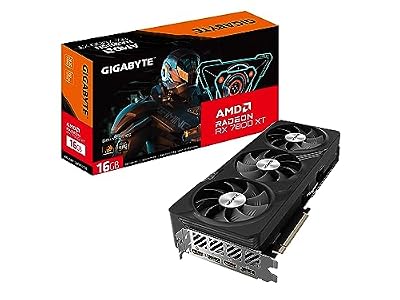
Gigabyte Radeon RX 7800 XT Gaming OC 16G Graphics Card, 3X WINDFORCE Fans 16GB 256-bit GDDR6, GV-R78XTGAMING OC-16GD Video Card
Included for 'RTX 2080 Ti vs RX 7800 XT: Key Differences Explained' because the listing specifies 3X WINDFORCE Fans 16GB 256-bit GDDR6 and GV-R78XTGAMING OC-16GD Video Card, details this guide uses to compare options.
View on Amazon
PowerColor Fighter AMD Radeon RX 7800 XT 16GB GDDR6 Graphics Card
Included for 'RTX 2080 Ti vs RX 7800 XT: Key Differences Explained' as a relevant option in this category; details come from the product listing.
View on AmazonQuick answer: Our top pick in 2026 is the Architecture — our #1 rated choice. See the full ranked comparison, alternatives and buying advice below.
Key Specifications
| Spec | RTX 2080 Ti | RX 7800 XT |
|---|---|---|
| Architecture | Turing | RDNA 3.0 |
| Release date | 20 September 2018 | 25 August 2023 |
| Launch MSRP | $999 | $499 |
| Shaders / CUDA cores | 4352 | 3840 |
| Boost clock | 1545 MHz | 2430 MHz |
| Process | 12 nm | 5 nm |
| TDP | 250 W | 263 W |
| Memory | 11 GB GDDR6 | 16 GB GDDR6 |
| Bus width | 352-bit | 256-bit |
| Bandwidth | 616.0 GB/s | 624.1 GB/s |
| Cache | 5.5 MB L2 | 4 MB L2 + 64 MB L3 |
| Interface | PCIe 3.0 x16 | PCIe 4.0 x16 |
| Power connectors | 2x 8-pin | 2x 8-pin |
| Size | 267 mm, 2-slot | 267 mm, 2-slot |
| Outputs | 1x HDMI 2.0, 3x DP 1.4a, 1x USB Type-C | 1x HDMI 2.1a, 3x DP 2.1 |
Raw bandwidth is a dead heat, but the 7800 XT adds a 64 MB Infinity Cache and runs at far higher clocks on a 5 nm process. That combination, plus a much newer architecture, is why the AMD card pulls ahead despite having fewer shader units on paper.
Benchmarks Summary
Tom’s Hardware’s RX 7800 XT launch review placed it about 16% ahead of the RTX 3070 Ti and roughly 20% ahead of the RTX 2080 Ti at 1440p ultra. TechPowerUp’s relative performance charts show a somewhat larger gap, which puts the realistic range at about 20-35% in favor of the RX 7800 XT in rasterized games. The lead grows at 4K and narrows at 1080p, where both cards can become CPU-limited.
For a sense of scale, a modern AAA title that runs around 55-65 FPS on the 2080 Ti at 1440p high often runs around 70-85 FPS on the 7800 XT. These are approximate ranges that vary with settings, CPU and game patches.
Ray tracing
Ray tracing is where the old Nvidia flagship holds on best. The 2080 Ti’s first-generation RT cores are slower than Ada or Ampere designs, and RDNA 3’s ray accelerators are also behind Nvidia’s newer cards. Published comparisons generally put the 7800 XT roughly level with or modestly ahead of the 2080 Ti in typical ray-traced games, thanks to its higher raw speed. In heavy path-traced modes, neither card is a good fit.
Upscaling and frame generation
- RTX 2080 Ti: DLSS 4 Super Resolution with the transformer model and DLSS Ray Reconstruction. No DLSS Frame Generation; FSR 3 frame generation is available in supporting games.
- RX 7800 XT: official FSR 4.1 ML upscaling since mid-2026 through the Adrenalin driver, for games with FSR 3.1 support, plus FSR 3 frame generation and AMD Fluid Motion Frames at the driver level.
DLSS still appears in more games, especially older ones, but the image-quality gap that once favored the 2080 Ti has largely closed in titles where FSR 4.1 is available.
VRAM Headroom: 11 GB vs 16 GB
| Scenario | Typical demand | RTX 2080 Ti (11 GB) | RX 7800 XT (16 GB) |
|---|---|---|---|
| 1440p high | about 8-11 GB | Usually fine | Comfortable |
| 1440p ultra + ray tracing | about 10-13 GB | Sometimes over budget | Comfortable |
| 4K high with upscaling | about 11-15 GB | Often tight | Usually fine |
The 2080 Ti’s 11 GB is still respectable, but the 7800 XT gives clear headroom for high-texture settings over the next few years, which matters for a card intended to last.
Power, PSU and Physical Fit
The two cards are rated within 13 W of each other. Sizing formula: GPU TDP + CPU power + about 150 W headroom.
- RTX 2080 Ti + 125 W CPU: 250 + 125 + 150 = about 525 W
- RX 7800 XT + 125 W CPU: 263 + 125 + 150 = about 538 W
A quality 650 W PSU with two separate 8-pin PCIe cables is the recommended baseline for either card. Both reference designs are 267 mm and 2-slot, but many partner RX 7800 XT models are triple-fan cards past 300 mm and up to 2.5-3 slots thick, so check your case’s GPU clearance.
Motherboard and Platform Notes
The RTX 2080 Ti is a PCIe 3.0 x16 card, so an older platform costs it nothing. The RX 7800 XT is PCIe 4.0 x16 and loses very little on a PCIe 3.0 x16 slot. AMD’s Smart Access Memory (Resizable BAR) can add a few percent on supported platforms but is not required. Pair the 7800 XT with at least a Ryzen 5 5600 or Intel 12th Gen-class CPU to avoid CPU limits at 1440p.
Cost Per Performance
Index the 2080 Ti at 100 and the 7800 XT at about 127 (middle of the review-based range):
- RTX 2080 Ti at launch: $999 / 100 = about $9.99 per performance point
- RX 7800 XT at launch: $499 / 127 = about $3.93 per performance point
Used prices tell a more relevant story. A used RTX 2080 Ti usually sells for around $250-$330, while a used RX 7800 XT typically runs around $350-$420. That makes them closer on cost per frame than launch prices suggest: roughly $2.90 vs $3.00 per performance point at mid-range used prices. With costs that close, the 7800 XT’s extra VRAM, newer features and longer remaining life make it the better buy unless the 2080 Ti is unusually cheap.
Recommendation Table
| Situation | Pick | Reason |
|---|---|---|
| 1440p high settings, keeping the card 3+ years | RX 7800 XT | Faster and 16 GB |
| 4K with upscaling | RX 7800 XT | More VRAM, bigger lead at 4K |
| Tight budget, 1080p/1440p, cheap used deal | RTX 2080 Ti | Strong value if priced low |
| CUDA-based software, Blender OptiX | RTX 2080 Ti | Nvidia software ecosystem |
| Older game library with DLSS but no FSR 3.1 | RTX 2080 Ti | Broader DLSS coverage |
| Streaming with AV1 | RX 7800 XT | Hardware AV1 encode |
Buyers shopping new in late 2026 should also look at the RX 9070 and RTX 5070, which sit in a similar or higher performance class with newer ray tracing hardware and upscaling.
Noise, Heat and Everyday Behavior
Board power ratings are similar, but the way each card handles that power differs. The RTX 2080 Ti Founders Edition used a dual-axial cooler that exhausts heat into the case, and many partner designs from 2018-2019 are now running on aging fans and dried thermal paste. A used 2080 Ti that runs hot or loud can often be improved with new thermal paste and pads, but that is extra work and risk for the buyer.
Partner RX 7800 XT cards are generally newer, larger triple-fan designs that run cooler and quieter at the same power level. RDNA 3 cards did have higher idle and multi-monitor power draw at launch, though AMD’s later drivers reduced it considerably. If you run two or more high-refresh monitors, read recent driver release notes for your specific setup.
Both cards benefit from good case airflow. With either one, a case with at least two intake fans and one exhaust fan keeps GPU temperatures and fan noise in a comfortable range during long gaming sessions.
Frequently Asked Questions
Is the RX 7800 XT faster than the RTX 2080 Ti?
Yes. Tom’s Hardware measured about a 20% lead at 1440p, and other review data shows up to roughly 35%. The gap is largest at 4K.
Which is better for ray tracing?
They are fairly close in typical ray-traced games, with the RX 7800 XT often slightly ahead because of its higher raw speed. In heavy path tracing both struggle. Neither is a strong choice if ray tracing is the top priority.
Does the RTX 2080 Ti still get driver updates?
Yes. Nvidia’s main driver branch continues to support RTX 20-series cards, including new DLSS features that apply to Turing. Support for these cards is expected to continue for some time but will eventually end.
What PSU do I need for either card?
A quality 650 W unit with two dedicated 8-pin PCIe cables is a safe baseline. Both cards draw roughly 250-263 W. Avoid daisy-chained single cables on older or budget supplies.
Is a used RTX 2080 Ti a good buy in 2026?
It can be at a low enough price, since it still performs at roughly RTX 3070 level. It has no remaining warranty and is six to eight years old. Test it under load and check temperatures before buying.
Ready to decide? Our #1 pick for 2026 is the Architecture.
Live price & availability on Amazon.


