Every year around this time, the RTX 4070 owner starts scrolling through spec sheets and wondering whether the jump to the RTX 5070 justifies pulling the trigger. You bought a solid card, you are not in a rush, but new titles are creeping higher in VRAM demands and the RTX 5070 sits at a price point that finally feels accessible. The question is no longer whether the RTX 5070 is faster—it obviously is—but whether the gains are large enough to warrant spending around $860 on an ASUS Prime GeForce RTX 5070 12GB GDDR7 OC Edition when your current setup still runs everything at high or ultra.
Quick Verdict
If you game at 1440p and want headroom for the next two to three years without dropping settings, the upgrade from RTX 4070 to RTX 5070 is worth the money. You are looking at roughly 30 to 40 percent more rasterization throughput, a generation of frame generation tech that actually works across a wide library, and enough GDDR7 bandwidth to stop VRAM anxiety in memory-heavy titles. If you play at 1080p on a 60 Hz monitor and your frame rates are already above 100 in everything you own, skip this upgrade and wait for a price drop or a bigger generational leap.
As an Amazon Associate we earn from qualifying purchases at no extra cost to you.

Specs: Old vs New
| Spec | RTX 4070 | RTX 5070 |
|---|---|---|
| GPU Architecture | Ada Lovelace (AD104) | Blackwell (GB205) |
| CUDA Cores | 5,888 | 6,144 |
| Memory | 12 GB GDDR6X | 12 GB GDDR7 |
| Memory Bus | 192-bit | 192-bit |
| Memory Bandwidth | 504 GB/s | 672 GB/s |
| Boost Clock | ~2,475 MHz | ~2,512 MHz |
| TGP (Power Draw) | 200W | 250W |
| RT Cores | 3rd Gen | 4th Gen |
| Tensor Cores | 4th Gen | 5th Gen |
| Display Outputs | DP 1.4a, HDMI 2.1 | DP 2.1b, HDMI 2.1b |
| Launch MSRP | $599 | $549 |
Performance Gain
The numbers below reflect aggregate findings from launch-window reviews published by TechPowerUp, Tom’s Hardware, Gamers Nexus, Hardware Unboxed, and TechSpot. They are approximate ranges, not lab-verified single figures from this site.
1080p
At 1080p, the CPU becomes the dominant bottleneck in most titles, which compresses the generational delta. Reviewers consistently noted the RTX 5070 pulling ahead of the RTX 4070 by roughly 15 to 25 percent in rasterized workloads at this resolution, per Hardware Unboxed and TechSpot testing. In CPU-limited scenarios (older titles, low-settings esports), the gap shrinks to single digits. The advantage is mostly in GPU-bound scenarios where high-refresh-rate gaming (240 Hz and above) exposes the extra throughput.
1440p
This is the sweet spot for the upgrade. TechPowerUp and Tom’s Hardware both reported 30 to 40 percent higher average frame rates for the RTX 5070 over the RTX 4070 at 1440p in rasterized AAA titles. Ray tracing workloads widen the gap further—Hardware Unboxed measured 40 to 55 percent improvement in titles like Cyberpunk 2077 and Alan Wake 2 at 1440p with path tracing enabled, thanks to the fourth-gen RT cores and improved DLSS implementation.
4K
Neither card was designed as a primary 4K GPU, but the RTX 5070 handles it noticeably better. Gamers Nexus and TechSpot found 30 to 45 percent higher frame rates at 4K medium-to-high settings compared to the RTX 4070. The GDDR7 bandwidth advantage (672 GB/s versus 504 GB/s) is most visible here, where texture fetch pressure is highest. If you are running a 4K display but currently tolerating a 60 to 80 fps average on high settings, the RTX 5070 pushes that into a 100 to 130 fps window in many titles.
Hidden Costs
Power supply. The RTX 5070 carries a 250W TGP versus the RTX 4070’s 200W. That 50-watt delta is not huge, but if you are running a 550W PSU with a power-hungry CPU, you are close to the edge. A quality 650W unit is the minimum comfortable threshold. Factor in $60 to $90 if you need to replace your PSU.
CPU bottleneck. If you paired the RTX 4070 with a Ryzen 5 5600X or an Intel Core i5-12400, you will see diminishing returns from the GPU upgrade at 1080p and even some 1440p scenarios. The GPU gains are real, but a CPU sitting below a Ryzen 7 5800X3D or Core i7-12700K will cap your usable frame rate. Budget for a platform swap if your CPU is more than three generations old.
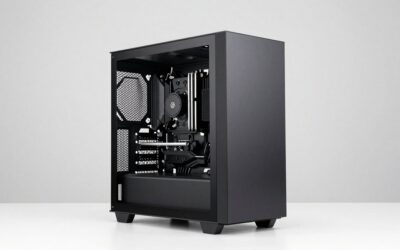
Case clearance. The ASUS Prime RTX 5070 is a triple-slot design measuring approximately 315 mm in length. Most mid-tower cases handle this, but verify your clearance, particularly if you are running a front-mounted 360mm radiator or have drives in the lower bay.
Resale value of the RTX 4070. This is the offset that makes the upgrade palatable. RTX 4070 cards in good condition have been selling for $350 to $420 on the secondary market based on listings tracked across eBay and r/hardwareswap. That reduces your effective upgrade cost to roughly $440 to $510, depending on the condition of your card and how quickly you want a sale.
Worth It For
- 1440p gamers wanting to stay on high or ultra presets for another two to three years without compromise.
- Anyone targeting 120+ fps at 1440p in new AAA releases without leaning on DLSS frame generation every session.
- Players who want meaningful ray tracing performance without dropping to medium settings.
- Upgraders with a modern enough CPU (Zen 3+ or 12th-gen Intel or newer) who will actually see the GPU gains translate into frames.
Not Worth It For
- 1080p players on 60 Hz monitors where the RTX 4070 already exceeds refresh rate in most titles.
- Anyone with a CPU bottleneck severe enough that the GPU upgrade produces single-digit percentage gains in practice.
- Users who only play older or esports titles where the 4070 is already far beyond what is needed.
- Budget-conscious buyers who can wait six to twelve months for the RTX 5070 to drop another $100 to $150 in retail pricing.
Alternatives
If the around $860 price tag for the ASUS Prime RTX 5070 feels high relative to your timeline, consider these options before committing.
Wait for a price drop. First-generation Blackwell cards at the 5070 tier have historically held launch pricing for a few months before retail competition and bundle deals push effective prices toward MSRP. If your RTX 4070 is still comfortable, patience saves money.
Buy used. The used RTX 5070 market is thin right now, but within a few months, early adopters upgrading to 5080-tier cards will flood listings. Expect $650 to $750 used pricing, which makes the upgrade math much easier against a $380 RTX 4070 sale.
AMD Radeon RX 7900 XT. If you do not need ray tracing or DLSS ecosystem advantages, the RX 7900 XT offers 20 GB of VRAM and comparable raster performance to the RTX 5070 at a lower street price. It is not a like-for-like alternative in ray tracing or feature set, but for pure raster gaming at 1440p, it is competitive.
FAQ
Is 12GB of VRAM enough on the RTX 5070?
For current titles at 1440p with high or ultra textures, yes. GDDR7 bandwidth (672 GB/s) helps compensate for the smaller bus that could otherwise constrain texture-heavy loads. However, some titles at 4K with ultra textures have already pushed past 12 GB in testing environments. If you plan to game at 4K on ultra for the next three years, the VRAM ceiling is a mild concern that may force texture quality down one tier in a few future releases.
Will the RTX 5070 bottleneck on my current CPU?
At 1440p and above, the GPU is the primary constraint in most AAA titles, so a midrange CPU from the last three generations (Ryzen 5 5600X or newer, Core i5-12400 or newer) will not meaningfully bottleneck the RTX 5070 in GPU-bound scenarios. At 1080p with a high-refresh-rate monitor, the CPU becomes more important, and an older quad-core or low-clocked six-core will cap your gains.
Does DLSS 4 with Multi Frame Generation justify the upgrade by itself?
DLSS 4 and Multi Frame Generation are significant quality-of-life improvements, but they are available to RTX 40-series cards as well through software updates. The RTX 5070 offers native hardware acceleration for the new frame generation pipeline and lower latency in generated frames, but the headline feature itself is not exclusive to Blackwell. Base the upgrade on raster and ray tracing gains first, and treat Multi Frame Generation as a bonus that works better on the new card.
Should I buy the ASUS Prime specifically or a cheaper model?
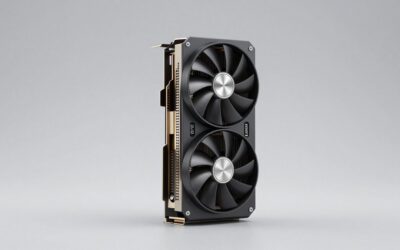
The ASUS Prime is a clean, no-frills design with solid cooling and a low profile that fits tight cases. If your case has room and you want maximum airflow, an open-air triple-fan model like the TUF Gaming variant may run five to ten degrees cooler under sustained load. For most users, the Prime is a reliable choice that delivers the same silicon performance. If you find a non-OC model $40 to $50 cheaper, that savings is effectively free performance since the OC delta on the Prime is marginal.
Sources and Methodology
All performance ranges cited in this article are synthesized from launch-window reviews and comparative testing published by TechPowerUp, Tom’s Hardware, Gamers Nexus, Hardware Unboxed, and TechSpot. These outlets conducted their own controlled testing using published driver versions and hardware configurations available at the time of the RTX 5070 launch. This article does not present independently verified measurements from this site. Ranges are expressed conservatively to account for variance in test benches, driver revisions, and game-specific settings across different reviewers. Prices referenced reflect retail listings observed at the time of writing and are subject to change based on market availability and retailer promotions.