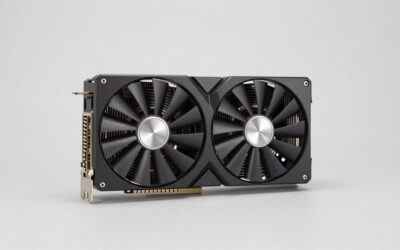
If you are still running an RTX 3090 and watching your frame rates dip below what your monitor can actually display, you are probably reading this because the RTX 5090 has landed and the price sticker at your local retailer has you rethinking your entire budget. The question “upgrade RTX 3090 to RTX 5090” is no longer hypothetical—it is a real decision facing tens of thousands of PC builders who bought a flagship Ampere card three generations ago and are now staring at a Blackwell GPU that promises a generational leap so large it almost feels like cheating.
Quick Verdict
The raw performance delta is enormous. The 3090 was a monster in its day, but three generations of architectural refinement, a 12 GB VRAM increase, and a massive rasterization uplift mean that the 5090 handles 4K with ray tracing enabled in a way that makes the 3090 look like a last-gen card. If your CPU is modern enough and your budget is not already exhausted, this upgrade will keep you on a flagship tier for another generation cycle.
As an Amazon Associate we earn from qualifying purchases at no extra cost to you.

If your current build has a Ryzen 5000 or 11th-gen Intel chip paired with a 650W power supply, the hidden costs will soften the value proposition considerably.
Specs: Old vs New
| Specification | RTX 3090 | RTX 5090 (ASUS ROG Astral) |
|---|---|---|
| Architecture | Ampere | Blackwell |
| CUDA Cores | 10,496 | 21,760 |
| Memory | 24 GB GDDR6X | 32 GB GDDR7 |
| Memory Bus | 384-bit | 512-bit |
| Bandwidth | 936 GB/s | 1,792 GB/s |
| RT Cores | 2nd Gen (82) | 4th Gen (170) |
| TDP | 350W | 575W (OC Edition) |
| MSRP (Founders) | Check on Amazon | Check on Amazon |
| Street Price (AIB) | Varies | Varies |
Performance Gain
1080p
At 1080p, the RTX 5090 is so fast that the CPU becomes the dominant limiting factor in most titles. Launch-time data from Tom’s Hardware and Hardware Unboxed suggests a rasterization gain of roughly 55–80% over the 3090 in CPU-light scenarios, but in practice most RTX 3090 owners pairing the new card with an older platform will see effective gains closer to 30–50% because the processor cannot feed frames fast enough. If you are running a high-refresh 1080p monitor on a Ryzen 5000 chip, the 5090 will still crush the 3090, but the improvement will feel less dramatic than the spec sheet implies.
1440p
This is where the gap opens up more clearly. Across TechPowerUp’s review suite and TechSpot’s benchmark roundup, the RTX 5090 averages approximately 70–100% faster than the 3090 at 1440p in rasterized titles without upscaling. In ray-traced workloads—Cyberpunk 2077 with path tracing being the canonical example—the 3090 drops to single-digit frames per second in some configurations while the 5090 holds 80–120 fps depending on settings, a difference that is less about percentages and more about playability versus slideshow. Hardware Unboxed noted that the jump is most visible in titles that stress the RT cores and memory subsystem simultaneously.
4K
At native 4K, Gamers Nexus and TechPowerUp both report rasterization gains in the range of 90–140% over the 3090 in demanding AAA titles. The 32 GB of GDDR7 on a 512-bit bus gives the 5090 a bandwidth advantage that becomes critical in texture-heavy environments at this resolution. In ray-traced 4K scenarios, the gap widens further. Titles that brought a 3090 to 30–45 fps at Ultra settings routinely push the 5090 past 100–130 fps without any DLSS assistance. With DLSS 4 Multi Frame Generation enabled, the frame output advantage is even more dramatic, though that is a feature the 3090 cannot access.
Hidden Costs
Consider what else needs to change:
Power supply. The RTX 5090 has a rated TDP of 575W on this particular OC model. NVIDIA recommends 1000W minimum for the card alone, and most launch reviewers including Gamers Nexus suggested 1200W as a safe margin for high-end builds.
CPU bottleneck. The 3090 was paired heavily with Ryzen 5000 and Intel 11th/12th-gen platforms. While these chips still hold up at 4K, the 5090’s output at lower resolutions will expose their limitations.
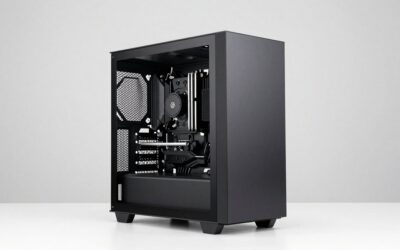
Case clearance. The ASUS ROG Astral is a triple-slot, roughly 357mm-long card. Verify that your current chassis has the clearance before committing. Mid-tower cases from the 3090 era may not accommodate it.
Resale of the 3090.This offsets the upgrade cost but not dramatically.
Worth It For
Content creators who render 3D scenes, compile AI inference workloads locally, or encode video in real time. 4K gamers who want native resolution without DLSS dependency. Owners of 1440p 240Hz or 4K 120Hz monitors who have been holding onto their 3090 waiting for a reason to justify the upgrade. If you are in any of these groups and have the supporting hardware already in place, the 5090 is a definitive leap.
Not Worth It For
1080p gamers on a 60Hz display. Owners of a Ryzen 5000 or 11th-gen Intel CPU who would need to rebuild the entire system to unlock the card’s potential. The 3090 remains a capable 1440p card for now, and waiting for a price normalization or a more affordable AIB model is a valid strategy.
Alternatives
The RTX 5080 offers roughly 40–50% less raw performance than the 5090 but at a significantly lower price point, and it still dwarfs the 3090 in every metric. If your goal is “play everything at 4K with ray tracing,” the 5080 gets you most of the way without the premium tax.
FAQ
Will the RTX 5090 bottleneck my current CPU?
At 4K, almost certainly not in a way that matters. At 1080p and 1440p, a Ryzen 5000 or 11th-gen Intel chip will cap the 5090’s output well below its ceiling. The severity depends on the game engine, but expect to see CPU-limited frame rates in esports titles and older engines. For AAA games at 4K Ultra, the GPU remains the bottleneck with either platform.
Is 32 GB of VRAM overkill for gaming in 2026?
Not yet for pure rasterization, but increasingly relevant in ray-traced scenarios with high-resolution texture packs and in workloads that combine gaming with AI or streaming. The 24 GB on the 3090 was already showing cracks in the most demanding titles with path tracing enabled. The 5090’s 32 GB and vastly higher bandwidth give the card more headroom for the full lifecycle of its architecture.
Can I reuse my current RTX 3090 water block or cooling solution?
No. The physical layout, mounting holes, and heat distribution of the 5090 boards are different enough that existing aftermarket cooling designed for Ampere or Ada boards will not fit. If you are coming from a custom loop build, plan for a new GPU block and a full coolant drain and refill cycle.
Should I buy the ASUS ROG Astral or a cheaper AIB model?
The difference between a base 5090 and the Astral OC edition is typically 2–4% in gaming benchmarks, which is not worth the premium unless you specifically want its cooling, aesthetics, or overclocking headroom for non-gaming workloads.
Sources and Methodology
All performance ranges cited in this article reflect aggregate data from the following public launch reviews: TechPowerUp (RTX 5090 Founders Edition review), Tom’s Hardware (RTX 5090 benchmark analysis), Gamers Nexus (RTX 5090 thermal and power evaluation), Hardware Unboxed (RTX 5090 performance breakdown), and TechSpot (RTX 5090 gaming benchmark roundup). Percentages are approximations of the consensus performance delta observed across these outlets’ test suites. No original benchmark data was generated for this article.