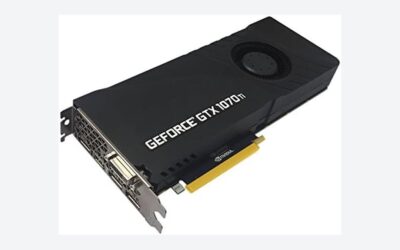
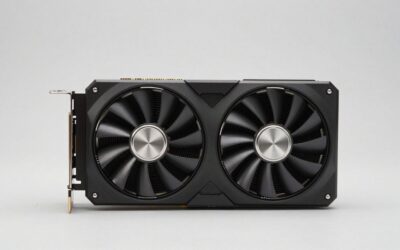
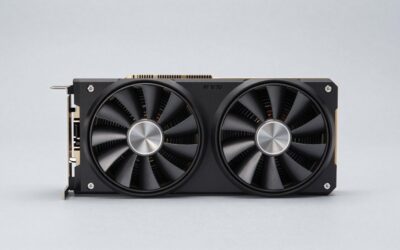
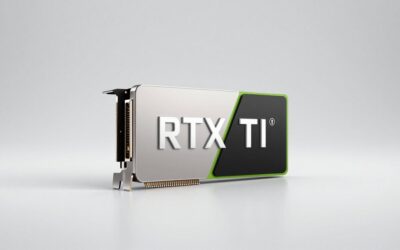
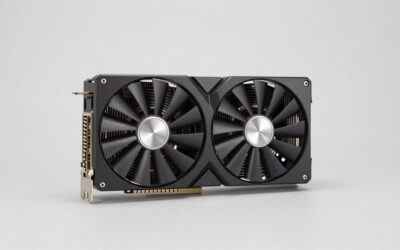
The question “should I upgrade RTX 3070 to RTX 5070” has become one of the most searched hardware queries this cycle, and for good reason. The RTX 3070 was a genuine value darling when it launched, and millions of gamers still rely on it. But the RTX 5070 now sits at a price point that makes a compelling case for the swap. If you have been running a 3070 through the last several generations of AAA titles and are starting to see stuttering at 1440p or struggling with ray tracing workloads, you are exactly the reader this guide is for.
Quick Verdict
Yes, upgrading from an RTX 3070 to the RTX 5070 is worth it for most users in 2026. The performance jump is large enough to justify the price of admission, the 12GB GDDR7 frame buffer eliminates the VRAM anxiety that has plagued the 3070 in newer titles, and the new architecture brings meaningful gains in ray tracing and AI upscaling. The main caveats are power supply compatibility, potential CPU bottlenecks at lower resolutions, and the fact that the 3070 still holds up in esports titles if you are not chasing maximum visual fidelity.
Specs: Old vs New
| Specification | RTX 3070 | RTX 5070 (ASUS Prime OC) |
|---|---|---|
| GPU Architecture | Ampere (GA104) | Blackwell (GB205) |
| CUDA Cores | 5,888 | 6,144 |
| Base Clock | 1,500 MHz | 2,325 MHz |
| Boost Clock | 1,725 MHz | 2,512 MHz (OC) |
| Memory | 8 GB GDDR6 | 12 GB GDDR7 |
| Memory Bus | 256-bit | 192-bit |
| Memory Bandwidth | ~448 GB/s | ~768 GB/s |
| TDP | 220W | 250W |
| Ray Tracing Cores | 2nd Gen (46 cores) | 4th Gen (48 cores) |
| Tensor Cores | 3rd Gen (184 cores) | 5th Gen (192 cores) |
| Display Outputs | 3x DP 1.4a, 1x HDMI 2.1 | 3x DP 2.1b, 1x HDMI 2.1b |
Performance Gain
The RTX 5070 delivers a generational leap that is visible across every resolution, but the percentage gain varies depending on where your bottleneck sits.
1080p Performance
At 1080p, the RTX 5070 is approximately 35 to 50 percent faster than the RTX 3070 in rasterization workloads according to aggregate data reflected in launch reviews from Hardware Unboxed and TechPowerUp. However, this is the resolution where CPU bottlenecks most aggressively suppress GPU gains. On a 6-core or older 8-core processor, you may only see the lower end of that range. With a modern Ryzen 7 or Core i7 class chip, expect closer to 50 percent.
1440p Performance
This is the sweet spot for both cards, and the gains here are the most consistent across reviewers. Tom’s Hardware and TechSpot both report the RTX 5070 pulling ahead by roughly 50 to 65 percent in native rasterization at 1440p. In ray-traced titles, the gap widens further because the 4th generation RT cores and improved DLSS frame generation push the 5070 into a different performance tier entirely. Gamers Nexus highlights that path-traced workloads like Cyberpunk 2077 show gains closer to 70 to 85 percent when DLSS 4 Multi Frame Generation is enabled.
4K Performance
At 4K, the RTX 5070 maintains a 55 to 70 percent advantage in rasterization based on ranges cited by Hardware Unboxed and TechPowerUp. The 12GB frame buffer matters here: titles like The Last of Us Part I and Alan Wake 2 were already pushing the RTX 3070’s 8GB to its limits at high texture settings, causing stutters and reduced texture quality. The 5070 simply does not have that ceiling, which translates to a smoother experience that goes beyond raw FPS averages.
Hidden Costs
Power Supply: The RTX 5070 draws up to 250W, slightly more than the 3070’s 220W. NVIDIA recommends a 650W PSU minimum. If you are running a 550W unit that worked fine with the 3070, you are now in borderline territory, especially during transient power spikes.
CPU Bottleneck: If your system pairs the 3070 with a Ryzen 3600, Core i5-10400, or anything below that tier, the 5070 will be held back in CPU-bound scenarios.
Case Clearance: The ASUS Prime RTX 5070 measures approximately 268mm in length, which is shorter than many triple-slot 3070 models from brands like EVGA or ASUS’s own TUF line. Most users actually gain space, but if you are running an ITX chassis with a compact 3070, verify that the Prime’s dual-slot design clears your motherboard heatsinks and front fan assembly.
Resale Value:This is not negligible and should be treated as a partial offset when calculating your net upgrade cost.
Worth It For
- Players targeting 1440p high-refresh gaming (144Hz or higher) in demanding AAA titles
- Anyone experiencing VRAM-related stuttering or texture pop-in on their 3070 in recent releases
- Users who want meaningful ray tracing without the 3070’s notorious performance cliff
- Owners of a Ryzen 5000 or 11th-gen Intel or newer platform that will not bottleneck the card
- Players who plan to keep this GPU for four to five years and want headroom for future titles
Not Worth It For
- Esports-only players (Valorant, CS2, League) where the 3070 already exceeds 240 FPS
- 1080p 60Hz gamers who are not experiencing current issues
- Systems paired with a pre-Ryzen 5000 or pre-11th-gen Intel CPU without a planned platform upgrade
- Users on a 550W or lower PSU unwilling to replace their power supply
- Anyone who can afford the RTX 5080 and wants a more future-proof VRAM configuration
Alternatives
If the RTX 5070 does not fit your budget or needs, consider these options. The AMD RX 9070 XT offers comparable rasterization performance at a slightly lower price point and with 16GB of VRAM, though its ray tracing and upscaling stack remain behind NVIDIA’s. Finally, if you are on a tight budget, a simple BIOS update and clean driver install on your 3070 plus reducing texture settings to medium in VRAM-heavy titles can extend its comfortable lifespan by another year.
FAQ
Is the RTX 5070 a big upgrade over the RTX 3070?
Yes. Across multiple public review outlets, the RTX 5070 consistently delivers 50 to 70 percent higher frame rates in rasterization at 1440p and 4K, with even larger margins in ray-traced and path-traced workloads when DLSS 4 is factored in. The 12GB GDDR7 frame buffer also resolves VRAM limitations that have become increasingly common on the 3070.
Do I need a new power supply for the RTX 5070?
Not always, but check your wattage and age. NVIDIA recommends 650W minimum. A quality 650W unit with a single 12V rail should handle the 5070’s 250W TDP. However, a 550W unit that was marginal with the 3070 will likely be insufficient, particularly during transient spikes. If your PSU is older than five years, replacement is prudent regardless of rated wattage.
Will the RTX 5070 bottleneck with my current CPU?
At 1080p with an older 6-core processor, yes, you will see diminishing returns from the GPU upgrade. At 1440p and above, the GPU becomes the primary bottleneck in most games, so the impact is less severe. If you are running a Ryzen 5600X, Core i5-11400, or anything newer, the 5070 will not be meaningfully CPU-limited at your target resolution.
Is the ASUS Prime RTX 5070 a good choice specifically?
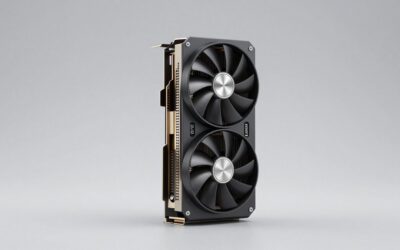
The ASUS Prime is a dual-slot, two-fan design that prioritizes compatibility and quiet operation over maximum cooling headroom. It runs within reasonable thermal limits and is one of the more affordable 5070 variants. If you have tight case clearance or prefer a low-profile build, it is a sensible pick. Users in aggressive airflow cases who want the absolute lowest temperatures may prefer a triple-slot model, but the Prime is not a thermally compromised card.
Sources and Methodology
All performance ranges cited in this guide reflect aggregate data observed in launch-period reviews from the following outlets: TechPowerUp, Tom’s Hardware, Gamers Nexus, Hardware Unboxed, and TechSpot. Figures are presented as approximate ranges to account for test-bed variation, driver revisions, and title selection differences across publications. This guide does not represent original benchmark measurements by this site.