- Top Pick: ASUS Dual GeForce RTX 5060 Ti 16GB GDDR7 OC Edition Gaming Graphics Card
- Best Value: GIGABYTE GeForce RTX 5060 Ti Gaming OC 8G Graphics Card, 8GB 128-bit GDDR7, PCIe 5.0, WINDFORCE Cooling System, GV-N506TGAMING OC-8GD Video Card
- Premium Choice: ASUS Prime GeForce RTX 5060 Ti 16GB GDDR7 Gaming Graphics Card
The RTX 5060 Ti and the RX 9070 XT come at the mid-range from completely different angles in 2026. NVIDIA aims the RTX 5060 Ti at 1080p/1440p players for $699, leaning on DLSS 4 and NVENC; AMD asks $734–799 for the RX 9070 XT but hands you a lot more raw rasterization, landing it closer to RTX 5070 Ti territory than to the RTX 5060 Ti. Here’s how to figure out which one is the better buy for your resolution and how you play.
| Spec | RTX 5060 Ti | RX 9070 XT |
|---|---|---|
| CUDA/Shaders | 4,608 CUDA | 4,096 Shaders |
| VRAM | 16GB GDDR7 | 16GB GDDR6 |
| TDP | 165W | 304W |
| MSRP | $429 (GPU) | $599 (GPU) |
| Prebuilt Price | $779–$1,150 | $800–$1,000 |
| 1440p Performance | 70–90fps AAA | 100–120fps AAA |
| Upscaling | DLSS 4 (MFG) | FSR 4 |
🛒 Best Price Today on Amazon
Prime members get fast, free shipping on everything above, plus member-only deals. New members get a 30-day free trial — cancel anytime.
As an Amazon Associate we earn from qualifying purchases at no extra cost to you.


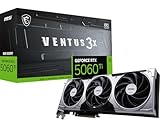
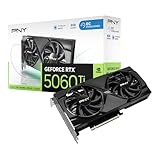
Performance Difference: RX 9070 XT Is Significantly Faster
In straight native rasterization at 1440p Ultra, the RX 9070 XT runs roughly 30–40% ahead of the RTX 5060 Ti. Take Cyberpunk 2077 at 1440p Ultra: the RX 9070 XT averages 78fps native to the RTX 5060 Ti’s 58fps. Bump to Forza Horizon 5 at 4K Ultra and it’s 65fps versus 45fps. The RX 9070 XT is really trading blows with the RTX 5070 here, not the RTX 5060 Ti — which makes the price math trickier than it looks on paper.
RTX 5060 Ti Advantages
DLSS 4 Multi-Frame Generation completely reshapes what the RTX 5060 Ti is capable of. Switch on DLSS 4 MFG at 1440p Quality and the RTX 5060 Ti effectively pushes 120–150fps in supported games — matching or beating the RX 9070 XT’s native numbers. The 8th-gen NVENC encoder, which streams with almost no hit to your frame rate, is NVIDIA-only too. For streamers and anyone living in DLSS 4 games, the RTX 5060 Ti keeps pace at a much lower 165W TDP (versus 304W).
RX 9070 XT Advantages
Native performance leadership at both 1440p and 4K, in every title, DLSS or not. Plenty of games still don’t support DLSS 4 MFG, so native frames are the only number that counts there. Cheaper in prebuilt form (you’ll find some $800 configs). AMD’s FSR 4 also covers a broader game library since it’s open source and available to any developer. Better value if you’d rather not lean on upscaling.
Verdict
Buy RTX 5060 Ti if: you mostly play DLSS 4 games, you stream over NVENC, you’re chasing 1080p/high-fps, or your PSU is under 650W (165W TDP versus 304W). Buy RX 9070 XT if: you want the most native 1440p performance you can get, you play a lot of non-DLSS games, you’re after 4K/60fps, or native frames matter more to you than upscaling.
Frequently Asked Questions
Which is faster, the RTX 5060 Ti or RX 9070 XT?
The RX 9070 XT sits in a higher performance tier and is substantially faster in most games, targeting high-refresh 1440p and 4K. The RTX 5060 Ti is a mid-range card aimed at 1080p and 1440p, so it is the slower option overall.
Which has more VRAM?
The RX 9070 XT carries a larger 16GB frame buffer suited to higher resolutions and future titles. The RTX 5060 Ti is available in smaller and 16GB configurations, so check the exact variant, but the 9070 XT is designed for more memory-intensive workloads.
Which is better for ray tracing?
NVIDIA generally holds an edge in ray-tracing efficiency and DLSS image quality, but the more powerful 9070 XT still delivers strong ray-traced performance thanks to its higher overall horsepower. At their respective tiers, the 9070 XT handles heavier ray tracing more comfortably.
Which offers better value?
Value depends on current pricing, but the RTX 5060 Ti targets budget-conscious 1080p and 1440p gamers at a lower cost, while the 9070 XT offers more performance per dollar at a higher price point. Match the card to your resolution and budget.
Which should I pick for 1440p gaming?
For high-refresh 1440p with headroom to spare, the RX 9070 XT is the stronger choice. If your budget is tighter and you play at 1080p or moderate 1440p settings, the RTX 5060 Ti remains a capable and more affordable option.
Ready to decide? Our #1 pick for 2026 is the CUDA/Shaders.
Live price & availability on Amazon.