- Top Pick: Thermalright Assassin X 120R Digital White CPU Cooler Air with 4X6mm HeatPipes, Digital Screen Top Cover,PWM Fan Heatsink CPU Cooler,151mm High, for AM5 and Intel lga1700/1851/1150/1151/1200
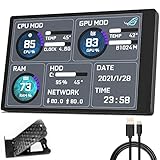
- Best Value: WOWNOVA English Version Computer Temp Monitor, ARGB PC Case Display, IPS USB Mini Screen, CPU RAM HDD Data Monitor
- Premium Choice: EIMSOAH 8.8 Inch IPS LCD Secondary Screen 8.8 inch Screen 480×1920 Resolution Computer Secondary Monitor, PC Case Screen Secondary Screen Computer for CPU GPU Temperature Display PC Case Monitors
Normal CPU temperatures are the benchmark every PC builder uses to judge whether their cooling is working. Run too hot and your processor throttles or crashes; stay in the healthy range and it performs reliably for years. This guide breaks down normal CPU temperatures across idle and load conditions and explains how to keep your chip in the safe zone.
As an Amazon Associate I earn from qualifying purchases.
As an Amazon Associate we earn from qualifying purchases at no extra cost to you.




Normal CPU temperatures fall around 30 to 45 degrees Celsius at idle and 60 to 80 degrees Celsius under load. These ranges cover the vast majority of modern desktop processors from both AMD and Intel. Short spikes above 80 degrees during demanding workloads are still normal, but temperatures that hover near the 90-to-100-degree limit point to a cooling problem that deserves prompt attention.
🛒 Best Price Today on Amazon
Prime members get fast, free shipping on everything above, plus member-only deals. New members get a 30-day free trial — cancel anytime.
Understanding Normal CPU Temperatures
Normal CPU temperatures are best expressed as ranges because a processor’s heat output changes with its workload. At idle, when little is running, normal temperatures land between 30 and 45 degrees Celsius. Under load from gaming or content creation, normal temperatures rise to the 60-to-80-degree band. These figures assume a capable cooler and reasonable case airflow. Readings that fall well outside these ranges warrant investigation, which our cooling troubleshooting guide makes straightforward.
Since your cooling solution largely dictates your temperatures, the table below compares proven coolers and accessories that help maintain normal CPU temperatures across a variety of builds.
| Product | Best For | Standout Feature | Rating |
|---|---|---|---|
| Noctua NH-D15 G2 | Premium air cooling | Handles hot chips with ease | 4.9/5 |
| NZXT Kraken Elite 360 | High-end liquid cooling | Large radiator for low load temps | 4.7/5 |
| Thermalright Peerless Assassin 120 | Budget cooling | Flagship thermals at a low price | 4.8/5 |
| Arctic P14 Case Fans | Case airflow | Quiet high-volume air movement | 4.7/5 |
| Thermal Grizzly Kryonaut | Peak heat transfer | Top-tier thermal compound | 4.8/5 |
What Affects Normal CPU Temperatures?
A range of factors determines whether your processor stays within normal CPU temperatures. The cooler is the dominant influence, but case airflow, ambient room temperature, and thermal paste condition all play meaningful roles. A high-performance chip pushed hard will always run warmer than an efficient model at light load. Understanding these variables lets you quickly diagnose why your temperatures might be higher than expected, a process our airflow optimization guide supports.
Normal CPU Temperatures at Idle
Idle readings form your baseline, taken when the system is on but mostly inactive. Normal CPU temperatures at idle sit between 30 and 45 degrees Celsius. If your idle temperatures are noticeably higher, such as 55 degrees or more, it typically points to weak airflow, an insufficient cooler, or aging thermal paste. Because idle readings reveal problems before they escalate under load, they are an excellent early diagnostic, as our monitoring software guide explains.
Normal CPU Temperatures Under Load
When your CPU is working hard, normal temperatures range from 60 to 80 degrees Celsius. Gaming, rendering, and heavy multitasking all generate considerable heat, and staying within this range means your cooling is effective. Brief spikes above 80 degrees during the most intense workloads are normal and expected. If your chip consistently runs near its thermal ceiling during ordinary gaming, though, it is a clear signal to upgrade cooling, per our cooler upgrade guide.
How Chip Design Affects Normal Temperatures
Not all processors share the same normal temperature profile. High-core-count and high-performance chips generate more heat and run warmer under load than efficient mainstream models. Some modern CPUs are deliberately designed to boost until they reach their thermal limit, briefly touching 90 degrees as intended behavior rather than a fault. Checking your specific chip’s rated maximum temperature helps you understand what normal means for your hardware and whether your cooling is truly adequate.
Recognizing Abnormal CPU Temperatures
Certain symptoms signal that temperatures have exceeded the normal range. Unexpected shutdowns, in-game stuttering, persistent loud fan noise, and performance that degrades after a few minutes of load all indicate overheating. When these appear, check your temperatures with monitoring software right away. Frequent culprits include dusty heatsinks, failed fans, and a poorly mounted cooler, each of which our overheating fix guide helps you resolve efficiently.
How to Maintain Normal CPU Temperatures
Keeping your processor within normal CPU temperatures comes down to consistent maintenance. Set up balanced intake and exhaust airflow, clean dust from fans and heatsinks every few months, and match your cooler to your chip’s heat output. Refresh thermal paste when installing a cooler or every couple of years. Regularly monitoring your temperatures lets you spot upward trends before they cause trouble. Together these habits ensure your CPU stays in its normal thermal range for the life of the system.
Frequently Asked Questions
What are normal CPU temperatures while gaming?
Normal CPU temperatures while gaming range from 60 to 80 degrees Celsius. This indicates your cooling is handling the workload and the processor can maintain its boost clocks. Occasional spikes just above 80 degrees during intense scenes are normal and not a cause for concern.
Are normal CPU temperatures different for laptops and desktops?
Laptops typically run warmer than desktops due to their compact cooling, so normal laptop CPU temperatures often reach 70 to 90 degrees under load. Desktops enjoy better airflow and larger coolers, keeping normal load temperatures in the 60-to-80-degree range with more thermal headroom overall.
Should I worry if my CPU briefly hits 90 degrees?
A brief spike to 90 degrees during heavy load is generally not a concern, as modern CPUs are designed to tolerate it. The issue arises only if temperatures stay pinned near the thermal limit continuously, which causes throttling and warrants improving your cooling setup.
How do I check if my CPU temperatures are normal?
Use free monitoring software such as Core Temp, HWiNFO, or HWMonitor to check your CPU temperatures at idle and under load. Compare the readings against the normal ranges of 30 to 45 degrees idle and 60 to 80 under load to judge whether your cooling is adequate.