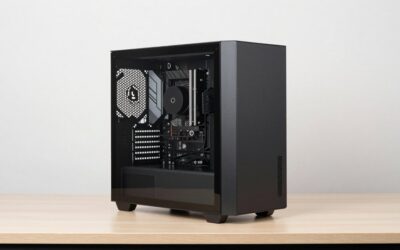
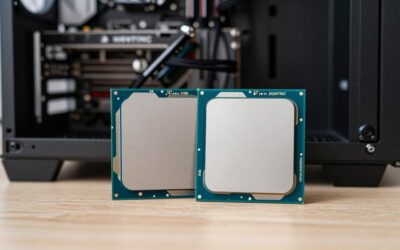
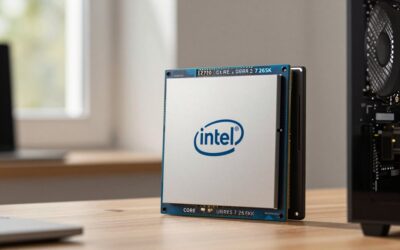
If you are running an i5-12400F and wondering whether it is time to upgrade, you are in a familiar position. Alder Lake has been a remarkably durable gaming CPU, but as GPU options have matured into the mid-to-high tier, the six-core chip is beginning to show its thread count limitation in modern titles. The Core Ultra 5 245KF enters the conversation as a compelling middle-ground option: it doubles the core count, pushes boost clocks well past 5 GHz, and arrives at a price point that makes it one of the most discussed value processors of the current generation. This guide breaks down whether the upgrade makes sense, what hidden costs you will encounter, and where alternatives might serve you better.
Quick Verdict
Upgrading from the i5-12400F to the Core Ultra 5 245KF delivers a meaningful performance improvement in CPU-bound scenarios, particularly at 1080p and in games that actively use more than six cores. However, this is a full platform swap: you need a new LGA 1851 motherboard and DDR5 memory. If your total upgrade budget can absorb $300 to $450 for the complete platform, the 245KF is a worthwhile investment for anyone pairing it with a mid-range or upper-mid-range GPU. If you are GPU-bottlenecked at 4K or on a tight budget where the motherboard cost stings, hold off.
As an Amazon Associate we earn from qualifying purchases at no extra cost to you.

Specs: Old vs New
| Specification | i5-12400F | Core Ultra 5 245KF |
|---|---|---|
| Cores / Threads | 6C / 12T (6P + 0E) | 14C / 20T (6P + 8E) |
| P-Core Boost | 4.4 GHz | 5.2 GHz |
| E-Core Boost | N/A | 4.6 GHz |
| Base Clock | 2.5 GHz | ~2.4 GHz (P) / ~1.9 GHz (E) |
| L3 Cache | 18 MB | 24 MB |
| TDP / PBP | 65 W | 65 W |
| Socket | LGA 1700 | LGA 1851 |
| Memory Support | DDR4-3200 / DDR5-4800 | DDR5-5600+ |
| Architecture | Intel 7 (10nm) | Intel 20A |
| Street Price | ~$120 (used) | ~$178 |
Performance Gain
The gains you will see depend heavily on resolution, GPU pairing, and whether a title scales beyond six cores. Below are approximate ranges drawn from launch-window reviews published by outlets including TechPowerUp, Tom’s Hardware, Gamers Nexus, Hardware Unboxed, and TechSpot.
1080p Gaming
At 1080p, where the CPU is most likely to be the limiting factor, the 245KF offers roughly a 25 to 45 percent improvement over the 12400F in titles that stress more than six threads. In GPU-bound scenarios at this resolution, the delta narrows to approximately 15 to 25 percent. Competitive titles like Counter-Strike 2 and Valorant, which lean on single-thread performance, show gains at the higher end of those ranges due to the 5.2 GHz boost clock and architectural IPC improvements noted by TechPowerUp and Tom’s Hardware.
1440p Gaming
At 1440p, the bottleneck shifts toward the GPU in most configurations. Reviews from Hardware Unboxed and TechSpot suggest CPU-limited gains in the 10 to 25 percent range, with the larger numbers appearing in open-world titles like Cyberpunk 2077 and Horizon Zero Dawn remaster where core utilization pushes past six threads.
4K Gaming
At 4K, the GPU dominates performance in virtually every title. Gamers Nexus and TechSpot report differences between the two chips in the 5 to 12 percent range, which means the upgrade will feel marginal unless you are also moving to a significantly faster graphics card. If 4K is your primary target, the 245KF upgrade is not the right first move.
Hidden Costs
The CPU itself is the easiest part of this upgrade to budget for. The real cost sits in the platform requirements.
Motherboard: The 245KF requires an LGA 1851 socket, which means a new board. Entry-level B860 boards start around $130, while feature-rich Z890 options range from $200 to $350+. This is the single largest hidden cost and often exceeds the price of the CPU itself.
DDR5 Memory: The Arrow Lake platform does not support DDR4. If your current system runs DDR4, you will need a new kit. A 32 GB DDR5-5600 set runs approximately $60 to $90 at current retail, adding a non-negotiable line item to your budget.
PSU: Good news here. The 245KF shares the same 65 W PBP as the 12400F. Any quality 550 W or larger PSU that ran your previous build will handle the new chip without issue. No PSU upgrade is required for the processor alone.
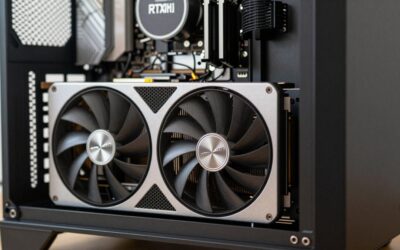
CPU Bottleneck Awareness: If your current GPU is a mid-range card like an RTX 3060 or RX 6600 XT, you will see limited gaming gains from the CPU upgrade because the GPU is already the ceiling. The 245KF is best paired with cards in the RTX 4070 / RX 7800 XT tier or above, where the CPU headroom actually translates into higher frame rates.
Case and Cooling: Your existing case almost certainly supports the new cooler mount. The 245KF ships without a cooler, so budget for an aftermarket unit if your previous cooler does not support LGA 1851 out of the box. Many popular coolers offer free or cheap mounting bracket swaps; check your manufacturer’s support page before purchasing.
Resale of Old Components: The 12400F and a DDR4 motherboard still hold modest resale value. Expect roughly $80 to $120 for the CPU and DDR4 board combo on the used market, which can offset a portion of your upgrade cost.
Worth It For
- Players at 1080p or 1440p with a GPU in the RTX 4070 class or above who are hitting 99th-percentile frame drops or stuttering in CPU-limited titles.
- Creators and multitaskers who need more than six cores for streaming, video editing, or compilation workloads.
- Builders planning a GPU upgrade in the near future who want CPU headroom so they do not have to revisit the platform again in a year.
- Anyone whose current 12400F system already runs DDR5 and includes a cooler compatible with LGA 1851 brackets, minimizing the hidden costs.
Not Worth It For
- Players locked into 4K gaming with a high-end GPU where the CPU is rarely the bottleneck.
- Budget-conscious builders who would rather put $350 toward a GPU upgrade than spread it across CPU, motherboard, and RAM.
- Users whose 12400F system is still paired with DDR4 and a basic motherboard, where the full platform cost approaches $350 to $500 before taxes.
- People who need PCIe 5.0 storage or specific I/O features and would be better served by stepping up to a higher-tier Arrow Lake part on the same platform.
Alternatives
AMD Ryzen 5 7600X: Priced in a similar range, it offers strong gaming performance on AM5 with DDR5 and a longer platform lifespan. If you are open to switching to AMD, this remains a competitive option, though the 245KF holds a modest edge in multi-threaded workloads thanks to its eight E-cores.
Stay on DDR4 with a 13th/14th Gen Upgrade: A Core i5-13600K or i5-14600K still runs on your existing LGA 1700 board and DDR4 kit. You gain cores and clocks without the platform tax, though you sacrifice access to the newest architecture and power efficiency improvements.
Wait for a Mid-Cycle Refresh: If your current system still feels responsive in your target games, there is no urgency. The 12400F remains a capable six-core chip, and future LGA 1851 boards may drop in price as the platform matures.
FAQ
Will my existing RAM work in the new platform?
Only if it is DDR5. The LGA 1851 platform does not support DDR4. Check your current kit before assuming compatibility.
Do I need a Z890 motherboard or is B860 enough for gaming?
For pure gaming with no overclocking ambitions, a B860 board handles the 245KF without issue and saves you $80 to $150 compared to mid-tier Z890 options.
Is the 245KF better than the non-K version?
The 245KF reaches 5.2 GHz on P-cores, while the locked 245K tops out lower. For gaming, the KF provides a few additional frames in CPU-bound titles. The price difference is typically small enough to justify the KF if both are in stock.
What is the actual total cost of this upgrade from a 12400F system?
Realistically, expect $350 to $500 for CPU, motherboard, and a DDR5 kit if you are starting from DDR4. Reselling your old platform can recover $80 to $120, bringing the net cost closer to $270 to $420.
Sources and Methodology
All performance ranges in this guide are approximations synthesized from launch-window benchmark data published by TechPowerUp, Tom’s Hardware, Gamers Nexus, Hardware Unboxed, and TechSpot. These figures reflect publicly available review results and should be treated as representative ranges rather than site-specific measurements. Actual results vary by game, driver version, RAM timings, and system configuration. We recommend cross-referencing specific title performance on those outlets before purchasing.