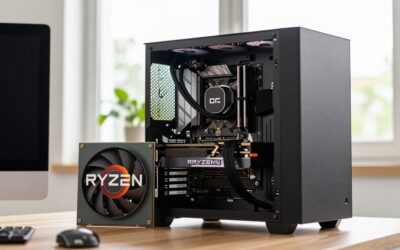
Knowing how to check your CPU temperature is one of the most valuable skills for any PC owner, letting you catch cooling problems before they cause throttling or damage. Whether you are diagnosing a hot laptop or verifying a new cooler, monitoring temperatures takes only a few minutes with the right tools. This guide explains exactly how to check CPU temp in 2026 and recommends the hardware that keeps those numbers low.
As an Amazon Associate I earn from qualifying purchases.
As an Amazon Associate we earn from qualifying purchases at no extra cost to you.





🛒 Best Price Today on Amazon
Prime members get fast, free shipping on everything above, plus member-only deals. New members get a 30-day free trial — cancel anytime.
How Do You Check CPU Temp: The Direct Answer
You check CPU temp by installing free monitoring software such as HWiNFO, Core Temp, or HWMonitor, which read the temperature sensors built into your processor and display them in real time. Open the program, look for the “CPU Package” or “Core” temperature reading, and observe it at idle and under load. You can also check CPU temperature directly in your motherboard’s BIOS or UEFI by entering setup during boot, though this only shows idle temperatures. For live monitoring while gaming or rendering, dedicated software is the most practical method and lets you log temperatures over time.
Once you know your numbers, the real question is whether they are safe and how to lower them if not. The tools and coolers below help you both measure and improve your temperatures, working alongside our temperature monitoring tips and CPU cooler comparison.
Best Tools and Coolers for Checking and Lowering CPU Temp
| Product | Best For | Standout Feature | Rating |
|---|---|---|---|
| Noctua NH-D15 chromax.black | Lowering high temperatures | Elite dual-tower air cooling | 4.9/5 |
| NZXT Kraken 280 RGB | Monitoring via CAM software | On-screen coolant temp readout | 4.7/5 |
| Thermal Grizzly Kryonaut | Improving heat transfer | Premium thermal conductivity | 4.9/5 |
| Arctic P12 PWM PST Fans | Better case airflow | High static pressure, low noise | 4.7/5 |
| Compressed Air Duster Can | Clearing dust buildup | Instant heatsink cleaning | 4.6/5 |
Using Software to Check CPU Temp
Monitoring software is the easiest and most detailed way to check CPU temp. Programs like HWiNFO and Core Temp show per-core readings, package temperature, and even minimum and maximum values recorded during a session. Keep the app open in the background while you game or run a workload to see how temperatures respond under real conditions. Logging the data lets you spot a slow upward drift that signals dried paste or a failing fan. This method gives you the complete picture, which our temperature monitoring tips expand on further.
Checking CPU Temp in the BIOS
If you cannot boot into your operating system or prefer a software-free approach, the BIOS or UEFI shows your CPU temperature on the main hardware monitor screen. Restart your PC and press the setup key, usually Delete or F2, to enter the firmware. The reading here reflects idle temperature because no operating system load is present, so it is useful as a baseline but not for testing under load. It is a quick sanity check when diagnosing a system that will not start, complementing a full CPU maintenance checklist.
Understanding What the Numbers Mean
Reading a temperature is only useful if you know what is normal. Most processors idle comfortably between 30-45°C, sit in the 50-70°C range during gaming, and may reach the 70s or low 80s under heavy rendering. Throttling typically begins around 90-100°C depending on the chip. If your CPU exceeds these ranges, it is time to investigate cooling, paste, or airflow. Knowing these thresholds turns a raw number into actionable insight and helps you decide whether an upgrade from our CPU cooler comparison is warranted.
Lowering High CPU Temperatures
If checking your CPU temp reveals numbers that are too high, several fixes help quickly. Reapplying premium thermal paste like Thermal Grizzly Kryonaut, cleaning dust from the heatsink with a compressed air duster, and improving case airflow with high static pressure fans all lower temperatures meaningfully. In stubborn cases, upgrading to a stronger cooler such as the Noctua NH-D15 or an NZXT Kraken AIO delivers the biggest drop. Our thermal paste application guide walks through the most cost-effective first step.
Monitoring Temperatures Over Time
Checking CPU temp once is helpful, but ongoing monitoring is what protects your hardware. Set your software to log temperatures during typical use so you can compare readings week to week. A gradual increase over months usually means paste is degrading or dust is accumulating, both easy to fix before they cause throttling. Building a habit of periodic checks, especially after upgrades or seasonal temperature changes, keeps your system healthy and quiet. Pair this with good case airflow for lasting results.
Frequently Asked Questions About How to Check CPU Temp
What is the best free software to check CPU temp?
HWiNFO, Core Temp, and HWMonitor are all excellent free options that read your processor’s built-in sensors and display real-time temperatures. HWiNFO offers the most detailed logging, while Core Temp is lightweight and beginner-friendly. Any of these lets you monitor package and per-core temperatures at idle and under load.
Can I check CPU temp without installing software?
Yes, you can check your CPU temperature in the BIOS or UEFI by restarting and pressing the setup key during boot, usually Delete or F2. The hardware monitor screen shows idle temperature. Some processors also expose temperature through built-in vendor utilities, but software remains best for monitoring under real workloads.
How often should I check my CPU temperature?
Check your CPU temperature after building or upgrading, whenever the system feels hot or noisy, and periodically every few months. Ongoing monitoring during heavy tasks helps you catch a slow upward drift caused by dried paste or dust. Seasonal checks are also wise since higher room temperatures raise CPU temperatures.
What CPU temperature is too high?
Temperatures above roughly 85°C under sustained load are worth investigating, and most processors begin throttling near 90-100°C. Brief spikes to the mid-80s during heavy workloads are usually fine, but consistently high numbers indicate a cooling, paste, or airflow problem that should be addressed to protect performance.