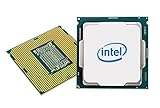
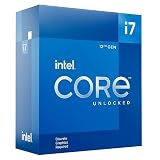
- Top Pick: Intel® Core™ Ultra 9 Processor 285K 24 cores (8 P-cores + 16 E-cores) up to 5.7 GHz
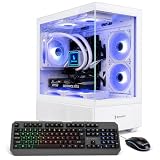
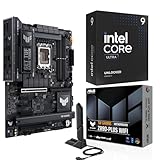
- Best Value: Micro Center CPU Motherboard Combo – Ultra 9 285K 24-Cores LGA 1851 Desktop Processor Bundle with Tuf Gaming Z890-Plus WiFi Motherboard
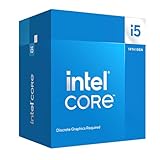
- Premium Choice: Intel® Core™ Ultra 9 Desktop Processor 285 24 cores (8 P-cores + 16 E-cores) up to 5.6 GHz
Building or upgrading a gaming PC in 2026 comes down to the same fork in the road it has for years, but the two flagships have never been further apart in philosophy. Intel’s Core Ultra 9 285K is a 24-core hybrid design — eight performance cores plus sixteen efficient cores — boosting to 5.7 GHz on the LGA 1851 platform with Z890 boards. AMD’s Ryzen 9 9950X3D counters with 16 Zen 5 cores, 32 threads, and a slab of 3D V-Cache stacked beneath one of its two core complexes.
That cache is the entire argument. Games are latency-sensitive and cache-hungry in a way that most productivity software simply isn’t, which is why the two chips can trade places depending on what’s on your screen. If you’re pairing a high-end GPU with a 1440p high-refresh or 4K display, the CPU you choose will shape your minimum frame rates, your frame-time consistency, and — increasingly in 2026 — how much headroom you have for streaming, background AI tools, and heavily simulated open worlds. Here’s how the two stack up.
As an Amazon Associate we earn from qualifying purchases at no extra cost to you. Product prices and availability are accurate as of the date shown and are subject to change.






⚡ Save on Your Next PC — Amazon Prime
Prime members get fast free shipping on the systems above, plus early access to Prime Day & Black Friday PC deals. New members get a 30-day free trial.
Watch: Intel Core Ultra 9 vs Ryzen 9: 2026 Battle — Video Review
Quick Verdict
If gaming is your priority and you want the highest average and 1% low frame rates available without fuss, the Ryzen 9 9950X3D is the safer buy — its 3D V-Cache delivers a measurable lead in CPU-bound titles while drawing less power under load. If you split your time between gaming and content creation, or you want the strongest all-rounder with modern connectivity and an integrated NPU, the Core Ultra 9 285K is the more versatile chip and often the better value once a bundle like the Micro Center 285K and TUF Gaming Z890-Plus WiFi combo enters the picture.
Key Differences
- Core layout: The 285K uses 8 P-cores and 16 E-cores for 24 cores and 24 threads with no hyper-threading; the 9950X3D runs 16 uniform Zen 5 cores with SMT for 32 threads.
- Cache strategy: AMD stacks 3D V-Cache on one CCD for roughly 144 MB of total cache, a decisive advantage in simulation and strategy games. Intel relies on conventional cache and faster memory support.
- Gaming performance: At 1080p and 1440p with a top-tier GPU, the 9950X3D typically leads by a meaningful margin in cache-sensitive titles, while the gap narrows to near-parity at 4K.
- Productivity: Intel’s 16 E-cores make the 285K extremely competitive in heavily threaded rendering, compiling, and export workloads, frequently matching or beating AMD depending on the application.
- Power and thermals: Arrow Lake runs far cooler and more efficiently than the previous Core i9-14900K generation, but the 9950X3D generally holds the efficiency edge in games specifically.
- Platform longevity: AM5 has been supported for multiple generations with more to come; LGA 1851 is a newer socket with a shorter confirmed roadmap.
Intel Core Ultra 9 285K
The Core Ultra 9 285K represents Intel’s clean break from the Raptor Lake era. Gone are the 250-watt sustained loads and voltage anxieties that dogged the i9-14900K; in their place is a tile-based design that finishes most multi-threaded work faster per watt while running noticeably cooler under an air or 240 mm AIO cooler. Twenty-four cores across two classes means Windows can park background tasks on E-cores and leave the P-cores free for your game, which pays off if you stream, record, or keep a browser full of tabs open while playing.
It also brings extras AMD doesn’t match on the desktop: an integrated NPU for on-device AI features, a capable Xe integrated GPU that’s genuinely useful for troubleshooting or transcoding, and support for very high-speed CUDIMM memory kits on Z890. The Micro Center 285K + TUF Gaming Z890-Plus WiFi bundle is worth a serious look, since it removes the biggest cost objection to the platform. Those wanting the same core count for less should consider the locked Core Ultra 9 285 at up to 5.6 GHz, or the Core Ultra 7 270K Plus, which keeps the 8+16 layout at up to 5.5 GHz.
AMD Ryzen 9 9950X3D
The Ryzen 9 9950X3D is the most straightforward recommendation in high-end gaming, and it earns that reputation honestly. The stacked cache on its gaming CCD keeps huge working sets close to the cores, which shows up most dramatically in the games that punish other CPUs hardest: large-scale strategy, flight and racing sims, MMOs in crowded hubs, and heavily modded sandboxes. The result isn’t just higher averages but steadier frame pacing, which is what you actually feel.
Crucially, this generation no longer forces a trade-off. Unlike earlier X3D parts with reduced clocks, the 9950X3D keeps a full 16-core configuration and strong boost behavior, so rendering and compiling performance stays in flagship territory. AM5 also remains the better long-term bet — a drop-in upgrade two or three years from now is a realistic expectation rather than a hope. The trade-offs are a weaker integrated GPU, no meaningful NPU, and a scheduler that occasionally needs a driver or chipset update to route threads to the right CCD.
Which Should You Buy?
- For competitive esports at high refresh: pick the Ryzen 9 9950X3D for the best 1% lows.
- For gaming plus streaming or editing: pick the Core Ultra 9 285K and let the E-cores absorb the background load.
- For 4K gaming with a flagship GPU: either works — buy whichever is cheaper, or grab the 285K motherboard bundle.
- For a build you’ll upgrade in 2028: pick AMD for AM5 socket longevity.
- For maximum value: consider the Core Ultra 9 285 or Core Ultra 7 270K Plus, which deliver most of the experience for less.
Frequently Asked Questions
Is the Ryzen 9 9950X3D always faster in games?
No. It leads clearly in cache-sensitive titles at 1080p and 1440p, but in GPU-bound 4K scenarios the difference often shrinks to a few frames. Some engines show near-identical results on both chips.
Do I need a new motherboard for the Core Ultra 9 285K?
Yes. Arrow Lake uses the LGA 1851 socket, so LGA 1700 boards from the i9-14900K era are not compatible. A Z890 board such as the TUF Gaming Z890-Plus WiFi is the standard pairing.
Is the Core i9-14900K still worth buying in 2026?
It remains fast, with boost clocks up to 6.0 GHz and 32 threads, and can be a bargain. But it runs hotter, uses an end-of-life socket, and requires current BIOS microcode, so it’s best treated as a budget option rather than a new build’s foundation.
How much cooling do these CPUs need?
Plan on a quality 240 mm AIO or a large dual-tower air cooler for either. The 9950X3D is the easier of the two to cool in gaming loads; the 285K benefits most from good cooling during sustained multi-threaded work.
Final Verdict
For a pure gaming rig where frame-time consistency matters most, the Ryzen 9 9950X3D is the chip to beat and the platform with the longer runway. For a machine that games hard but also renders, compiles, streams, and handles modern AI workloads, the Core Ultra 9 285K is the more complete package — especially bought as a bundle. Both are excellent; choose based on how you actually spend your hours at the desk.