Choosing the right AMD processor for gaming in 2026 means navigating a lineup that spans budget-friendly six-core chips to 3D V-Cache monsters built for triple-digit frame rates. With so many generations coexisting on store shelves, it’s easy to overspend on cores you’ll never use in games, or underspend and bottleneck an otherwise capable GPU.
This guide breaks down six of the most relevant AMD desktop processors on the market right now, explains what actually matters for gaming performance versus marketing hype, and helps you match a chip to your budget, motherboard platform, and target frame rates.


Save $39.01
Dropped $9.01
As an Amazon Associate we earn from qualifying purchases at no extra cost to you. Product prices and availability are accurate as of the date shown and are subject to change.






🎮 Get More From Your Setup — Free
Prime Gaming gives you free PC games every month, in-game loot, and a free Twitch channel sub — plus fast free shipping on all the gear above. New members get a 30-day free trial.
Watch: Best Amd Processor For Gaming — Video Review
How to Choose a AMD Processor For Gaming (2026)
- 3D V-Cache vs. Standard: AMD’s 3D V-Cache chips (X3D models) add extra L3 cache that dramatically boosts frame rates in cache-sensitive titles, making them the top choice for pure gaming builds.
- Core Count: Most games still lean on 6-8 fast cores rather than raw core count, so prioritize clock speed and cache over chasing 16 cores unless you also stream or render.
- Platform and Socket: Confirm your motherboard supports the chip’s socket (AM4 vs. AM5) and has a BIOS update available, since newer X3D chips often need the latest firmware.
- Cooling Requirements: Higher-end chips run hot under load, so budget for an adequate cooler; some Ryzen 5 models include a bundled cooler that’s sufficient for everyday use.
- GPU Pairing: Match CPU tier to your graphics card; an ultra-premium CPU paired with a budget GPU wastes money, while a weak CPU can bottleneck a high-end card.
The Best AMD Processor For Gaming (2026)s Reviewed
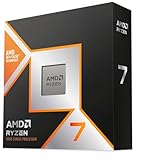
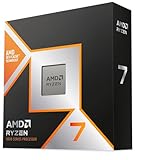
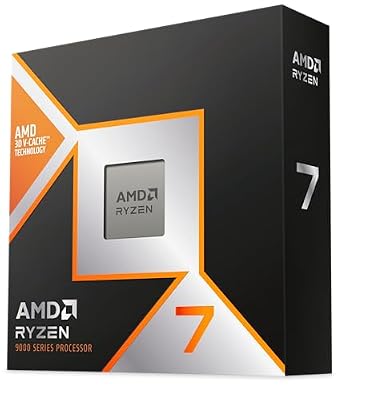
AMD Ryzen 7 9800X3D
The current gold standard for gaming, the 9800X3D combines a refined Zen 5 architecture with 3D V-Cache to deliver the highest gaming frame rates of any consumer CPU on the market, with excellent efficiency for its performance tier.
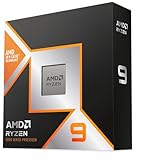
AMD Ryzen 9 9950X3D
This 16-core flagship blends elite gaming performance with serious multitasking muscle, making it the pick for gamers who also stream, edit video, or run demanding creative workloads alongside their games.
AMD Ryzen 7 7800X3D
Still one of the best value-to-performance gaming chips available, the 7800X3D offers frame rates remarkably close to its 9800X3D successor at a noticeably lower price point.
AMD Ryzen 5 9600X
A strong mid-range option on the AM5 platform, the 9600X delivers modern architecture and solid single-thread performance for builders who want a future-proof socket without paying for 3D V-Cache.
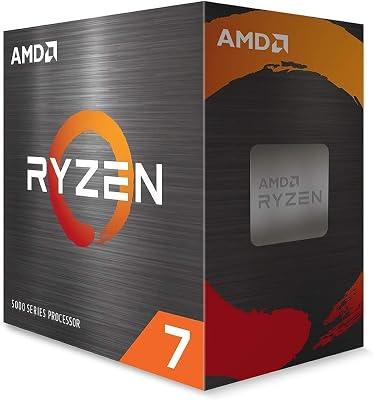
AMD Ryzen 7 5800X3D
For gamers on the older AM4 platform, the 5800X3D remains an excellent upgrade path, injecting 3D V-Cache gaming performance into existing builds without a full motherboard swap.
Related Guides
- Snapdragon Processor Vs Intel: Full Comparison (2026)
- Best CPU Gaming Case (2026)
- Best Graphics Processor For Gaming (2026)
- Best CPU Cooling For Gaming (2026)
- Best Am4 Processor For Gaming (2026)
Frequently Asked Questions
Do I need an X3D chip for gaming in 2026?
Not strictly, but X3D chips consistently lead gaming benchmarks thanks to their extra cache, so they’re worth the premium if maximizing frame rates is your priority.
Is AM4 still worth buying into for gaming?
AM4 is a mature, affordable platform, and chips like the Ryzen 7 5800X3D make it a smart budget path, though AM5 offers a longer upgrade runway for future CPU generations.
How many cores do I actually need for gaming?
Six to eight cores is the sweet spot for nearly all current games; more cores mainly benefit streaming, editing, or heavy background multitasking rather than raw frame rates.
Will a budget Ryzen 5 bottleneck a high-end GPU?
Entry-level chips like the Ryzen 5 5500 can bottleneck flagship GPUs at high resolutions, so pair budget CPUs with mid-range graphics cards for a balanced build.
Final Thoughts
For most gamers, the AMD Ryzen 7 9800X3D is the best overall choice, with the Ryzen 7 7800X3D offering exceptional value for those watching their budget, and the Ryzen 9 9950X3D reserved for enthusiasts who need top-tier gaming performance alongside heavy multitasking power.
Top picks from this guide
 AMDAMD Ryzen 7 3700X 8-Core, 16-Thread Unlocked Desktop Processor with…$149 \xc2\xb7 99/100
 AMDAMD Ryzen 7 7800X3D 8-Core, 16-Thread Desktop Processor$349 \xc2\xb7 98/100
 AMDAMD Ryzen 7 5800X 8-core, 16-thread unlocked desktop processor$255 \xc2\xb7 98/100
 AMDAMD Ryzen 7 5700X 8-Core, 16-Thread Unlocked Desktop Processor$200 \xc2\xb7 98/100