Best gaming monitor for a first time buyer searches often begin with confusing specifications: refresh rates, unfamiliar panel technologies, and competing resolution claims. Your practical problem is simpler. You need a display that matches your existing hardware, available desk space, and preferred games without requiring expensive upgrades.
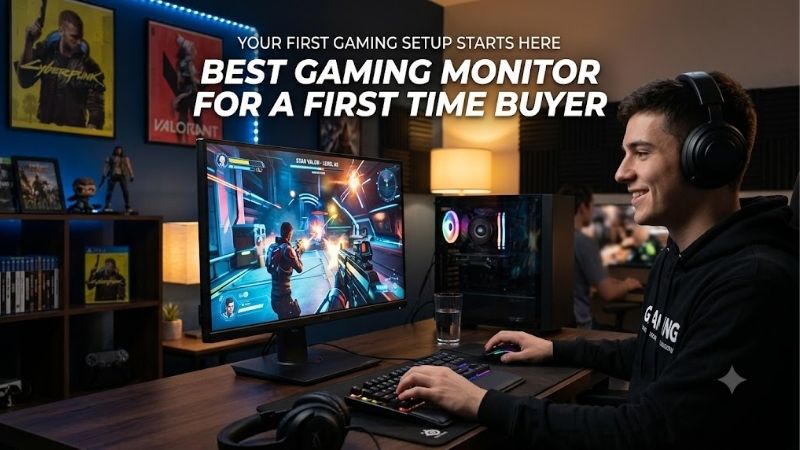
Quick answer: For most people in 2026, the best gaming monitor for a first time buyer is the ASUS ROG Strix XG27ACS — our #1 rated choice. See the full ranked comparison, alternatives and buying advice below.
How to Choose a Gaming Monitor
The best gaming monitor for a first time buyer should complement your current equipment. This guide compares four specific models for balanced PC gaming, affordable competition, combined productivity, and console entertainment. Each recommendation explains relevant specifications and limitations, making the purchasing decision easier to justify.
Resolution and Graphics Demands
Resolution determines how many pixels compose each image. Higher resolutions reveal finer scenery and sharper lettering, but increase graphics processing requirements. A 27-inch 1440p display balances desktop clarity against gaming demands without requiring premium hardware. For that practical combination, choose the ASUS ROG Strix XG27ACS.
Before committing to 4K, compare performance benchmarks for your GPU in your preferred games. Target resolution matters more than the impressive screenshot in a listing. Lower settings remain possible, but selecting manageable requirements simplifies ownership. For a lower resolution that favors modest hardware, choose the AOC 24G4.
Refresh Rate and Adaptive Sync
Refresh rate describes how frequently the display updates; frame rate describes computer output. Higher refresh rates accommodate additional frames without guaranteeing games produce them. Matching capabilities avoids paying for unused specifications. For 1440p gaming with additional refresh headroom, choose the ASUS ROG Strix XG27ACS.
Adaptive synchronization adjusts display timing to compatible graphics output, reducing tearing when performance fluctuates. Support depends on hardware and input, so verify the combination rather than assuming every input works identically. Smoothness deserves priority over small refresh differences. For compact 180Hz gaming, choose the AOC 24G4.
Screen Size and Stand Adjustments
Display size influences viewing distance and workspace. Larger screens make scenery more prominent but require separation to keep the whole image comfortable to scan. Measure desk depth and stand clearance before choosing a diagonal measurement. For spacious setups where a larger picture suits your seating position, choose the Dell G3223Q.
Stand adjustments provide flexibility when positioning the display alongside keyboards, microphones, or a laptop. Height adjustment matters when desks cannot move; swivel matters when seating is offset. A larger screen can be harder to accommodate. For detailed 4K visuals with less panel width than the 32-inch Dell, choose the Gigabyte M28U.
Connections and Shared Peripherals
Connections determine resolution and refresh combinations. Console owners should verify 4K at 120Hz support instead of relying on HDMI branding. Compatible games still require performance modes, sometimes sacrificing visual detail. For larger-screen console gaming with supported high-refresh connections, choose the Dell G3223Q.
A KVM switch allows computers to share a keyboard and mouse through the monitor, reducing cable changes between work and gaming sessions. This convenience requires USB connections and setup; single-computer households gain little. For a combined workspace where peripheral sharing solves a daily problem, choose the Gigabyte M28U.
Top Picks
The best gaming monitor for a first time buyer addresses a limitation instead of maximizing specifications. These selections emphasize priorities: balanced resolution, affordable speed, productive flexibility, and larger console visuals. Compare their input limits and dimensions before paying for capabilities your setup cannot exploit.
| Product | Best For | Key Spec | Watch Out For |
|---|---|---|---|
| ASUS ROG Strix XG27ACS | Best Overall | 27-inch 1440p IPS, 180Hz via DP/USB-C | HDMI 144Hz; USB-C 7.5W |
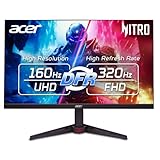
| AOC 24G4 | Best Value | 23.8-inch 1080p IPS, 180Hz | Less desktop space; no USB hub |
| Gigabyte M28U | Work and Gaming | 28-inch 4K IPS, 144Hz, KVM | No swivel; console 4K/120Hz uses 4:2:0 |
| Dell G3223Q | Console Gaming | 32-inch 4K IPS, 144Hz PC, 120Hz console | Large footprint; 24Gbps HDMI |
ASUS ROG Strix XG27ACS: Best Overall
The ASUS ROG Strix XG27ACS earns my best overall recommendation for PC gaming. Its 27-inch Fast IPS panel combines 2560 x 1440 resolution with 180Hz through DisplayPort or compatible USB-C video. This combination provides desktop definition alongside refresh headroom for competitive games, without introducing the graphics demands of 4K.
It is the best gaming monitor for a first time buyer seeking versatility across shooters, strategy games, and work. Its limitation is connectivity: HDMI reaches 144Hz, while USB-C delivers only 7.5W. Laptop owners still need their regular charger rather than expecting this display to provide full docking-station functionality.
AOC 24G4: Best Value
The AOC 24G4 is my best value selection when its selling price remains below the 1440p ASUS. Its 23.8-inch IPS panel combines 1920 x 1080 resolution with 180Hz operation. Reduced graphics requirements make this a sensible starting point for modest desktops, particularly when competitive performance matters more than detailed scenery.
This is the best gaming monitor for a first time buyer prioritizing manageable hardware requirements and compact dimensions. Its drawback is resolution: 1080p provides less image detail and multitasking space than 1440p. The missing USB hub further limits convenience. Select it for affordable gaming rather than extensive desktop productivity.
Gigabyte M28U: Best for Work and Gaming
The Gigabyte M28U is best for combined work and gaming. Its 28-inch IPS panel offers 3840 x 2160 resolution at up to 144Hz, with a built-in KVM switch. High pixel density benefits document clarity, while peripheral sharing accommodates separate computers. This recommendation makes sense when productivity contributes to its value.
It can be the best gaming monitor for a first time buyer balancing work with entertainment. Limitations include 4K graphics requirements and a stand with height and tilt adjustment but no swivel. Console 4K at 120Hz uses 4:2:0 chroma, reducing color detail. Choose its sharp desktop and KVM with those compromises understood.
Dell G3223Q: Best for Console Gaming
The Dell G3223Q is best for console gaming on a spacious home desk. Its 32-inch Fast IPS panel delivers 3840 x 2160 resolution, supporting 144Hz with compatible PC connections and 4K at 120Hz with compatible consoles. Larger dimensions suit players sitting farther away, when scenery matters more than a compact workstation.
It can be the best gaming monitor for a first time buyer when console immersion outweighs compactness. Its width can overwhelm shallow desks, making positioning a purchasing constraint. HDMI bandwidth is 24Gbps, with console 4K at 120Hz using 4:2:0 chroma. Evaluate viewing distance before assuming the size deserves extra spending.
Frequently Asked Questions
Questions about the best gaming monitor for a first time buyer usually involve resolution, refresh rates, and display settings. Specifications describe capabilities rather than guaranteeing compatibility across devices and games. These answers explain practical priorities and exceptions without treating premium features as mandatory purchases.
Should I Choose 1080p, 1440p, or 4K?
Choose 1440p for a balanced first PC monitor when your graphics card delivers good performance at that resolution. It improves desktop definition without introducing the processing burden of 4K. The ASUS fits this middle ground. Choose 1080p instead when maintaining competitive frame rates on modest hardware is your primary concern.
Consider 4K when document clarity, work, or compatible console entertainment justifies the expense. The Gigabyte and Dell accommodate those priorities at different sizes. Older games may perform well at 4K without premium graphics hardware. Evaluate the software you actually use rather than treating blockbuster requirements as universal.
Is 144Hz Too Much for a Beginner?
No, 144Hz is a sensible starting point rather than excess for beginners. Compared with 60Hz, it accommodates more frequent image updates when your computer supplies frames. Competitive rankings are irrelevant to that benefit. Prioritize resolution and game performance before spending more on extreme refresh specifications.
The exception is gaming dominated by titles limited to 30 or 60fps, where higher refresh rates contribute less. Console buyers should prioritize 120Hz modes instead of chasing PC-only maximums. Variable performance does not automatically waste a higher-refresh screen when adaptive sync improves frame delivery below its maximum.
Should HDR Determine My Purchase?
No, HDR should not determine this purchase unless contrast and brightness justify it. Accepting an HDR signal does not guarantee bright highlights alongside deep shadows. These recommendations are justified by resolution, dimensions, refresh capability, and connectivity. Treat basic HDR compatibility as secondary rather than premium.
If dark-room contrast is your priority, investigate capable mini-LED or OLED alternatives before choosing. Those technologies introduce different costs and upkeep. For these IPS recommendations, assess ordinary desktop and gaming performance first. An HDR badge alone cannot establish how satisfying a display looks in your room.
How Do I Set Up My First Gaming Monitor?
Connect the display to your graphics card, then select native resolution and the highest supported refresh rate in system settings. Motherboard connections may follow a different graphics path from the dedicated GPU. Correct cabling alone does not ensure correct setup; an otherwise compatible monitor can remain at 60Hz until settings change.
Use the return period to inspect solid-color screens, text clarity, and familiar gameplay. Look for defective pixels, image irregularities, and motion artifacts during normal use. Aggressive overdrive can introduce bright outlines around moving objects; reducing that setting distinguishes a configuration problem from a display defect.
Final Thoughts
The best gaming monitor for a first time buyer matches current needs and a defensible budget. Choose ASUS for balanced 1440p PC gaming, AOC for modest hardware, Gigabyte for a shared 4K workspace, or Dell for larger console visuals. Compare selling prices, return conditions, and input requirements before purchasing capabilities you rarely use.
Ready to decide? Our #1 pick for 2026 is the ASUS ROG Strix XG27ACS.
Live price & availability on Amazon.