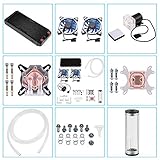
- Top Pick: ARCTIC Liquid Freezer III Pro 360 A-RGB – AIO CPU Cooler, Water Cooling
- Best Value: BXQINLENX 24-Piece Silver Chrome G1/4" Fittings Kit for Custom PC Water Cooling Systems (Silver)
- Premium Choice: Thermalright Aqua Elite 240 V3 Water Cooling CPU Cooler, Double PWM ARGB Fans with S-FDB Bearings,Efficient PWM Controlled Pump,for AMD/AM4/AM5, Intel LGA1150/1151/1200/1700/1851, (AE240 V3)
Air or liquid cooling is one of the classic build decisions, and in 2026 both options are better than ever. A premium air tower like the Thermalright Peerless Assassin 120 SE rivals many all-in-one liquid coolers for a fraction of the price, while a 360mm AIO like the ARCTIC Liquid Freezer III Pro handles the hottest CPUs with quieter sustained performance and a cleaner look.
This comparison cuts through the marketing to show you which cooler actually suits your CPU, case, and budget. Neither is universally better; the right pick depends on your thermal load, how much you value aesthetics, and how much maintenance risk you are willing to accept.
As an Amazon Associate we earn from qualifying purchases at no extra cost to you.




⚡ Save on Your Next PC — Amazon Prime
Prime members get fast free shipping on the systems above, plus early access to Prime Day & Black Friday PC deals. New members get a 30-day free trial.
Watch: Air vs Water Cooling for Gaming PCs — Video Review
Quick Verdict
Choose a high-end air cooler for the best value, reliability, and zero pump-failure risk on mainstream CPUs. Choose a 240mm or 360mm AIO like the ARCTIC Liquid Freezer III Pro or Thermalright Aqua Elite 240 for top-tier CPUs, cleaner cable-free looks, and quieter behavior under sustained heavy loads. Custom loops are for enthusiasts chasing the absolute best or a specific aesthetic.
Key Differences
- Cooling ceiling: A good 360mm AIO edges out even the best air tower on the hottest CPUs under sustained load.
- Value: Air coolers deliver more cooling per dollar and last the life of the PC.
- Noise: Larger radiators move heat with slower fans, so AIOs can run quieter under heavy load.
- Reliability: Air has no pump to fail; an AIO pump is a moving part with a finite lifespan.
- Clearance: Tall air towers can block RAM or side panels; AIOs free up space around the socket.
- Aesthetics: AIOs offer a cleaner, cable-light look with RGB pump caps and radiator fans.
Air Cooling
Modern dual-tower air coolers are shockingly capable. The Thermalright Peerless Assassin 120 SE, with six heat pipes and dual 120mm fans, keeps mainstream and even many high-end CPUs well within safe temperatures for a tiny price. There is no pump to wear out, no liquid to leak, and no maintenance beyond an occasional dusting, making air the most reliable long-term choice.
The downsides are size and clearance. Big towers are heavy, can obstruct tall RAM, and may not fit slim cases. They also dump heat directly into the case, so your case airflow matters more. For the vast majority of builds, though, a quality air cooler is all you will ever need.
Water Cooling
All-in-one liquid coolers move heat from the CPU to a radiator mounted on the case, where large surface area and slow-spinning fans dissipate it quietly. A 360mm unit like the ARCTIC Liquid Freezer III Pro or a 240mm Thermalright Aqua Elite 240 V3 is the go-to for the hottest flagship CPUs and for builders who want a clean, open look around the socket with RGB accents.
The trade-offs are cost and the pump. AIOs cost more than equivalent air coolers, and the pump is a moving part that will eventually fail, typically after many years. Leaks are rare on quality sealed units but not impossible. If you run a top-tier CPU, stream while gaming, or simply want the aesthetic, an AIO earns its price; otherwise air is the safer value.
Which Should You Buy?
- Pick air for mainstream CPUs, tight budgets, and maximum long-term reliability.
- Pick a 240mm AIO for high-end CPUs in mid-tower cases with a clean look.
- Pick a 360mm AIO for flagship CPUs, heavy sustained workloads, or overclocking.
- Check RAM and case clearance before committing to a tall air tower.
- Confirm your case supports the radiator size on the top or front before buying an AIO.
Frequently Asked Questions
Does water cooling cool better than air?
A large AIO edges out the best air coolers on the hottest CPUs under sustained load, but on mainstream chips the difference is small. Air is more than enough for most builds.
Can an AIO leak and kill my PC?
It is rare with quality sealed units, but the risk is not zero. Air coolers eliminate that risk entirely, which is a real advantage for peace of mind.
How long does an AIO pump last?
Typically five to seven years or more for quality units. It is a wear part, so unlike air it will eventually need replacing.
Is a 240mm or 360mm AIO better?
A 360mm radiator dissipates more heat and can run quieter, but a 240mm unit is plenty for most high-end CPUs and fits more cases. Match the size to your case and CPU heat.
Final Verdict
For most gamers, a premium air cooler like the Peerless Assassin 120 SE offers the best mix of performance, price, and reliability. Step up to a 240mm or 360mm AIO only if you run a flagship CPU, want the quietest sustained load, or care about the cleaner aesthetic. Both are excellent; match the cooler to your CPU’s heat and your case’s limits.
Top picks from this guide
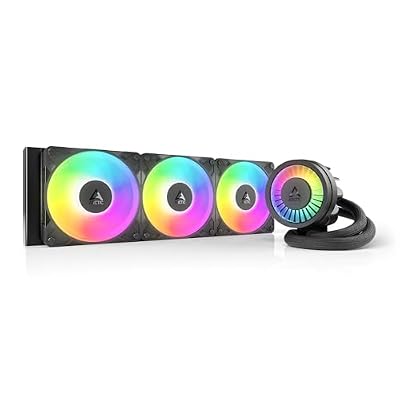 ARCTICARCTIC Liquid Freezer III Pro 360 A-RGB - AIO CPU…$77 \xc2\xb7 99/100
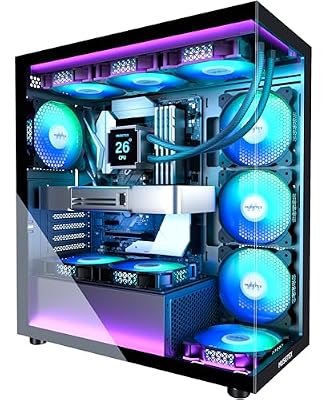 MUSETEXMUSETEX ATX PC Case 7 PWM ARGB Fans Pre-Installed, Type-C…$80 \xc2\xb7 98/100
 ThermalrightThermalright Peerless Assassin 120 SE CPU Cooler, 6 Heat Pipes…$31 \xc2\xb7 96/100
 ThermalrightThermalright Aqua Elite 240 V3 Water Cooling CPU Cooler, Double…$45 \xc2\xb7 96/100