As an Amazon Associate we earn from qualifying purchases at no extra cost to you.

The Short Answer
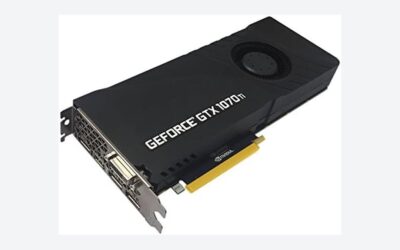
Yes, the RTX 5070 fits in most micro ATX cases, but it depends on which card you buy. The Founders Edition at approximately 244mm long clears the GPU length limits of the vast majority of mATX chassis on the market. Partner cards from ASUS, MSI, Gigabyte, and others range from 250mm to over 330mm, and the longer triple-fan variants will not fit cases with a 280mm or smaller clearance limit. The critical condition is verifying your specific case’s maximum GPU length before purchasing an AIB model with a beefier cooler.
The Numbers
| Specification | Value | Notes |
|---|---|---|
| Total Board Power (TBP) | 250W | Per NVIDIA official specification |
| Transient power spikes | Approximately 400–500W | Short-duration peaks reported by Gamers Nexus and TechPowerUp during load transients; significantly lower than the RTX 5080/5090 |
| Recommended PSU | 650W minimum | NVIDIA official recommendation; 750W provides comfortable headroom with high-end CPUs |
| Power connector | 12V-2×6 | Revised connector (not the original 12VHPWR); uses same cable form factor |
| Founders Edition dimensions | ~244mm × 114mm × 36mm (2-slot) | Compact dual-slot cooler; the most compatible option for tight mATX builds |
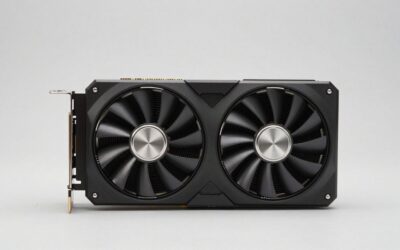
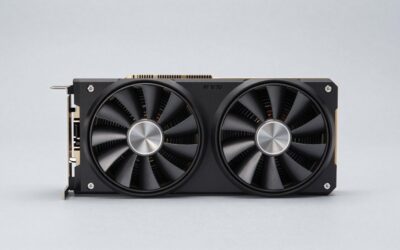
| Common AIB dimensions | 250–330mm length; 2 to 3.5 slots | Varies widely by model; triple-slot coolers may block adjacent PCIe slots or interfere with front radiators |
| PCIe interface | PCIe Gen 5 x16 | Fully backwards compatible with Gen 4 and Gen 3 slots |
| Supported platforms | AM5, LGA 1851, LGA 1700, AM4, Intel 100-series and newer | No specific BIOS version required; standard PCIe initialization |
When the Answer Changes
Several factors can push a “yes” into a “maybe” or “no” territory:
CPU pairing: A high-TDP processor like a Ryzen 9 or Core i9 generates additional thermal load inside a compact case. In tight mATX chassis with limited airflow, a hotter CPU environment can cause the GPU to throttle at the same clock speeds where a cooler platform would not. This does not prevent physical installation but affects sustained performance.
Overclocking: The Founders Edition’s compact 2-slot cooler leaves less thermal headroom for aggressive overclocking. AIB cards with larger coolers and 3+ slot designs dissipate heat more effectively but demand more internal volume. In a case with 310mm GPU clearance, a 305mm triple-slot card fits physically but may restrict airflow to surrounding components, indirectly affecting overclocking potential.
Older power supplies: Units built before 2018 or those that already struggle with transient spikes from high-draw GPUs may trip overcurrent protection when the RTX 5070 hits short-duration peaks. While 250W TBP is modest, the spike behavior means a quality 650W unit is safer than a questionable 700W unit with poor transient response. Reviews from Hardware Unboxed and Tom’s Hardware have documented that PSU quality matters more than wattage alone for Blackwell-series cards.
BIOS considerations: No BIOS update is strictly required for the RTX 5070 to initialize on modern platforms. However, very early PCIe Gen 5 motherboards (particularly first-batch Z790 and X670 boards) received BIOS updates that improved PCIe link training stability. If your board is on the earliest firmware revision and you experience intermittent display issues, updating to the latest stable BIOS resolves the problem.
How to Check Your Own System
Start by finding your case’s maximum GPU length. This specification is listed on the manufacturer’s product page under “Supports up to X mm graphics card” in the spec sheet. Common mATX cases have limits ranging from 240mm (ultra-compact models like some Jonsbo or Cooler Master NR-series variants) to 360mm (full mATX towers like the Corsair 4000D or NZXT H5 Flow).
If your case supports a front radiator, remember that a 240mm or 360mm AIO mounted on the front fan wall reduces available GPU length by the radiator thickness plus fan height (typically 25mm + 25mm = 50mm). Subtract this from the manufacturer’s listed maximum to get your true clearance.
Measure your candidate card. The GPU length, width, and slot thickness are listed in the product specifications on the manufacturer’s website. Compare against your case’s clearance. Also verify that the card’s cooler does not overlap the case’s drive cage or bottom-mounted PSU shroud in ways not captured by the single length number.
Safe Options if It Doesn’t Fit
If your micro ATX case has a clearance below 250mm, the RTX 5070 Founders Edition at approximately 244mm is the most reliable choice. It is a 2-slot card with a compact footprint.
If the Founders Edition is unavailable in your region, look for “mini” or “ITX” variants from AIB partners. ASUS produces TUF models with shorter PCBs in some SKUs, and MSI’s Ventus line includes compact 2-slot options. Verify exact dimensions before ordering.
If no RTX 5070 model clears your case, consider a short-length alternative from the same performance tier, or upgrade to a case with better GPU clearance. In 2026, the mATX market has shifted toward taller cases that accommodate modern GPU dimensions, so replacement options are plentiful.
For cases under 240mm clearance, a low-profile card like the RTX 4060 or RX 7600 may be a better physical fit, though performance is a generation behind.
FAQ
Can I install the RTX 5070 in a case with 250mm GPU clearance?
The Founders Edition at approximately 244mm fits with roughly 6mm of margin. AIB cards longer than 250mm will not fit in this scenario. Verify exact card dimensions against your case spec sheet before purchasing.
Does the 12V-2×6 connector require a new power supply?
Not necessarily. Most PSUs that include a native 12V-2×6 cable (ATX 3.0 or 3.1 certified units released from 2023 onward) connect directly. Older ATX 2.x supplies can use the included adapter cable with dual or triple 8-pin connections, provided the unit has sufficient wattage and transient headroom.
Will a 3-slot RTX 5070 block my second PCIe slot?
Yes, a 3-slot card will occupy the space above and potentially below the primary PCIe x16 slot. In mATX layouts where the second full-length slot sits directly below, it will be inaccessible. Most gamers do not use a second PCIe slot, so this rarely matters in practice.
Is PCIe Gen 5 necessary for the RTX 5070?
No. The RTX 5070 uses a PCIe Gen 5 x16 interface but delivers negligible performance difference on Gen 4 x16 or even Gen 4 x8 slots. At 250W TBP, bandwidth requirements are well within Gen 4 limits. Any motherboard with a PCIe 3.0 x16 slot will run the card without meaningful bottleneck.
Sources and Methodology
Performance and power figures referenced in this article reflect approximate ranges drawn from launch-period reviews published by TechPowerUp, Tom’s Hardware, Gamers Nexus, Hardware Unboxed, and TechSpot. Transient spike observations are consistent across Gamers Nexus and TechPowerUp testing methodologies. Physical dimensions are taken from NVIDIA’s published Founders Edition specifications and individual AIB manufacturer spec sheets. No measurements were conducted by this site.