As an Amazon Associate we earn from qualifying purchases at no extra cost to you.

The Short Answer
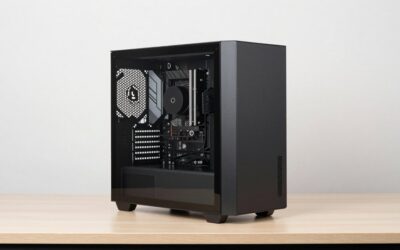
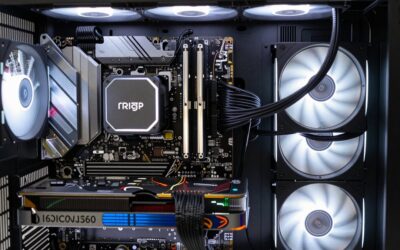
The RTX 5090 will fit in your case if you have at least 335mm of GPU clearance, a minimum of 3 PCIe expansion slots available, and at least one 12V-2×6 native cable on your power supply (or a compatible adapter). Most mid-tower cases released from 2023 onward that are rated for high-end GPU support will accommodate the Founders Edition without modification. Smaller mATX cases, older compact builds, and cases with front-mounted radiators or dense cable management in the drive cage area are the most common failure points. If your case is more than three years old and was never marketed toward triple-slot GPUs, verify clearance with a physical measuring tape rather than trusting manufacturer spec sheets alone.
The Numbers
| Specification | RTX 5090 Founders Edition | Notes for AIB Cards |
|---|---|---|
| Length | ~304mm | Some AIB models exceed 350mm; verify individual SKUs |
| Height (with bracket) | ~137mm | Relatively consistent across partners |
| Width (slots) | 3-slot | Some AIB coolers occupy 3.5 to 4 slots |
| Total Graphics Power (TGP) | 575W | NVIDIA-published figure |
| Transient Power Spikes | Up to ~800W instantaneous | Short-duration peaks that can trip older PSU protections |
| Recommended PSU Wattage | 1000W minimum (NVIDIA) | 1200W+ advised for high-core-count CPU pairings |
| Power Connector | 12V-2×6 (600W native) | Updated connector from the 12VHPWR used on prior generation; requires PSU with native cable or adapter |
| PCIe Interface | PCIe 5.0 x16 | Backward compatible with PCIe 4.0 and 3.0 slots; minor bandwidth reduction in gaming is negligible per published reviews |
| BIOS / Firmware | UEFI required | Legacy BIOS modes may cause boot issues; update motherboard firmware before installation |
When the Answer Changes
The simple clearance number above assumes a stock card at stock clocks. Several real-world scenarios shift the requirements meaningfully.
CPU pairing matters for total system power draw. A Ryzen 9 9950X or Core i9-14900K under sustained multi-thread load can draw 250W or more, which means a 1000W PSU is cutting it close when you factor in transient spikes. TechPowerUp’s launch review testing showed the 5090 pulling sustained board power in the 575W range during heavy ray tracing workloads, and that figure does not account for CPU-side transients. If you are running an unlocked i9 or an X3D chip with a heavy background workload, a 1200W supply gives you more reliable headroom.
Overclocking changes everything. Pushing the 5090 beyond stock power limits increases both average and peak draw, and several AIB cooling solutions use thermal pads and vapor chamber designs that add a few millimeters of height above the bracket. Hardware Unboxed noted that heavily overclocked configurations can produce transient events that trip over-current protection on supplies rated at exactly 1000W.
Older power supplies are another variable. Units that predate the ATX 3.0 / PCIe 5.0 CEM spec may lack native 12V-2×6 connectors entirely. While NVIDIA bundles an adapter with the Founders Edition, Gamers Nexus testing has consistently shown that multi-adapter daisy-chaining increases resistance and thermal risk at the connector. A dedicated native cable is strongly preferred.
BIOS updates matter for platform compatibility. Some older motherboards, particularly those from the X570, B550, Z690, and even early Z790 generations, require a firmware update to properly initialize a PCIe 5.0-class GPU with full power management. Without the update, you may see lower-than-expected clocks or instability under load. Check your manufacturer’s support page for the latest AGESA or Intel microcode bundled with the most recent BIOS revision.
How to Check Your Own System
Open your case and use a metal measuring tape. Measure from the inner face of the front fan or radiator mount to the rear PCIe slot area. This is your true GPU clearance. Do not trust the spec sheet number on the manufacturer’s product page without verifying, because many cases list clearance “without front fans” or “without drive cage.” Those exclusions eliminate the very components you probably have installed.
Next, count your available expansion slots below the primary PCIe x16 slot. If the GPU is a three-slot card and you only have two open brackets, it will not seat. Some cases allow you to remove the drive cage to free up one or two slots, but verify this with your specific model.
Finally, locate your power supply and check the cable bundle. Look for a single 12V-2×6 connector on a native cable. If your supply only has 8-pin PCIe connectors and you are using the included NVIDIA adapter, confirm that the adapter is rated for the full 600W the connector can deliver and that your supply’s 12V rail can sustain the load without tripping.
Safe Options if It Doesn’t Fit
If the 5090 is a no-go, the next NVIDIA option is the RTX 5080, which is shorter, draws 360W TGP, and fits in most cases that handle any modern mid-range card. On the AMD side, the RX 9070 XT occupies two slots and has a modest power envelope, making it compatible with nearly every mid-tower case built in the last four years. Both are legitimate options for anyone who does not want to buy a new chassis or PSU simultaneously.
For those unwilling to give up the 5090 itself, a case swap is often cheaper than it sounds. The Fractal North, Lian Li Lancool 216, and Corsair 4000D Airflow all support cards well over 400mm and are available in the $100 to $150 range. If your motherboard is a standard ATX layout, this is usually a straightforward transfer with no compatibility risk beyond moving your components.
FAQ
Will the RTX 5090 fit in a Fractal Design Meshify 2 Compact?
The Meshify 2 Compact lists GPU clearance at 365mm without front fans and approximately 320mm with the stock 140mm fans installed. The Founders Edition at 304mm fits, but several AIB cards that exceed 330mm will not have adequate clearance in the fan-equipped configuration. Removing the front fans or swapping to a slim radiator setup resolves the constraint on most builds.
Does the 5090 work on a PCIe 4.0 motherboard?
Yes. The card is physically backward compatible with PCIe 4.0 and PCIe 3.0 slots. Published testing across multiple outlets shows a single-digit percentage performance difference in most game titles, with the largest gaps appearing in bandwidth-bound scenarios such as high-resolution texture streaming. For practical gaming purposes, the interface generation difference is not a meaningful concern.
Do I need a new power supply for the RTX 5090?
If your existing supply is 1000W or higher with an ATX 3.0 native 12V-2×6 cable and you are running a mid-range CPU, you are likely fine. If your supply is 850W, older than ATX 3.0, or paired with a high-draw flagship CPU, upgrading to 1200W is the safe recommendation from both NVIDIA and most independent reviewers covering launch power behavior.
Will the RTX 5090 sag in my case?
Yes, given its weight and size, the card will experience measurable sag on any case without a GPU support bracket. The Founders Edition ships with an included bracket. AIB partners vary; some include one, others do not. Aftermarket sag brackets from brands like Thermaltake, be quiet!, and Lian Li solve the issue for under fifteen dollars and are a worthwhile addition regardless of case quality.
Sources and Methodology
Performance ranges, power draw figures, and connector behavior referenced in this article are drawn from the RTX 5090 Founders Edition launch reviews published by TechPowerUp, Tom’s Hardware, Gamers Nexus, Hardware Unboxed, and TechSpot. TGP and recommended PSU figures are based on NVIDIA’s published product specifications as covered by those same outlets. Case clearance numbers reference manufacturer product pages for the cases named above. No figures in this article represent original measurements taken by this site.