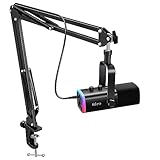
- Top Pick: FIFINE AmpliGame AM8T XLR/USB Gaming Microphone Set, Dynamic PC Mic
- Best Value: TONOR Gaming Microphone Set with Boom Arm, Vocal Condenser Microphone for Content Creators, USB Mic for PC with Stand, RGB, Tap Mute, Gain Control, Gaming Equipemnt, Twitch, Streaming, TC310+
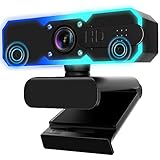
- Premium Choice: NBPOWER 1080P 60FPS Streaming Camera Webcam with Microphone and Fill RGB Light,Autofocus,Work with Laptop/Desktop Computer/Winsdows/Mac OS/PC Computer for Camera
A gaming PC for streaming needs more than raw gaming grunt — it needs the CPU cores and GPU encoding headroom to play and broadcast at the same time without dropping frames. By 2026, modern multi-core CPUs and NVENC-equipped RTX GPUs make that far easier. Here are the best PCs for streaming.
- Best Streaming Gaming PCs of 2026
- Streaming PC Comparison Table
- Best Overall: NZXT Player Series
- Best for Pros: Corsair Vengeance
- Best Value: MSI Aegis
- Software Encoding vs NVENC: Which Should You Use?
- Recommended Stream Settings by Platform
- What Makes a Good Streaming PC
- Single PC vs Dual PC Streaming
- Frequently Asked Questions
- Related Articles
🛒 Best Price Today on Amazon
Prime members get fast, free shipping on everything above, plus member-only deals. New members get a 30-day free trial — cancel anytime.
As an Amazon Associate we earn from qualifying purchases at no extra cost to you.

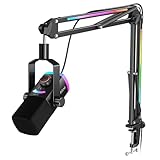


Best Streaming Gaming PCs of 2026
Streaming PC Comparison Table
| Streaming PC | CPU Cores | GPU | Best For | Price |
|---|---|---|---|---|
| NZXT Player Series | 8+ cores | RTX 5070 Ti | Game + stream | ~$1,899 |
| Corsair Vengeance | 12+ cores | RTX 5080 | Pro streaming | ~$2,499 |
| MSI Aegis | 8 cores | RTX 5070 | Value streaming | ~$1,599 |
Best Overall: NZXT Player Series
The NZXT Player Series balances strong multi-core CPU grunt with an RTX 5070 Ti, whose NVENC encoder shoulders the stream with barely a performance hit. You can game at high settings while pushing 1080p60 or higher cleanly. With quality cooling and build, it’s the best all-round streaming machine for most creators.
NZXT’s clean cable management and roomy airflow case mean the CPU and GPU stay cool during the double load of gaming plus encoding — thermals are where cheaper prebuilts stumble under streaming stress. The RTX 5070 Ti’s ninth-gen NVENC encoder also supports AV1, which delivers noticeably sharper stream quality at the same bitrate on platforms that accept it. For the vast majority of Twitch and YouTube creators, this is the machine that does everything without fuss.
Best for Pros: Corsair Vengeance
The Corsair Vengeance — 12-plus CPU cores and an RTX 5080 — is built for serious streamers juggling demanding games, high-bitrate encoding, and multitasking all at once. Those abundant cores and the premium GPU shrug off 4K gaming plus streaming, making it the call for professional creators.
The extra cores matter most when you run a full production stack — OBS with multiple scenes, a browser full of dashboards, chat bots, replay buffers, and background rendering or transcoding. The RTX 5080’s larger frame buffer and stronger AV1 encoder let you push 1440p or 4K streams at high bitrates while still gaming at max settings. If streaming is your income rather than a hobby, the headroom here prevents the dropped frames and encoder overload that cost you viewers.
Best Value: MSI Aegis
The MSI Aegis brings 8 capable CPU cores and an RTX 5070 at a friendlier price, handing new and growing streamers everything they need to game and broadcast in 1080p60. NVENC encoding keeps your in-game framerates up while you stream, which makes it a smart value play.
For someone building an audience from scratch, the Aegis hits the sweet spot: enough power to stream popular titles at a clean 1080p60 without the premium you’d pay for 4K-capable hardware you don’t yet need. The RTX 5070’s NVENC encoder is the same architecture as the pricier cards, so your stream quality doesn’t suffer — you simply have less headroom for the most demanding games at max settings. It’s the best entry point into serious streaming.
Software Encoding vs NVENC: Which Should You Use?
Streamers have two ways to encode a broadcast, and the choice shapes what hardware you need. x264 (CPU) encoding runs the compression on your processor and can produce marginally better image quality at low bitrates, but it steals CPU cycles from your game and demands a very high core count to do without stutter. NVENC (GPU) encoding runs on a dedicated hardware block inside the RTX GPU, so it barely touches your gaming performance and, on modern cards, matches or beats x264 quality thanks to the ninth-gen encoder and AV1 support.
For nearly every streamer in 2026, NVENC is the right answer — it frees your CPU for the game and background apps while delivering excellent quality. Reserve x264 only if you’re on a platform that can’t accept the newer codecs and you have cores to spare. This is exactly why every PC on this list pairs an RTX GPU with a strong CPU rather than chasing raw core count alone.
Recommended Stream Settings by Platform
- Twitch (H.264): 1080p60 at 6,000 kbps is the safe ceiling for most partners — clean and reliable for fast-paced games.
- YouTube (AV1/HEVC): 1440p or 4K at higher bitrates is supported; AV1 delivers sharper detail at the same data rate.
- Kick and others (AV1): Take advantage of AV1 for better quality-per-bitrate on RTX 50-series encoders.
Whatever the platform, keep your upload headroom in mind — aim to use no more than 70-80% of your available upload bandwidth so buffering and dropped frames don’t creep in.
What Makes a Good Streaming PC
- CPU cores: 8+ cores help juggle gaming, encoding, and background apps
- NVENC GPU encoding: Offloads streaming from the CPU with minimal quality loss
- RAM: 32GB is ideal for gaming plus OBS, chat, and browser overhead
- Fast storage: NVMe SSDs speed up scene loading and clip saving
Complete your setup with a streaming mic, webcam, and Stream Deck.
Single PC vs Dual PC Streaming
Modern hardware has made single-PC streaming genuinely effective — an RTX GPU’s NVENC encoder handles the broadcast with negligible impact on framerates, so most streamers don’t need a second box. A dual-PC setup (gaming rig plus a dedicated streaming PC and a capture card) is still the pro gold standard for maxed games at high bitrates, but it piles on cost and complexity most creators can skip in 2026.
Frequently Asked Questions
What specs does a PC need to game and stream at the same time?
Streaming while gaming demands CPU and GPU headroom. A modern 8-core-plus CPU handles software encoding and game logic, while a GPU with a strong hardware encoder like NVENC offloads streaming with minimal frame loss. Aim for at least 32GB of RAM and a fast SSD. This combination lets you broadcast at 1080p60 without tanking your in-game frame rate.
Should I use hardware or software encoding for streaming?
Hardware encoding, such as NVIDIA NVENC or AMD equivalents, uses a dedicated chip on the GPU so your game performance barely drops, and modern NVENC quality rivals software x264. Software encoding uses the CPU for slightly better quality at a heavy performance cost. For most single-PC streamers, hardware encoding is the clear choice, freeing CPU resources for the game itself.
Do I need a two-PC setup or can one PC handle streaming?
A single strong PC handles gaming and streaming well thanks to modern hardware encoders, and it is simpler and cheaper. A dedicated two-PC setup, where a second machine encodes the stream, offers the highest quality and zero game impact, favored by professional streamers. Start with one capable PC; only add a second machine if you push very high bitrates or resolutions.
How much RAM do I need for streaming?
32GB of RAM is the sweet spot for gaming and streaming, since the game, broadcast software, browser sources, chat tools, and overlays all consume memory simultaneously. 16GB can work for lighter setups but leaves little headroom and may stutter with many sources open. If you multitask heavily or run large games, 32GB ensures smooth, stable streaming sessions.
What internet upload speed is required for streaming?
Upload speed determines your stream quality. For 1080p60 at a 6000 kbps bitrate, you want at least 10 Mbps upload with headroom, and a wired Ethernet connection for stability. Higher resolutions need more. Check your upload, not just download speed, and use a wired connection since Wi-Fi fluctuations cause dropped frames that no amount of PC power can fix.
Ready to decide? Our #1 pick for 2026 is the NZXT Player Series.
Live price & availability on Amazon.
Top picks from this guide
 FIFINEFIFINE AmpliGame AM8T XLR/USB Gaming Microphone Set, Dynamic PC Mic…$58 \xc2\xb7 98/100
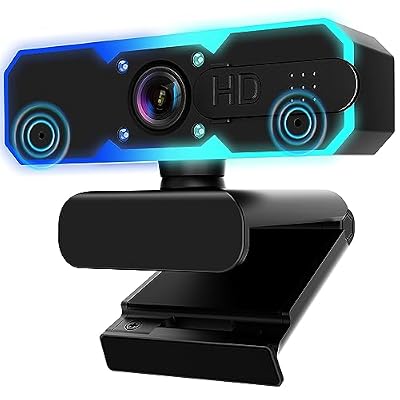 NBPOWERNBPOWER 1080P 60FPS Streaming Camera Webcam with Microphone and Fill…$30 \xc2\xb7 95/100
 ElgatoElgato Stream Deck MK.2 Studio Controller, 15 Macro Keys |…$120 \xc2\xb7 95/100
 TONORTONOR Gaming Microphone Set with Boom Arm, Vocal Condenser Microphone…$30 \xc2\xb7 94/100