The gaming CPU works in lockstep with your GPU to keep frame rates high and smooth. In 2026, AMD’s Ryzen X3D chips with 3D V-Cache rule the gaming charts, while Intel’s latest Core parts hold up well all round. Pick the right CPU and your GPU never gets held back. Get it wrong and even a flagship graphics card can be starved of frames, especially in fast-paced competitive titles. This guide covers the best gaming CPUs of 2026, how much processor you actually need, and why cache and platform choice matter more than raw clock speed.
- Best Gaming CPUs of 2026
- Gaming CPU Comparison Table
- Best Gaming CPU: AMD Ryzen 7 9800X3D
- Best for Gaming + Productivity: Ryzen 9 9950X3D
- Best Value: Ryzen 7 7800X3D
- Why 3D V-Cache Matters for Gaming
- AMD vs Intel for Gaming in 2026
- How Much CPU Do You Need?
- Don’t Forget the Platform Costs
- Frequently Asked Questions
- Related Articles
🛒 Best Price Today on Amazon
Prime members get fast, free shipping on everything above, plus member-only deals. New members get a 30-day free trial — cancel anytime.
As an Amazon Associate we earn from qualifying purchases.






Best Gaming CPUs of 2026
Gaming CPU Comparison Table
| CPU | Cores/Threads | Cache | Socket | Best For | Price |
|---|---|---|---|---|---|
| AMD Ryzen 7 9800X3D | 8/16 | 96MB 3D | AM5 | Best Gaming | ~$479 |
| AMD Ryzen 9 9950X3D | 16/32 | 128MB 3D | AM5 | Gaming + Productivity | ~$699 |
| AMD Ryzen 7 7800X3D | 8/16 | 96MB 3D | AM5 | Value Gaming | ~$349 |
| Intel Core Ultra 9 285K | 24/24 | 36MB | LGA1851 | Productivity | ~$589 |
| AMD Ryzen 5 9600X | 6/12 | 32MB | AM5 | Budget Gaming | ~$279 |
Best Gaming CPU: AMD Ryzen 7 9800X3D
The Ryzen 7 9800X3D is the best gaming CPU you can buy in 2026. Its second-gen 3D V-Cache (96MB) supercharges gaming, and unlike older X3D chips it’s fully overclockable. With 8 cores and 16 threads it chews through modern games while staying efficient. For a pure gaming build, nothing else comes close. The redesigned cache-below-die layout also runs cooler and clocks higher than the previous generation, so it no longer trades productivity performance for gaming wins — it leads in both. Pair it with a good air or 240mm liquid cooler and DDR5-6000 memory and it will feed any GPU on the market without breaking a sweat.
Best for Gaming + Productivity: Ryzen 9 9950X3D
If you stream, edit video, or run heavy productivity alongside gaming, the Ryzen 9 9950X3D is the ultimate call. With 16 cores, 32 threads, and 3D V-Cache, it pairs top-tier gaming with serious multi-threaded muscle. It’s the do-everything flagship for creators who also game. The chip intelligently parks the non-cache cores during gaming to keep latency low, then unleashes all 16 cores for rendering, compiling, or exporting. If your PC is a workstation by day and a gaming rig by night, this is the processor that refuses to compromise on either job.
Best Value: Ryzen 7 7800X3D
The previous-gen Ryzen 7 7800X3D is still a phenomenal gaming chip and has dropped in price, making it brilliant value. Its 3D V-Cache lands gaming performance near the 9800X3D for less, and it shares the same AM5 platform for future upgrades. For budget-minded gamers, it’s a smart buy. Because AM5 is supported through at least 2027, you can start with the 7800X3D today and drop in a newer X3D chip years down the line without replacing your motherboard or memory — a rare upgrade path that stretches your money further.

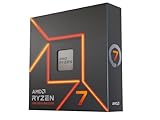
AMD Ryzen 7 7800X3D 8-Core, 16-Thread Desktop Processor


As an Amazon Associate we earn from qualifying purchases. Product prices and availability are accurate as of the date/time indicated.
Why 3D V-Cache Matters for Gaming
AMD’s 3D V-Cache stacks extra L3 cache right on the chip, giving games quicker access to the data they hit constantly. That slashes memory latency in gaming workloads and translates to noticeably higher frame rates — especially in CPU-bound games like sims, strategy titles, and high-fps competitive shooters. X3D chips top the gaming benchmarks again and again. The benefit is largest at 1080p and 1440p where the CPU has to feed frames fastest; titles like Microsoft Flight Simulator, Factorio, and competitive shooters can see 20–30% gains over an identical non-X3D chip purely from the larger cache.
AMD vs Intel for Gaming in 2026
For pure gaming, AMD’s X3D chips are the clear winners thanks to 3D V-Cache, and the AM5 platform gives you a long upgrade runway. Intel’s Core Ultra 9 285K is a strong all-rounder that shines in productivity and handles high-speed memory well, but it trails the X3D parts in most games. If your build is gaming-first, choose an AMD X3D CPU. If you split time between gaming and heavy multi-core work and value platform features, Intel is competitive — just know you are giving up some frames to get there.
How Much CPU Do You Need?
Match your CPU to your gaming goals:
- 1080p high-refresh competitive: CPU matters most here — a 9800X3D maximizes framerates
- 1440p gaming: A mid-range CPU like the 9600X pairs well with most GPUs
- 4K gaming: GPU-bound, so even a mid-range CPU rarely bottlenecks
Don’t Forget the Platform Costs
A CPU is only one piece of the puzzle. Every AM5 or LGA1851 build needs a compatible motherboard, DDR5 memory, and adequate cooling. X3D chips run efficiently and pair happily with a solid air cooler, saving money versus chasing an expensive AIO. Budget for a B650 (AMD) or B860 (Intel) board for most gamers — high-end X870E or Z890 boards add features like more PCIe lanes and faster networking that pure gamers rarely need. Spending the savings on a better GPU almost always yields more frames than a pricier motherboard.
Frequently Asked Questions
How many cores do I need for gaming?
Most games are well-served by 6 to 8 cores, and going far beyond that yields little gaming benefit while costing more. An 8-core CPU offers a great balance for gaming plus light multitasking and streaming. Extra cores help productivity and heavy background tasks but not frame rates directly. For a pure gaming build, a strong 6 or 8-core chip is the sweet spot.
Does the CPU or GPU matter more for gaming?
For most gaming, especially at 1440p and 4K, the GPU is the bigger determinant of frame rates, so prioritize your graphics card budget. The CPU matters more at 1080p, in competitive high-refresh gaming, and in CPU-heavy simulation and strategy titles. Aim for a balanced pairing: a capable CPU that will not bottleneck your GPU, without overspending on cores you will not use for gaming.
What about CPUs with 3D V-Cache for gaming?
AMD’s 3D V-Cache chips stack extra cache that dramatically boosts gaming performance in many titles, often leading gaming benchmarks. This large cache especially helps CPU-bound and simulation games. If gaming is your top priority, a 3D V-Cache CPU is often the best-performing choice. For mixed gaming and heavy productivity, weigh it against standard high-core chips that may edge ahead in content creation.
Will a new CPU require a new motherboard?
Often yes, since new CPU generations may use a different socket or require a compatible chipset and BIOS update. Check that your intended CPU matches an available motherboard socket and chipset. AMD has historically kept sockets longer, aiding upgrades, while Intel changes more frequently. Plan the CPU and motherboard together, and consider a platform with an upgrade path if future CPU swaps matter.
Do I need a cooler with my gaming CPU?
Some CPUs include a stock cooler suitable for stock operation, but many high-performance gaming chips ship without one, requiring an aftermarket cooler. Powerful CPUs run hot and benefit from a good air or liquid cooler to sustain boost clocks quietly. Check whether your chosen CPU includes a cooler, and budget for a capable aftermarket unit if it does not or if you want lower temperatures.
Ready to decide? Our #1 pick for 2026 is the AMD Ryzen 7 9800X3D.
Live price & availability on Amazon.
Top picks from this guide
 AMDAMD Ryzen™ 5 9600X 6-Core, 12-Thread Unlocked Desktop Processor$178 \xc2\xb7 99/100
 AMDAMD Ryzen™ 7 5800XT 8-Core, 16-Thread Unlocked Desktop Processor$230 \xc2\xb7 99/100
 AMDAMD Ryzen™ 9 5900XT 16-Core, 32-Thread Unlocked Desktop Processor$290 \xc2\xb7 98/100
 AMDAMD Ryzen 5 5500 6-Core, 12-Thread Unlocked Desktop Processor with…$88 \xc2\xb7 96/100