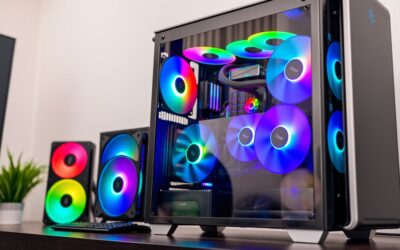
- Top Pick: msi Codex R2 Gaming Desktop PC | NVIDIA GeForce RTX 5070 12GB | Intel Core i5-14400F | 32GB DDR5 RAM | 1TB NVMe SSD | Air Cooling | Wi-Fi 6E | Windows 11 Home | VR Ready | D14NVP5-613US
- Best Value: suevery Prebuilt Gaming PC, Core I9, RTX 5060TI 8G Desktop Computer
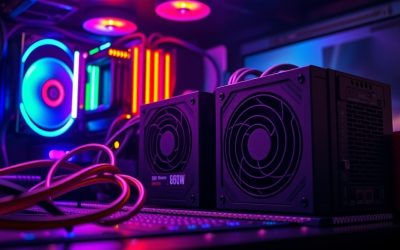
- Premium Choice: AsiaHorse Upgraded 16AWG PSU Cable Extension Sleeved Custom Mod GPU PC Power Supply Soft Braided Cables with Two Color Comb Kit 24P/8P to 6+2P/8P to 4+4P 30CM
Swapping the GPU is the single biggest hardware upgrade you can do for gaming. It takes 15–30 minutes and can double or triple your frame rates without you touching anything else in the build. This guide walks the full 2026 GPU upgrade — from compatibility checks through the physical install — and points you to the best upgrade targets at every budget.
🛒 Best Price Today on Amazon
Prime members get fast, free shipping on everything above, plus member-only deals. New members get a 30-day free trial — cancel anytime.
As an Amazon Associate we earn from qualifying purchases.



Step 1: Check Compatibility Before Buying
Before you buy a new GPU, run through these four compatibility checks:
| Check | What to Verify | Where to Find |
|---|---|---|
| PCIe Slot | Motherboard has PCIe x16 slot (all modern boards do) | Motherboard manual / CPU-Z |
| PSU Wattage | Power supply has enough headroom for new GPU TDP | PSU label / system specs |
| PCIe Power Connectors | PSU has required 8-pin or 16-pin (12VHPWR) connectors | PSU cable bundle |
| Physical Clearance | Case has enough length and height for the GPU | GPU dimensions vs case specs |
PSU Wattage Guide: RTX 5060 Ti (165W TDP) wants a 550W PSU minimum; RTX 5070 (250W) wants 650W; RTX 5070 Ti (300W) wants 750W; RTX 5080 (360W) wants 850W; RTX 5090 (575W) wants 1000W. Tack on roughly 125W for the CPU and 50W for everything else to figure your full system draw.
Step 2: Uninstall Old GPU Drivers First
Before you physically pull the cards, strip your current graphics drivers with Display Driver Uninstaller (DDU) in Safe Mode. That heads off driver conflicts with the new GPU, which matters most when you’re jumping between NVIDIA and AMD. DDU wipes every driver file and registry entry cleanly. Skip it and you’re inviting display glitches, crashes, and instability after the swap.
Step 3: Physical Installation (15 Minutes)
The physical swap goes like this: 1) Power down and unplug; 2) Pop the side panel; 3) Pull the power cables off the old GPU; 4) Back out the PCIe retention screw(s) and push the slot release tab; 5) Slide the old card out; 6) Press the new GPU firmly into the PCIe x16 slot until it clicks; 7) Refit the slot screws; 8) Hook up the power cables (critical — never boot without them connected); 9) Put the panel back and power on.
Best GPU Upgrades in 2026
Best Mid-Range Upgrade: Sapphire Pulse RX 9070 XT
The AMD RX 9070 XT at $799 is the best GPU upgrade value of 2026 if you’ve got a 650W+ PSU. It puts up 1440p/100fps+ across every AAA title and trades blows with the RTX 5070 for less money. No 12VHPWR adapter needed — just standard 2×8-pin power. AMD’s FSR 4 upscaling runs in 1440+ supported games. Coming from an RTX 3060 Ti, RX 6700 XT, or GTX 1080 Ti, the RX 9070 XT is a 2–3x jump.
Best Premium Upgrade: ASUS Prime RTX 5070 Ti
If you want the RTX stack (DLSS 4 with Frame Generation, NVENC encoding, RTX lighting), the RTX 5070 Ti at $1,449 brings 4K-capable performance plus NVIDIA’s class-leading DLSS 4 upscaling and AI Frame Generation. It needs a 12VHPWR connector (adapter in the box) and a 750W+ PSU. Versus RTX 3080/RX 6900 XT-tier cards, expect a 70–90% bump.

ASUS Prime RTX 5070 Ti OC 16GB GDDR7 GPU, PCIe 5.0, HDMI 2.1b, 3X DP 2.1b, High FPS 4K Gaming, Creator PC, AI Creation, Video Editing, 3D Rendering, Streaming, Local AI, with GPU Holder




As an Amazon Associate we earn from qualifying purchases. Product prices and availability are accurate as of the date/time indicated.
Frequently Asked Questions
How do I know if my PC can handle a new GPU?
Check that your power supply has enough wattage and the correct connectors, that the card physically fits your case length, and that your CPU is strong enough to keep pace. Confirming these three things before buying avoids the most common upgrade surprises.
Do I need a new power supply?
Possibly. Powerful GPUs demand more wattage and specific connectors, so compare the card’s recommended power supply rating against yours. If your unit is underpowered, low quality, or lacks the required connectors, upgrade it to protect the whole system and ensure stability.
Will a new GPU be bottlenecked by my CPU?
If your processor is much older or weaker than the new card, it can limit frame rates, especially at 1080p and high refresh. The effect shrinks at higher resolutions. Check pairing benchmarks to ensure your CPU can adequately feed the new GPU.
Do I need to uninstall old drivers first?
Performing a clean removal of the previous graphics drivers before installing the new card prevents conflicts and stability issues. Use a driver removal utility, then install the fresh driver for your new GPU. This step is quick and avoids many common post-upgrade problems.
Will a new GPU fit in my case?
Modern high-end cards are large, so check the maximum GPU length your case supports and compare it to the card’s dimensions. Also confirm clearance for the cooler thickness and power connectors. Measuring beforehand prevents the frustration of a card that will not fit.
Ready to decide? Our #1 pick for 2026 is the PCIe Slot.
Live price & availability on Amazon.
Top picks from this guide
ASUSASUS Prime RTX 5070 Ti OC 16GB GDDR7 GPU, PCIe…$1,529 \xc2\xb7 99/100 ThermaltakeThermaltake Reactor 9880 Gaming Desktop (AMD Ryzen™ 7 9800X3D, ToughRam…$4,226 \xc2\xb7 99/100
 Aceracer GPU Support Bracket, GPU Stand with Magnet Non-Slip Base,(L,…$9 \xc2\xb7 98/100
 AsiaHorseAsiaHorse Upgraded 16AWG PSU Cable Extension Sleeved Custom Mod GPU…$23 \xc2\xb7 95/100