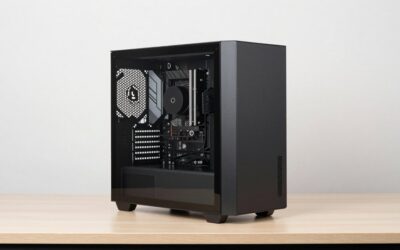
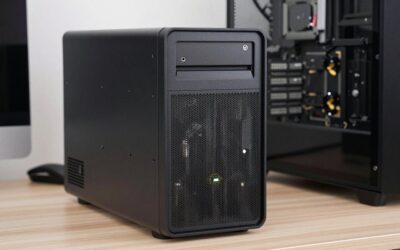
- Top Pick: Thermaltake LCGS View i560T-170 Gaming Desktop (Intel Core™ i7-14700F, ToughRam 16GB DDR5 6000MT/s RGB Memory, NVIDIA® GeForce RTX™ 5060 Ti 8G, 1TB NVMe M.2, WiFi, Windows 11) V17B-B76B-56T-LCS
- Best Value: Thermaltake LCGS Versa i570S Gaming Desktop (Intel Core™ i9-14900KF, 32GB 6000MT/s DDR5 RGB Memory, NVIDIA GeForce® RTX 5070, 1TB NVMe M.2, WiFi, Windows 11) H16S-B760-570-LCS
- Premium Choice: The Horizon RGB I9 RTX Gaming Desktop Computer PC || Core I9 CPU Upto 5.4GHz || 32GB RAM || 2TB Storage || RTX 5070 || 360MM AIO || 1.2GB/s WiFi, VR and Gaming Ready || Windows 11 Home
Choosing the right processor is the single biggest decision that shapes how smoothly your games run, how future-proof your rig feels, and how much headroom you have for streaming or multitasking. In 2026 the gaming CPU landscape is dominated by chips with stacked cache, higher clock ceilings, and better efficiency than ever before. This guide answers the question directly and shows you how to match a processor to your resolution, GPU, and budget.
As an Amazon Associate I earn from qualifying purchases.
As an Amazon Associate we earn from qualifying purchases at no extra cost to you.


🛒 Best Price Today on Amazon
Prime members get fast, free shipping on everything above, plus member-only deals. New members get a 30-day free trial — cancel anytime.
What Is the Best CPU for Gaming in 2026?
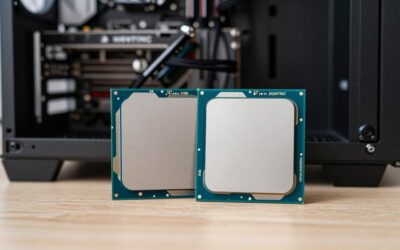
For most gamers in 2026, the best CPU for gaming is a chip with a large 3D-stacked L3 cache and 8 fast cores, because games respond more to cache and per-core speed than to raw core count. The AMD Ryzen 7 9800X3D remains the go-to recommendation for pure gaming performance, while the Ryzen 5 series offers the best value and Intel’s Core Ultra parts win for mixed gaming-plus-productivity workloads. If you game at 1440p or 4K, a mid-range CPU paired with a strong GPU delivers nearly identical frame rates to the flagship, so you rarely need to buy the most expensive chip. The right answer depends on your target resolution, your graphics card, and whether you also stream or create content.
Top Gaming CPUs Compared
| Product | Best For | Standout Feature | Rating |
|---|---|---|---|
| AMD Ryzen 7 9800X3D | Uncompromised 1080p/1440p gaming | Second-gen 3D V-Cache with unlocked overclocking | |
| AMD Ryzen 5 9600X | Best value all-round gaming | Low power draw with high single-thread speed | |
| Intel Core Ultra 7 265K | Gaming plus productivity | Strong multithreaded performance and efficiency cores | |
| AMD Ryzen 9 9950X3D | High-end gaming and creation | 16 cores with 3D V-Cache on the gaming die | |
| Intel Core Ultra 5 245K | Budget mid-range builds | Balanced core mix at an accessible price |
Why Cache Matters More Than Core Count for Gaming
Games rarely use more than 8 cores effectively, so piling on cores does little for frame rates. What games love is fast access to data, and that is exactly what a large L3 cache provides. AMD’s X3D chips stack extra cache directly on the compute die, which dramatically reduces the time the CPU spends waiting on memory. The result is higher and more consistent frame rates, especially in simulation-heavy titles, strategy games, and esports shooters where the 1% lows matter as much as the average. When you compare a standard chip against its X3D sibling, the cache-heavy version routinely pulls ahead in gaming while using less power. This is why cache, not core count, sits at the top of any CPU buying checklist for gamers.
How Resolution Changes Your CPU Choice
Your monitor resolution is the deciding factor that most people overlook. At 1080p the CPU does more work per frame, so a faster processor produces meaningfully higher frame rates and the gap between chips is wide. As you climb to 1440p and especially 4K, the graphics card becomes the bottleneck and the CPU differences shrink to a few percent. That means a competitive 1080p esports player benefits hugely from a flagship X3D chip, while a 4K single-player gamer can save money with a mid-range CPU and put those savings into a better GPU. Always match the CPU tier to how GPU-bound your target resolution is, and read our note on balancing CPU and GPU spend before you commit.
Matching Your CPU to Your Graphics Card
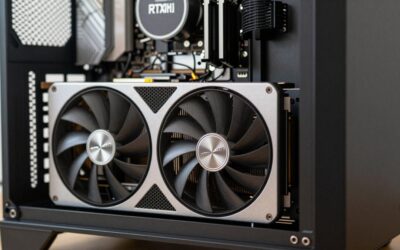
A balanced build avoids two classic mistakes: pairing a flagship CPU with a weak GPU, or feeding a top-tier GPU with a slow processor. If your graphics card is a mid-range model, a Ryzen 5 or Core Ultra 5 keeps it fully fed without wasting money. If you own or plan to buy a high-end card, step up to a Ryzen 7 X3D so the CPU never holds back those extra frames. Also confirm your chosen chip drops into a modern socket with an upgrade-friendly motherboard, since AM5 in particular offers a long support runway that lets you swap in a faster CPU later without replacing the board.
Cooling, Power, and Platform Longevity
Modern gaming CPUs run efficiently, but the flagship parts still benefit from a capable air cooler or a 240mm liquid cooler to hold peak clocks. Efficiency also matters for your electricity bill and case temperatures, and here AMD’s X3D chips shine by delivering top gaming performance at modest wattage. Platform longevity is the final piece: choosing a socket with years of promised support means your next upgrade can be a simple CPU swap. Keep an eye on safe operating temperatures so your chip sustains its boost clocks over long sessions.
How to Read CPU Gaming Benchmarks
Charts are only useful if you know what they isolate. Reviewers usually test processors at 1080p with a very fast graphics card so the CPU becomes the limit, which shows the real difference between chips. At 1440p and 4K the graphics card takes over, and the gap shrinks or disappears. Look at three numbers: the average frame rate, the 1 percent lows, and the frame-time graph. A processor with a slightly lower average but steadier lows often feels smoother in play.
What to Look For Before You Buy
Socket and Upgrade Path
The socket decides what you can install next. AMD’s AM5 is DDR5-only, and AMD has said it will support the platform for several years. Intel’s LGA 1700 supports either DDR4 or DDR5 depending on the board, while the newer LGA 1851 socket for Core Ultra 200S chips is DDR5-only. A board and CPU that share a current socket let you upgrade the processor later without replacing the whole platform.
Rated Power Versus Real Power
The listed TDP is a cooling guideline, not the maximum power the chip draws. Unlocked processors can pull well above the headline number when boosting, which affects cooler and power-supply choices. Many higher-end chips, including most unlocked and stacked-cache models, ship without a cooler, so budget for a separate tower air cooler or liquid cooler.
Integrated Graphics and Extra Features
Some processors include a basic integrated GPU, which is handy for troubleshooting a dead graphics card or running a spare monitor. Chips with an “F” suffix on Intel and some AMD models omit it. Also consider memory support: a platform that officially supports DDR5-5600 or faster gives you more flexibility than one limited to lower speeds.
Which One Should You Buy?
| If you… | Choose… |
|---|---|
| Play mostly competitive games at high refresh rates | A stacked-cache AMD processor, which benefits cache-heavy titles |
| Split time between gaming and video editing or compiling | A chip with more cores and threads, such as a twelve- or sixteen-core model |
| Build on a tight plan and play at 1440p or 4K | A mid-range six- or eight-core chip and put the savings toward the graphics card |
| Want the longest upgrade runway | A processor on AM5, where later chips are expected to fit the same board |
| Need low heat and quiet operation | An efficient chip with a modest power rating and a good tower cooler |
Common Mistakes When Choosing a Gaming CPU
- Buying by core count alone. Most games use a handful of fast cores, so clock speed, cache, and architecture matter more than twelve or sixteen cores.
- Over-spending on the CPU for 4K. At 4K the graphics card is the bottleneck, so a mid-range processor is usually enough.
- Ignoring the cooler. A strong processor on a weak cooler throttles and loses the performance you paid for.
- Running memory in the wrong mode. A memory kit may run below its rated speed until you enable its profile (XMP or EXPO) in the BIOS.
- Forgetting the BIOS update. A new CPU on an older board may not boot until the BIOS is updated, so check the compatibility table first.
Quick Reference: Current Platform Options
| Socket | Memory type | Notes |
|---|---|---|
| AM5 (AMD) | DDR5 only | Supports stacked-cache gaming chips and later processor generations |
| LGA 1700 (Intel) | DDR4 or DDR5, depending on board | Check which memory type the board uses |
| LGA 1851 (Intel Core Ultra 200S) | DDR5 only | Newer platform with updated chipset features |
As an illustration of balance, imagine a graphics card that renders 90 frames per second in a game at 1440p while the CPU can prepare 140. The graphics card is the limit, so a faster processor adds nothing, while a better GPU would raise the result up to the 140 frame ceiling.
Frequently Asked Questions
Is AMD or Intel better for gaming in 2026?
For pure gaming, AMD’s X3D processors generally lead thanks to their large stacked cache, which boosts frame rates and 1% lows. Intel remains highly competitive for users who mix gaming with heavy productivity work, so the best choice depends on whether gaming or content creation is your priority.
How many cores do I need for gaming?
Eight fast cores are the sweet spot for gaming in 2026, since almost no games scale beyond that. More cores help only if you also stream, render video, or run demanding background tasks. For gaming alone, invest in per-core speed and cache rather than chasing a higher core count.
Does a faster CPU matter at 4K?
At 4K the graphics card handles most of the workload, so CPU differences shrink to just a few percent in most titles. A capable mid-range processor is usually enough at that resolution, letting you redirect budget toward a stronger GPU that will deliver far more visible improvement.
Do I need to overclock my gaming CPU?
Overclocking is optional and delivers modest gains for most gamers today because modern chips already boost aggressively on their own. Enabling memory profiles like EXPO or XMP often gives a bigger real-world benefit than manual overclocking, and it is far simpler and safer for newcomers to set up.