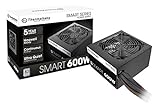
- Top Pick: Thermaltake Smart 600W ATX 12V V2.3/EPS 12V 80 Plus Certified Active PFC Power Supply PS-SPD-0600NPCWUS-W
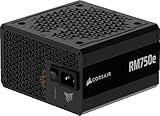
- Best Value: CORSAIR RM750e ATX 3.1 PCIe 5.1 Ready 750W Power Supply – Black
- Premium Choice: Thermaltake Smart 500W 80+ White Certified PSU, Continuous Power with 120mm Ultra Quiet Cooling Fan, ATX 12V V2.3/EPS 12V Active PFC Power Supply PS-SPD-0500NPCWUS-W
The power supply is the least glamorous component in any build, yet choosing the best computer power supply is one of the most consequential decisions you will make. A quality unit protects every other part from voltage spikes, runs quietly for years, and leaves room to grow. A cheap one can fail catastrophically and take your motherboard or GPU with it. This guide explains what actually matters when shopping for a PSU, translates the confusing efficiency and wattage jargon into plain advice, and recommends specific units that have earned their reputations across thousands of builds.
Navigate: top picks · wattage sizing · efficiency ratings · how to choose · modular cables · FAQ.
As an Amazon Associate we earn from qualifying purchases at no extra cost to you. Product prices and availability are accurate as of the date shown and are subject to change.


As an Amazon Associate I earn from qualifying purchases.
🛒 Best Price Today on Amazon
Prime members get fast, free shipping on everything above, plus member-only deals. New members get a 30-day free trial — cancel anytime.
The best computer power supply picks
These units span budget to high-end builds, and each has a strong track record for reliability. The key spec column highlights the wattage and efficiency tier that define each choice.
| Product | Key Spec | Best For | Rating |
|---|---|---|---|
| Corsair RM850e | 850W, 80+ Gold, ATX 3.0 | Best overall power supply | 4.8/5 |
| Corsair RM1000x | 1000W, 80+ Gold | High-end GPU builds | 4.8/5 |
| Seasonic Focus GX-750 | 750W, 80+ Gold | Reliable mid-range | 4.7/5 |
| be quiet! Pure Power 12 M | 750W, 80+ Gold | Silent operation | 4.6/5 |
| EVGA SuperNOVA 650 GT | 650W, 80+ Gold | Budget-conscious builds | 4.5/5 |
| Corsair SF750 | 750W, SFX, 80+ Platinum | Small form factor | 4.7/5 |
| Thermaltake Toughpower GF3 | 850W, 80+ Gold, ATX 3.0 | Value ATX 3.0 pick | 4.4/5 |
Sizing the best computer power supply for your build
Wattage is the first number everyone fixates on, and it matters, but overbuying is a common mistake. A modern mid-range gaming PC with an RTX 4060 draws well under 400 watts under load, so a quality 650W unit provides ample headroom. High-end systems with an RTX 4080 or 4090 justify 850W to 1000W. The best computer power supply for you is one sized about 30 percent above your expected peak draw, which keeps the unit running in its most efficient and quietest range.
Why headroom matters
Running a PSU near its maximum rating shortens its lifespan and forces the fan to spin faster. Leaving comfortable headroom means the unit loafs along cool and quiet, and it also leaves room for a future GPU upgrade without buying a new power supply.
Transient spikes and ATX 3.0
Recent GPUs produce brief power spikes that can trip older supplies. Units built to the ATX 3.0 standard, like the Corsair RM850e, are engineered to absorb these transients gracefully. If you plan to run a current-generation graphics card, an ATX 3.0 power supply with a native 12VHPWR connector is the safest choice.
Understanding 80 Plus efficiency ratings
The 80 Plus certification tells you how much wall power the unit converts to usable output versus wasted heat. Bronze, Gold, and Platinum are the common tiers. For the best computer power supply value, Gold is the sweet spot: it wastes little energy, runs cool, and rarely commands a large premium over Bronze. Platinum and Titanium units cost more for marginal efficiency gains that only heavy 24/7 systems recoup.
Efficiency and long-term cost
A more efficient power supply draws slightly less from the wall for the same output, trimming your electricity bill over years of use. More importantly, higher efficiency means less waste heat inside the case, which helps your other components run cooler and quieter.
How to choose the best computer power supply
Beyond wattage and efficiency, the quality of the internal components separates a great power supply from a mediocre one. Reputable brands use Japanese capacitors, robust protection circuitry, and honest wattage ratings. Cheap units often exaggerate their capacity and skimp on safety features. Sticking with established names like Corsair, Seasonic, and be quiet! virtually eliminates the risk of a dangerous failure.
Protection features to demand
The best computer power supply includes over-voltage, under-voltage, over-current, over-temperature, and short-circuit protection. These safeguards shut the unit down before a fault can damage the rest of your system. Every model in this guide includes the full suite.
Warranty as a quality signal
Warranty length is a reliable proxy for manufacturer confidence. Premium power supplies carry seven- to ten-year warranties, while budget units offer three to five. A long warranty signals durable internals and gives you peace of mind for the life of the build.
Modular versus non-modular cables
Fully modular power supplies let you attach only the cables you need, dramatically improving airflow and making cable management far easier. Semi-modular units hardwire the essential cables while making the rest detachable. For a clean build the best computer power supply is fully modular, though semi-modular is a fine budget compromise. Non-modular units save a little money but leave a nest of unused cables to stuff into your case.
My overall recommendation
For the widest range of builds the Corsair RM850e is the best computer power supply to buy in 2026. It combines ATX 3.0 compliance, 80 Plus Gold efficiency, fully modular cabling, and a long warranty at a fair price, giving you room to grow while keeping noise and heat low.
Frequently Asked Questions
How many watts does the best computer power supply need to be?
The right wattage depends on your components, but most mid-range gaming builds are well served by a 650W to 750W unit, while high-end systems with a top-tier GPU justify 850W to 1000W. Aim for roughly 30 percent more capacity than your expected peak draw, which keeps the power supply efficient, cool, and ready for a future upgrade.
Is a Gold-rated power supply worth the extra money?
For most builders, an 80 Plus Gold power supply is the ideal balance of efficiency and price. It wastes less energy as heat than Bronze units, runs cooler and quieter, and rarely costs much more. Platinum and Titanium tiers offer only marginal further gains that primarily benefit systems running heavy loads around the clock, so Gold remains the best value for typical use.
Can a bad power supply damage other components?
Yes, a low-quality or failing power supply can send incorrect voltages that damage your motherboard, GPU, or storage drives. This is exactly why buying from a reputable brand with proper protection circuitry matters so much. The best computer power supply units include over-voltage, over-current, and short-circuit protection that shut the unit down safely before a fault can harm the rest of your system.
Do I need an ATX 3.0 power supply?
If you are running a current-generation graphics card, an ATX 3.0 power supply is strongly recommended because it is engineered to handle the brief power spikes those GPUs produce. It also includes a native 12VHPWR connector, eliminating adapter clutter. For older or lower-power systems a quality ATX 2.x unit still works fine, but ATX 3.0 is the future-proof choice.
Is modular cabling necessary for the best computer power supply?
Modular cabling is not strictly necessary, but it makes building far easier and improves airflow by letting you install only the cables you actually use. Fully modular units are ideal for clean, tidy builds, while semi-modular designs offer a budget-friendly middle ground. Non-modular power supplies work perfectly well electrically but leave unused cables that you must tuck away inside the case.
Ready to decide? Our #1 pick for 2026 is the Corsair RM850e.
Live price & availability on Amazon.