- Top Pick: MSI MAG A750GL PCIE5, Fully Modular Compact Gaming 750W Power Supply, 80+ Gold, ATX 3.1 & PCIe 5.1 Ready, Native Dual-Color 12V-2×6 Cable, 10 Year Warranty
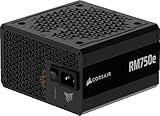
- Best Value: CORSAIR RM750e ATX 3.1 PCIe 5.1 Ready 750W Power Supply – Black
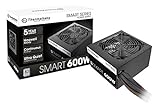
- Premium Choice: Thermaltake Smart 500W 80+ White Certified PSU, Continuous Power with 120mm Ultra Quiet Cooling Fan, ATX 12V V2.3/EPS 12V Active PFC Power Supply PS-SPD-0500NPCWUS-W
The power supply is the least glamorous part of a build, yet the best PC PSU for your system quietly determines its stability, efficiency and safety. Skimp here and you risk crashes, coil whine, or in the worst case, damage to expensive components. A quality unit delivers clean, steady power, runs quietly, and leaves headroom for future upgrades. This guide ranks the standout power supplies across wattages and efficiency tiers, and explains exactly how to size and choose one so your rig runs rock-solid for years.
As an Amazon Associate I earn from qualifying purchases.
As an Amazon Associate we earn from qualifying purchases at no extra cost to you. Product prices and availability are accurate as of the date shown and are subject to change.





Check the comparison table, then read the how to choose section. The wattage sizing guide helps you pick capacity, efficiency ratings explains the 80 Plus tiers, modularity and cables covers connectors including 12VHPWR, and warranty and reliability shows why the brand matters.
🛒 Best Price Today on Amazon
Prime members get fast, free shipping on everything above, plus member-only deals. New members get a 30-day free trial — cancel anytime.
The best PC PSU picks by tier
| Product | Key Spec | Best For | Rating |
|---|---|---|---|
| Corsair RM850x (2024) | 850W, Gold, ATX 3.1 | Best all-round | 4.9/5 |
| be quiet! Straight Power 12 1000W | 1000W, Platinum | Silent high-end | 4.8/5 |
| Seasonic Focus GX-750 | 750W, Gold | Mainstream value | 4.8/5 |
| Corsair RM1000e (2023) | 1000W, Gold, ATX 3.0 | High-end GPUs | 4.7/5 |
| MSI MAG A650BN | 650W, Bronze | Budget builds | 4.4/5 |
| Seasonic Prime TX-1000 | 1000W, Titanium | Top efficiency | 4.8/5 |
| Corsair SF750 | 750W, SFX, Platinum | Small form factor | 4.7/5 |
Why the Corsair RM850x is the best PC PSU for most builds
The Corsair RM850x has earned its reputation as the default recommendation for mid-to-high-end systems. Its 850W of clean, 80 Plus Gold power comfortably feeds a Ryzen 9 or Core i7 paired with an RTX 4070 or 4080, the fully modular cabling keeps builds tidy, and the fan stays silent under light loads. The latest revision includes the native 12V-2×6 connector for modern GPUs, and Corsair backs it with a lengthy warranty.
Wattage sizing without guesswork
Choosing wattage is about headroom, not maximum bragging rights. Add up your CPU and GPU power draw, then add roughly 30 percent overhead for spikes and future upgrades. A mainstream RTX 4060 or 4070 build is happy on 650 to 750W, an RTX 4080 wants 850W, and an RTX 4090 calls for 1000W. Running a PSU around 50 to 70 percent of its rated load keeps it in its most efficient and quietest zone.
Understanding 80 Plus efficiency ratings
The 80 Plus certification indicates how much wall power actually reaches your components rather than being lost as heat. Gold is the sweet spot for most builders, balancing efficiency and price, while Platinum and Titanium offer marginal gains at a premium. Higher efficiency means less wasted electricity, less heat and often quieter operation, so a Gold-rated unit from a reputable brand is the safe default choice.
Modularity and cables, including 12VHPWR
A fully modular PSU lets you connect only the cables you need, dramatically improving airflow and looks. For modern high-end GPUs, ensure the unit is ATX 3.0 or 3.1 with a native 12VHPWR or 12V-2×6 connector, which avoids messy adapters. Always seat that connector fully, as a partially inserted plug is the main cause of the overheating issues reported on early high-wattage cards.
Warranty and reliability
A power supply protects everything else in your PC, so reliability is paramount. Favour units with long warranties of seven to twelve years, which signal manufacturer confidence, and stick to trusted names like Corsair, Seasonic and be quiet!. Quality protections such as over-voltage, over-current and short-circuit safeguards are standard on good units and are worth verifying before you buy a cheaper alternative.
Small form factor and SFX options
Compact builds need SFX power supplies, which pack full wattage into a smaller footprint. The Corsair SF750 shows that small does not mean weak, delivering 750W of Platinum-rated power with modular cabling in a tiny package. If you are building in a mini-ITX case, confirm the PSU standard your case supports and choose an SFX or SFX-L unit accordingly.
How to choose the best PC PSU
Total your components’ power draw and add around 30 percent headroom, then pick an 80 Plus Gold or better unit from a trusted brand. Choose fully modular cabling for airflow, ensure ATX 3.0 or 3.1 compatibility with the right connector for your GPU, and prioritise a long warranty. Match the form factor to your case, and never cut costs on the one part that safeguards your entire system.
Frequently Asked Questions
What is the best PC PSU wattage for a gaming build?
For most gaming builds, an 850W power supply is the best all-round choice, comfortably powering a high-end CPU paired with an RTX 4070 or 4080 while leaving headroom for upgrades. Mainstream systems with an RTX 4060 run happily on 650 to 750W, and an RTX 4090 build should use 1000W. Sizing for about 30 percent overhead keeps the unit efficient and quiet.
Does 80 Plus efficiency rating actually matter?
The 80 Plus rating matters because it reflects how efficiently the PSU converts wall power, affecting electricity use, heat output and noise. Gold is the sweet spot for most builders, offering strong efficiency at a reasonable price. Platinum and Titanium provide small additional gains for a premium, worthwhile mainly for high-wattage systems that run long hours where the savings and reduced heat add up.
Do I need an ATX 3.0 power supply for a new GPU?
An ATX 3.0 or 3.1 power supply is strongly recommended for modern high-end GPUs because it includes a native 12VHPWR or 12V-2×6 connector and is designed to handle the power spikes these cards produce. This avoids clumsy adapters and improves reliability. For older or lower-tier graphics cards, a quality older-standard unit still works fine with the appropriate PCIe cables.
Is a modular power supply worth it?
A fully modular power supply is worth it for the vast majority of builds because it lets you connect only the cables you need, greatly improving airflow, cable management and appearance. Semi-modular units offer a cheaper compromise with the essential cables fixed. Given how much a clean interior aids cooling and future upgrades, the small extra cost of full modularity is usually justified.
How long does a good PC power supply last?
A quality power supply from a reputable brand typically lasts seven to ten years or more, often outliving the components it powers. Long warranties of seven to twelve years reflect this durability. Because the PSU can be carried across multiple builds, investing in a well-made unit with strong protections is smart, as it continues to safeguard new components through several upgrade cycles.
Ready to decide? Our #1 pick for 2026 is the Corsair RM850x (2024).
Live price & availability on Amazon.