A mini ITX board is a promise that everything will fit in a very small box, and the cap of 250 dollars is far from the hard part. Seven listings sit under it, and they point to four very different directions: modern AMD AM5 with DDR5, current Intel Core Ultra on LGA1851, an older LGA1700 DDR4 budget board, and two oddballs built for retro or server duty. Choosing between them is mostly about the processor you plan to install.
Anyone planning a compact gaming PC, a quiet home server, or a travel-friendly workstation will find a match here. Mini ITX boards give up expansion slots, so the features that remain, such as M.2 count, networking, and display outputs, carry real weight. The comparison below sticks to what each title lists, for a build that has to hold up through 2026.
Quick Picks

ASUS PRIME H610I-PLUS D4 LGA 1700(Intel 12th Gen&Intel vPro)mini ITX Motherboard(PCIe 4.0,DDR4,USB 3.2 Gen 1 Type-A,1Gb Lan,DP/HDMI/D-Sub,V-M.2(Key E),Q-LED,Mono-out header with amp IC,SPI TPM header)

As an Amazon Associate we earn from qualifying purchases. Product prices and availability are accurate as of the date/time indicated.

ASUS TUF Gaming B850I WiFi NEO AM5 Mini ITX Motherboard, DDR5, DIMM Fit, WiFi 6E, 2.5Gb LAN, PCIe 5.0, 2X M.2, 2X USB-C, AI Cooling II, Pre-Mounted I/O Shield, SFF PC


As an Amazon Associate we earn from qualifying purchases. Product prices and availability are accurate as of the date/time indicated.

ASRock AMD B850i Lightning WiFi 6E Socket AM5 Ryzen 9000/8000/7000 Series DDR5 8200+ (OC) MHz 128GB Mini ITX Motherboard M.2 SATA3 6.0 Gb/s PCIe 5.0 B850 BIOS Flashback


As an Amazon Associate we earn from qualifying purchases. Product prices and availability are accurate as of the date/time indicated.

ASRock Intel Core Ultra B860 LGA1851 B860I WiFi 6E DDR5 8933 MHz 128GB M.2 Mini ITX Motherboard SATA3 6.0 Gb/s PCIe 5.0


As an Amazon Associate we earn from qualifying purchases. Product prices and availability are accurate as of the date/time indicated.

ASRock B650I Lightning WiFi AMD AM5 Mini-ITX Motherboard, Supports AMD Ryzen 9000/8000/7000 Series Processors, DDR5 7200+ (OC), PCIe 5.0 M.2, 2.5G LAN, WiFi 6E, 8+2+1 Power Phase


As an Amazon Associate we earn from qualifying purchases. Product prices and availability are accurate as of the date/time indicated.

Mini-ITX Motherboard with Quad-Core 8-Thread Low Power CPU, Dual 2.5G LAN, 8 SATA, HDMI/DP 4K, PCIe x4, 2 M.2 NVMe, DDR4 RAM – Home Server, NAS Storage, Firewall, Virtualization


As an Amazon Associate we earn from qualifying purchases. Product prices and availability are accurate as of the date/time indicated.

SHANGZHAOYUAN H97 Strong LGA 1150 Motherboard for Intel 4th Core i7/i5/i3 | Mini ITX Gaming Mainbaord, DDR3, PCIe 3.0, NVME M.2, SATA 6Gb/s, VGA/DVI/HDMI-Compatible, Dual LAN




As an Amazon Associate we earn from qualifying purchases. Product prices and availability are accurate as of the date/time indicated.
| Product | Best for | Key spec from the title |
|---|---|---|
| ASUS PRIME H610I-PLUS D4 | Thrifty Intel 12th Gen build | LGA 1700, DDR4, PCIe 4.0, 1Gb LAN |
| ASUS TUF Gaming B850I WiFi NEO | Premium AM5 gaming PC | DDR5, WiFi 6E, 2.5Gb LAN, PCIe 5.0, 2x M.2 |
| ASRock B850I Lightning WiFi | AM5 with Ryzen 9000 | DDR5 8200+ OC, 128GB, PCIe 5.0 |
| ASRock B860I WiFi | Intel Core Ultra build | LGA1851, DDR5 8933, WiFi 6E |
| ASRock B650I Lightning WiFi | Lower-cost AM5 option | DDR5 7200+ OC, PCIe 5.0 M.2, 2.5G LAN |
| Quad-core low-power mini-ITX board | Home server or NAS | Dual 2.5G LAN, 8 SATA, 2 M.2 NVMe |
| SHANGZHAOYUAN H97 Strong | Retro Intel 4th Gen build | LGA 1150, DDR3, NVMe M.2 |
How to Choose
Start from the socket and processor
The H610I takes 12th Gen Intel on LGA 1700. The ASRock B860I takes Core Ultra on LGA1851. The three AM5 boards take Ryzen 9000, 8000, and 7000. The H97 board needs 4th Gen Intel on LGA 1150. Mismatching board and chip is the quickest way to waste an afternoon, and no BIOS setting can make a processor fit a socket it was not built for. Write down your exact CPU model first, then filter the list by the socket named in each title.
Pick the memory generation you can afford
DDR4 on the H610I and the server board is the cheapest to fill. DDR5 on the AM5 and Core Ultra boards costs more but sets you up for faster platforms. The H97 uses DDR3, which suits a salvaged-parts build and little else. Remember that memory sticks are keyed differently by generation, so a DDR4 kit will not seat in a DDR5 slot no matter how hard you push.
Count storage and networking
M.2 slots are scarce on mini ITX. The TUF lists 2x M.2, and the server board lists 2 M.2 NVMe plus 8 SATA. For a media server, SATA count outweighs PCIe generation. For a gaming PC, PCIe 5.0 and WiFi 6E matter more. Look for 2.5G LAN if your router supports it, because a faster port makes little difference when the rest of your network tops out at gigabit.
Check the extras that small boards skip
Budget boards cut corners on WiFi, USB-C, and VRM cooling. The H610I has no wireless, while the TUF adds two USB-C ports and an AI cooling feature. Pre-mounted I/O shields save fiddly assembly in a tight case, where a loose shield is easy to bend. Fewer VRM heatsinks mean your case airflow matters more, so plan fans accordingly.
The 7 Best Options
ASUS PRIME H610I-PLUS D4
The PRIME H610I-PLUS D4 is an LGA 1700 board for Intel 12th Gen, listing PCIe 4.0, DDR4, USB 3.2 Gen 1 Type-A, 1Gb LAN, and DP, HDMI, and D-Sub outputs. It is the budget route into a compact Intel build, a fit for a living-room media PC, a family computer, or an office box that needs a few video outputs and nothing fancy. The M.2 Key E slot named in the title is the type used for wireless cards, so it suggests where a WiFi module could go.
- Strength: DDR4 memory keeps costs low.
- Strength: three display outputs, including legacy D-Sub.
- Trade-off: only 1Gb LAN and no WiFi named in the title.
Skip it if you want wireless built in or a platform with a long upgrade path, since the board offers neither and the socket is a step behind the newest Intel generation.
ASUS TUF Gaming B850I WiFi NEO
This AM5 board lists DDR5, DIMM Fit, WiFi 6E, 2.5Gb LAN, PCIe 5.0, two M.2 slots, two USB-C ports, AI Cooling II, and a pre-mounted I/O shield. It is the feature-rich choice for a serious small gaming PC. DIMM Fit and a pre-mounted I/O shield point to a design aimed at easier assembly in cramped cases, and the pair of USB-C ports covers modern headsets and fast external drives without a hub.
- Strength: two M.2 slots and PCIe 5.0.
- Strength: WiFi 6E, 2.5Gb LAN, and two USB-C ports.
- Trade-off: DDR5 memory raises the total build cost.
Skip it if you only need a basic board and do not want to pay for premium features, or if you already own DDR4 memory that you hoped to reuse.
ASRock B850I Lightning WiFi
The B850I Lightning WiFi supports Ryzen 9000, 8000, and 7000 on AM5, with DDR5 8200+ (OC) and 128GB capacity, plus WiFi 6E, M.2, SATA3, and PCIe 5.0. It suits builders who want AM5 with high memory capacity, such as a creator who edits large projects or runs virtual machines on a compact desktop. Having both PCIe 5.0 and WiFi 6E on a board this small gives a lot of modern capability for the footprint.
- Strength: 128GB memory ceiling.
- Strength: PCIe 5.0 and WiFi 6E.
- Trade-off: the 8200 memory speed is an overclock rating that needs a compatible kit.
Skip it if you plan to run a modest DDR5 kit and want something simpler, because the overclock rating mostly matters for premium memory kits.
ASRock B860I WiFi
The B860I WiFi is an LGA1851 board for Intel Core Ultra, listing DDR5 8933 MHz, 128GB, WiFi 6E, M.2, SATA3, and PCIe 5.0. It is the only current-generation Intel board in the group. A builder moving to Core Ultra and wanting DDR5 in a small case will find the feature set close to the AMD boards, with a socket that matches the new chips.
- Strength: Core Ultra support on the newest Intel socket.
- Strength: DDR5 with a 128GB ceiling.
- Trade-off: Intel’s newest platform costs more than older boards.
Skip it if you prefer AMD processors or want to save money, since an older Intel board or an AM5 option usually costs less.
ASRock B650I Lightning WiFi
The B650I Lightning WiFi supports Ryzen 9000, 8000, and 7000, with DDR5 7200+ (OC), PCIe 5.0 M.2, and 2.5G LAN. It offers a lower-tier AM5 route with essential modern features. For many builders the practical difference from the B850 boards is small, because everyday games and apps rarely depend on the last few hundred megahertz of memory speed.
- Strength: AM5 with PCIe 5.0 storage.
- Strength: 2.5G LAN for fast networking.
- Trade-off: the listing shows a lower memory overclock rating than the B850 boards.
Skip it if you need the highest memory speeds or the most expansion headroom the newer chipset offers.
Quad-Core Low-Power Mini-ITX Server Board
This board has a quad-core 8-thread low-power CPU, dual 2.5G LAN, 8 SATA ports, HDMI and DP 4K output, a PCIe x4 slot, 2 M.2 NVMe slots, and DDR4. It is for a home server or NAS, a small always-on box that shares files, runs a media library, or backs up other computers. Eight SATA ports allow a drive-heavy layout rarely seen on a mini ITX board, and the 4K video outputs cover a media-center role as well.
- Strength: eight SATA ports and dual 2.5G LAN.
- Strength: low-power CPU is built in.
- Trade-off: the processor cannot be swapped.
Skip it if you want a gaming-class processor or the freedom to change CPUs later, since the low-power chip is part of the board.
SHANGZHAOYUAN H97 Strong
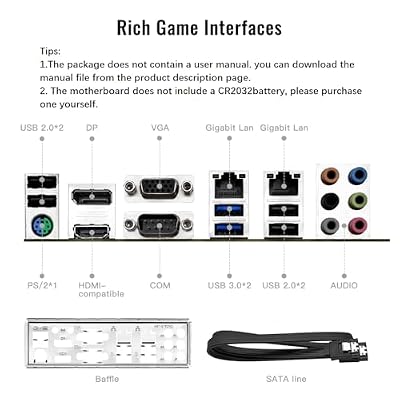
This LGA 1150 board supports 4th Gen Intel i7, i5, and i3, with DDR3, PCIe 3.0, NVMe M.2, SATA 6Gb/s, and VGA and DVI outputs. It is for a retro or salvaged-parts build, such as a spare office PC assembled from a drawer of old Intel parts. Having an NVMe M.2 slot on an older platform is a bonus for faster boot times.
- Strength: NVMe M.2 on an older platform.
- Strength: legacy VGA and DVI outputs.
- Trade-off: DDR3 and a very old socket.
Skip it if you want a modern, upgradable platform, because DDR3 and LGA 1150 are both at the end of the line.
Which One Fits Your Situation
Building a compact gaming PC
The ASUS TUF Gaming B850I WiFi NEO has PCIe 5.0, two M.2 slots, and WiFi 6E, while the ASRock B850I Lightning WiFi offers a similar AM5 feature set with a stated 128GB memory ceiling.
Choosing Intel Core Ultra
The ASRock B860I WiFi is the only LGA1851 board in the group, and it lists DDR5 at 8933 MHz with a 128GB ceiling. Every other Intel option here is an older socket.
Building a home server
The quad-core board offers 8 SATA ports and dual 2.5G LAN, with two M.2 NVMe slots for a cache drive. A low-power processor suits a machine that stays on around the clock, and the PCIe x4 slot leaves room for an extra network or storage card.
Reviving old parts
The SHANGZHAOYUAN H97 Strong is the only option for a 4th Gen Intel i7, i5, or i3 you already own. It also keeps DDR3 modules in service, so a retro project costs very little.
Common Mistakes
- Buying DDR5 memory for a DDR4 board.
- Ignoring the socket and processor generation.
- Skipping a check of the case for mini-ITX support, plus its cooler height and graphics card length limits.
- Choosing a board without WiFi and forgetting to buy a card, which leaves a small case with no easy place to add one.
- Expecting memory overclock speeds without a matching kit, since the OC figures in titles are ceilings rather than defaults.
Related guides
- Usb C Kvm Switch For Two Laptops And Two Monitors
- Vertical Laptop Stand For Dual Laptop Desk Setup
- Nvme Enclosure With Active Cooling For Mac Mini
Frequently Asked Questions
Is mini ITX slower than larger boards?
No. The chipset and processor set performance, and mini ITX simply has fewer slots. The trade-off is less room for add-in cards and, on some boards, fewer memory slots.
How many M.2 slots do I need?
One is enough for most builds, since a single fast NVMe drive handles the operating system and games. The TUF and the server board list two, which helps if you want a separate drive for projects or a cache.
Does the server board take a CPU upgrade?
No. The listing describes a low-power CPU that comes with the board, so the processor and board are upgraded together as one unit. That is typical for compact server boards and keeps power draw low.
Is DDR3 still usable?
For the H97 board it is the only option, since that platform predates DDR4. It suits retro builds only, and anyone starting fresh is better served by DDR4 or DDR5 boards that can take newer processors later.