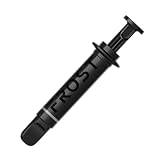
- Top Pick: ID-COOLING Frost X55 Core 4g Thermal Paste 16.2 W/m-K Thermal Conductivity
- Best Value: Thermal Grizzly Delid-Die-Mate Heater V1 – Precision CPU Heat Spreader Removal Tool for Intel LGA 1851 Processors – Made in Germany
- Premium Choice: Iceberg Thermal FUZEIce Plus High Performance Thermal Paste with 2-in-1 Spatula CPU GPU Heatsink Paste 13W/mK 3.5g
Keeping an eye on your processor’s temperature is one of the easiest ways to catch cooling problems before they cause throttling or instability. Learning how to check CPU heat takes only a few minutes and requires nothing more than free software you probably should have installed anyway. This guide walks through the tools and methods step by step.
As an Amazon Associate I earn from qualifying purchases.
As an Amazon Associate we earn from qualifying purchases at no extra cost to you.



🛒 Best Price Today on Amazon
Prime members get fast, free shipping on everything above, plus member-only deals. New members get a 30-day free trial — cancel anytime.
How to Check CPU Heat: The Quick Answer
To check CPU heat, download a free monitoring tool such as HWMonitor, Core Temp, or HWiNFO, install it, and open it to read your processor’s current temperature in degrees Celsius. These programs pull data directly from the temperature sensors built into your CPU, showing you idle, current, and maximum readings in real time. You can also check CPU heat in your motherboard’s BIOS or UEFI screen, though software running inside Windows is more convenient for watching temperatures during gaming or heavy work. For the most useful picture, run a monitoring tool while you play a game or run a workload so you can see how hot the chip gets under real load, not just at idle.
No special hardware is needed because every modern CPU reports its own temperature. The job is simply choosing a reliable tool and knowing what the numbers mean.
Tools and Coolers to Check and Control CPU Heat
| Product | Best For | Standout Feature | Rating |
|---|---|---|---|
| Noctua NH-U12S redux | Compact air cooling | Quiet single-tower efficiency | 4.8/5 |
| ARCTIC Liquid Freezer III 240 | Lowering load temps | Thick radiator cools hot chips | 4.8/5 |
| Thermalright Peerless Assassin 120 | Budget heat control | Flagship cooling at low cost | 4.8/5 |
| Cooler Master MasterFan MF120 Halo | Boosting case airflow | Balanced pressure and quietness | 4.5/5 |
| ARCTIC MX-6 Thermal Paste | Improving heat transfer | Long-lasting low-resistance paste | 4.7/5 |
How to Check CPU Heat With Free Software
The simplest way to check CPU heat is with a dedicated monitoring app. Core Temp shows per-core temperatures in a tiny window, HWMonitor lists every sensor in your system, and HWiNFO offers the most detail with logging. Install one, open it, and look for the “CPU Package” or “Core” temperature. Keeping the window visible while you play lets you see peaks in real time, which tells you far more than a single idle reading. Once you know your numbers, compare them to the usual CPU temperature ranges to judge whether they are healthy.
Checking CPU Heat in the BIOS or UEFI
Every motherboard shows CPU temperature in its BIOS or UEFI screen, which you reach by pressing Delete or F2 during startup. This method is useful for a quick idle check or when Windows will not boot, but it only shows the temperature at rest since no load is running. It is a handy sanity check after installing a new cooler on your gaming motherboard, confirming the cooler is mounted and reporting correctly before you boot into the operating system.
Reading CPU Heat Under Load
Idle numbers rarely tell the full story, so the best way to check CPU heat is under a real workload. Launch a demanding game or run a stress test while your monitoring tool logs the maximum temperature. This reveals how your cooling copes during the moments that matter most. If peaks climb near the danger zone, you may need to understand how hot is too hot for a CPU and consider a better AIO or air cooler to bring them down.
What to Do If Your CPU Heat Is Too High
If checking reveals high temperatures, start with the basics: clean dust from your cooler and fans, verify the cooler is mounted with firm, even pressure, and reapply thermal paste if it is several years old. Improving case airflow with additional intake and exhaust fans often drops temperatures noticeably. A powerful gaming CPU naturally runs warmer, so pairing it with adequate cooling from the start prevents most heat issues before they appear.
Frequently Asked Questions
What is the best free tool to check CPU heat?
HWiNFO, Core Temp, and HWMonitor are all excellent free tools to check CPU heat. HWiNFO offers the most detail and logging, Core Temp is the simplest for a quick reading, and HWMonitor displays every sensor in your system in one clear window.
How often should I check my CPU heat?
Check your CPU heat whenever you install new cooling, change thermal paste, or notice performance drops. Beyond that, a monthly spot check under load is plenty for most users. Continuous monitoring is only necessary if you are diagnosing an ongoing overheating or stability problem.
Can I check CPU heat without installing software?
Yes, you can check CPU heat without installing software by entering your motherboard’s BIOS or UEFI screen during startup, where the current temperature is displayed. However, this only shows idle readings, so software is still needed to monitor temperatures under real gaming or workload conditions.
Why does my CPU heat spike suddenly?
Sudden CPU heat spikes usually come from background tasks, updates, or bursty applications briefly loading the processor. This is normal behavior. Persistent high temperatures during light use, however, may indicate failing thermal paste, poor airflow, or a cooler that is no longer mounted correctly.