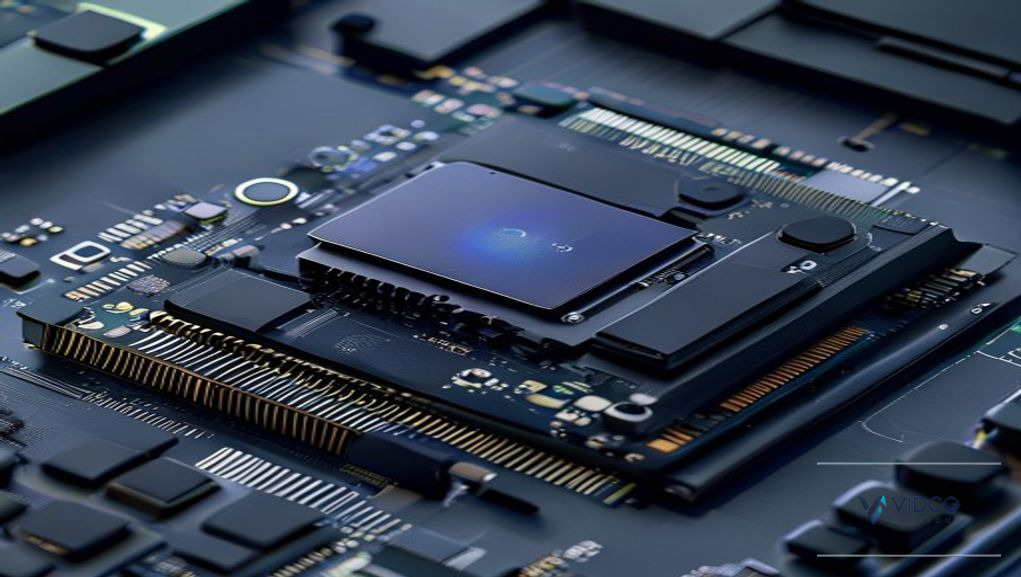
- Top Pick: The Horizon Autherium Dragon RGB I9 RTX Gaming PC || 64GB RAM || 5TB Storage || Core I9 Upto 5.4Ghz || RTX 5070 OC || Windows 11 PRO || 360MM AIO || 2.4GB/s WiFi, VR, Gaming Ready Desktop Computer
- Best Value: Skytech Gaming PC Azure 3, Ryzen 7, RTX 5060, 16GB RAM, 1TB SSD
- Premium Choice: Panorama XL RTX 5080, AMD Ryzen 7 9800X3D, 64GB DDR5 RAM, 2TB NVMe Gen4 SSD, Prebuilt Gaming Desktop PC w/Windows 11 Pro, 3 Year Warranty, RGB Keyboard+Mouse, RJ45, Internal WiFi 7 + BT, 3X DP, HDMI
🛒 Best Price Today on Amazon
Prime members get fast, free shipping on everything above, plus member-only deals. New members get a 30-day free trial — cancel anytime.
Stop Playing on Low FPS — Here’s How to Fix It
Low FPS (frames per second) leaves games feeling sluggish, laggy, and frankly no fun to play. Maybe you’re stuck at 30 FPS in a title that ought to hit 144, or maybe you just want a little more headroom — either way, this guide walks through 15 proven methods to lift FPS on any gaming PC in 2026. No snake oil — only techniques that actually work.
As an Amazon Associate we earn from qualifying purchases at no extra cost to you.


What Causes Low FPS?
Figure out where the holdup is before you start tuning. GPU-Z, MSI Afterburner, or your game’s built-in overlay will show you GPU and CPU load. When the GPU is at 99%, you’re GPU-bound — upgrade the card or dial settings back. When the CPU is at 99%, you’re CPU-bound — shut down background apps or upgrade.
15 Ways to Boost FPS in PC Games
1. Update Your GPU Drivers
Stale drivers can quietly cost you 10–20% of your performance. Both NVIDIA GeForce Experience and AMD Adrenalin update drivers in one click. On NVIDIA, turn on Game Ready Drivers; on AMD, run Adrenalin 2026 Edition for the freshest per-title tuning.
2. Enable High Performance Power Plan
Windows ships on the Balanced plan, which reins in your CPU and GPU. Switch over via Control Panel → Power Options → High Performance (or Ultimate Performance on Windows 11 Pro). That single change can net 5–15 FPS in CPU-bound games.
3. Enable NVIDIA DLSS or AMD FSR
DLSS 4 (NVIDIA) and FSR 4 (AMD) render at a lower resolution and use AI to rebuild the image at near-native sharpness. At 1440p, DLSS Quality mode looks close to native while boosting frame rates substantially — often 40–80% more with barely any drop in image quality.
4. Lower In-Game Shadow Quality
Few settings hammer the GPU like shadows. Knocking them from Ultra down to Medium frequently buys you a 15–25 FPS improvement while you’d struggle to notice the difference mid-match. Anti-aliasing and ambient occlusion are worth trimming too.
5. Enable Hardware-Accelerated GPU Scheduling (HAGS)
HAGS cuts CPU overhead by handing GPU memory scheduling to the GPU itself. On Windows 11: Settings → Display → Graphics → Hardware-Accelerated GPU Scheduling → On. You’ll need an RTX 2000+ or RX 6000+ card. The payoff is biggest when the CPU is the bottleneck.
6. Disable Xbox Game Bar and Background Apps
Xbox Game Bar and other background tasks nibble away at CPU time. Kill it under Settings → Gaming → Xbox Game Bar → Off. While you’re at it, close Chrome, Discord overlays, streaming apps, and anything else you don’t need mid-game.
7. Optimize NVIDIA Control Panel / AMD Radeon Settings
Flip Power Management Mode to Maximum Performance in the NVIDIA Control Panel. Turn Vertical Sync off globally and rely on in-game or G-Sync instead. On AMD, switch Radeon Chill off and crank the performance target to its ceiling.
8. Enable Resizable BAR (Smart Access Memory)
ReBAR opens up the GPU’s full VRAM to the CPU, making data transfers more efficient. Enable it in BIOS under PCIe / SAM settings. It works with RTX 3000+/RX 6000+ cards on Intel 10th Gen+ or Ryzen 3000+ platforms. Expect anywhere from 2–15% depending on the title.
9. Upgrade to an SSD (if You’re Still on HDD)
An HDD doesn’t directly lower FPS, but causes severe stuttering during open-world traversal as assets stream in too slowly. An NVMe SSD eliminates shader compilation stutters in DX12/Vulkan games. NVMe vs SATA SSD for Gaming — which to choose.
10. Add More RAM (and Enable XMP/EXPO)
Sitting on 8GB of RAM? Moving to 16GB+ can noticeably raise FPS in current games. Just as crucial: enable XMP (Intel) or EXPO (AMD) in BIOS so the memory runs at its rated speed. The gap between 3200MHz and 4800MHz DDR5 shows up clearly in CPU-bound games.
11. Clean Your PC and Check Temperatures
When parts overheat, thermal throttling kicks in and saps performance. A CPU touching 95°C+ will throttle to save itself. Blow the dust out of heatsinks and fans, redo the thermal paste if your cooler is 2+ years old, and tidy up airflow. Target under 85°C on the CPU and under 83°C on the GPU at load.
12. Defragment HDD / TRIM SSD
Running an HDD? Defragging it helps. With SSDs, Windows handles TRIM on its own, so leave them alone — defragmenting only burns through their lifespan. Use CrystalDiskInfo to keep tabs on SSD health and confirm it’s running right.
13. Overclock Your GPU (Safely)
A conservative GPU overclock hands you 5–10% extra performance at no cost. In MSI Afterburner, nudge the core clock up +100–150MHz and memory +500MHz, then hammer it with 3DMark or Unigine Heaven. Today’s cards have generous safety margins — back off 50MHz if you crash.
14. Use Fullscreen (Exclusive) Mode
Exclusive fullscreen lets the GPU drive the display directly, trimming presentation overhead compared to windowed or borderless modes. Windows 11’s borderless gets close thanks to DirectFlip, but exclusive fullscreen still squeaks ahead on certain titles for the lowest-latency output.
15. Upgrade Your GPU
Once you’ve squeezed all you can out of software, hardware is the next move. The RTX 5070 Ti and RX 9070 XT offer the best bang for the buck in 2026 for 1440p and 4K gaming. Both push past 100 FPS in demanding AAA titles at max settings.
FPS Boost Results — What to Expect
| Optimization | Typical FPS Gain | Difficulty |
|---|---|---|
| Update GPU drivers | 5–20% | Easy |
| High Performance power plan | 5–15% | Easy |
| Enable DLSS/FSR | 40–80% | Easy (in-game) |
| Lower shadows/AA | 15–25% | Easy |
| Enable HAGS | 2–8% | Easy |
| Enable ReBAR/SAM | 2–15% | Medium (BIOS) |
| Enable XMP/EXPO | 5–15% | Medium (BIOS) |
| GPU overclock | 5–10% | Medium |
| GPU upgrade | 50–200% | Hardware |
How do I check what’s causing low FPS?
Does more RAM help FPS?
Is DLSS/FSR worth using?
How much FPS can I gain from overclocking my GPU?
Does Windows 11 improve gaming performance?
Frequently Asked Questions
What is the easiest way to boost FPS?
Lowering the most demanding graphics settings such as shadows, reflections, and volumetric effects gives an immediate frame-rate boost with minimal visual loss. Combined with updating drivers and closing background apps, these quick changes often deliver the biggest gains without spending any money.
Does lowering resolution help FPS?
Yes, dramatically. Resolution is one of the heaviest loads on the GPU, so dropping from 4K to 1440p or 1440p to 1080p significantly raises frame rates. Upscaling technologies achieve a similar effect while preserving much of the sharpness of the higher resolution.
Do upscalers like DLSS and FSR boost FPS?
Yes, substantially. These technologies render the game at a lower internal resolution and intelligently upscale the image, delivering large frame-rate gains with a small quality trade-off. Enabling quality or balanced modes is one of the most effective ways to boost performance today.
Does updating drivers improve FPS?
Frequently. GPU makers release optimized drivers for new games that can noticeably improve performance and fix stutter. Keeping drivers current, and performing a clean install when switching versions, ensures you get these optimizations and avoid bugs that can drag down frame rates.
Which setting hurts FPS the most?
Ray tracing is typically the single most demanding setting, followed by high-resolution shadows and screen-space reflections. Disabling or lowering ray tracing usually recovers a large chunk of performance. Anti-aliasing and volumetric effects are the next best targets for reclaiming frame rate.
Ready to decide? Our #1 pick for 2026 is the Update GPU drivers.
Live price & availability on Amazon.