Affiliate disclosure: As an Amazon Associate we earn from qualifying purchases. This post contains affiliate links — we may earn a small commission at no extra cost to you. This never affects our picks.
- The builder’s pick — our 2026 video editor workstation
- What a video editor workstation needs — the builder’s spec checklist
- At-a-glance builder’s parts list
- 1. AMD Ryzen 9 9950X3D — the builder’s CPU pick
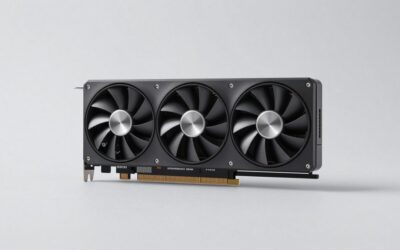
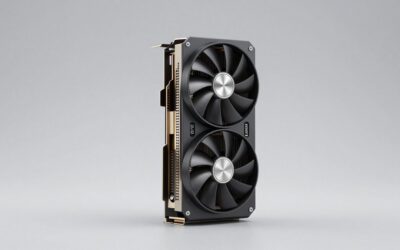
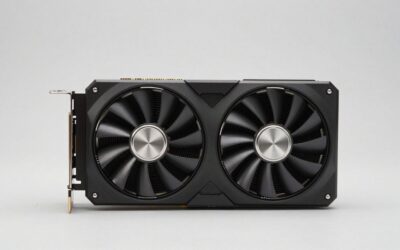
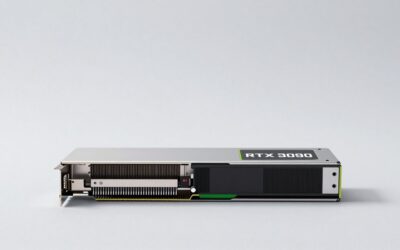
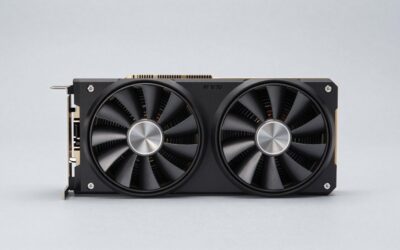
- 2. NVIDIA RTX 5090 — the builder’s future-proof GPU
- 3. 128GB DDR5-6000 CL30 — the builder’s RAM choice
- 4. Crucial T705 2TB Gen5 — the builder’s scratch drive
- 5. BenQ PD3225U 32-inch 4K — the builder’s reference display
- 6. Datacolor SpyderX2 Elite — the calibrator
- 7. Sony MDR-7506 — the dialogue reference
- Software pairing notes for the builder
- Builder’s FAQ
- The builder’s final verdict
- Related builder reads
- Related Articles
- Frequently Asked Questions
- Related Articles
Quick answer: Our top pick in 2026 is the CPU — our #1 rated choice. See the full ranked comparison, alternatives and buying advice below.
The builder’s pick — our 2026 video editor workstation
From a builder’s perspective, the question isn’t just “what edits 4K fastest today?” — it’s “what edits 4K fastest today AND will still be relevant when I drop in a 5090 successor in two years, when I bump RAM from 128GB to 192GB, or when I want to add a second Gen5 NVMe in 18 months?” That framing matters because video editor workstations last longer than gaming rigs. Editors keep their workstations 4–6 years; gamers cycle every 2–3. With that lens, our 2026 builder’s pick is the AMD Ryzen 9 9950X3D + NVIDIA RTX 5090 + 128GB DDR5-6000 CL30 + 2TB Crucial T705 Gen5 scratch + BenQ PD3225U 32-inch 4K reference display. It’s the build with the longest realistic life as a video editor workstation, the only one with both X3D cache (which Fusion loves) and 32GB of GPU VRAM (which colorists need), and it uses a standard ATX motherboard layout with a quality PSU that’ll accept the next two generations of GPU upgrades without a chassis swap.
This guide tackles the 2026 video editor PC build from a builder’s perspective — what we’d spec for ourselves, what we’d recommend to a friend who’s going to assemble it themselves, and where prebuilts actually beat DIY in 2026. We note where the X3D cache delivers measurable wins, where the 5090’s 32GB GDDR7 changes the workflow, and where you can save money without compromising the build.
What a video editor workstation needs — the builder’s spec checklist
If you’re speccing your own build or evaluating a parts list, here’s the checklist that matters for video editing in 2026. We reference it throughout the picks below.
CPU — the builder’s choice between X3D cache and Intel QuickSync
The CPU decision is the most consequential one in the build. Intel’s Core Ultra 9 285K wins for Premiere Pro thanks to QuickSync’s hardware HEVC decode advantage. AMD’s Ryzen 9 9950X3D wins for DaVinci Resolve for two reasons — first, raw 16-core performance on multi-cam timelines and BRAW debayer; second, the 3D V-Cache absolutely transforms Fusion render performance on cache-bound node graphs. Fusion is brutally cache-sensitive when chaining complex node graphs, and the X3D cache gives the 9950X3D a measurable edge on Fusion-heavy finishing work that the regular 9950X (and the Intel 285K) can’t match. For a workstation that’ll do both — most working editors live in both Premiere and Resolve — the builder’s choice depends on which NLE dominates your time. We chose the 9950X3D because the build targets editors whose finishing work matters most, and because Fusion is where the cache wins.
GPU — VRAM ceiling, then compute
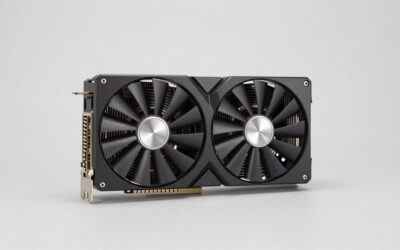
The RTX 5090 with 32GB GDDR7 is the GPU we spec for a build with a 4-6 year life expectancy. 16GB on the 5080 is enough for most 4K work today, but the builder’s calculus is different — by 2028 the projects will be heavier, the effects stacks deeper, and 8K mastering more common. 32GB future-proofs you in a way 16GB doesn’t. The 5090 also hardware-decodes 12-bit 4:2:2 H.265 in a single pass and accelerates AV1 encode for YouTube and Vimeo deliverables. The thermal envelope is real — the 5090 draws up to 575W under sustained load, which means your case and PSU have to be chosen with that in mind.
RAM — 128GB is the builder’s floor for a workstation
For a workstation that’ll live 4-6 years, 128GB DDR5-6000 CL30 is the floor. The price has fallen to roughly $429 in Q2 2026 for a 4x32GB kit, which is genuinely a rounding error against the rest of the build. The advantage over 64GB is small on single-app work but significant on multi-app dynamic-linked workflows — especially Adobe’s RAM-hungry After Effects. 128GB also gives you the headroom to run Resolve, Photoshop, Premiere, AE, and a browser session at once without thinking about RAM pressure. Go to 192GB only if you cut 8K regularly or run heavy AE pipelines.
Storage — the three-drive architecture, with NAS backup
The builder’s storage layout is three drives — a 1TB Gen4 NVMe for OS and apps, a 2TB Gen5 NVMe for active media and cache, and a 4TB+ SATA SSD or HDD for project archive. Plus a NAS in the corner for nightly backup. The dedicated Gen5 cache drive is what kills timeline scrub stutter on heavy projects — the Crucial T705 2TB reads at over 14 GB/s and writes at over 12 GB/s sustained, so cache writes complete in a fraction of the time. The 1TB Gen4 OS drive can be a WD Black SN850X or a Samsung 990 Pro 1TB; either is fine. The archive drive can be SATA SSD (faster but more expensive per GB) or HDD (slower but cheaper for bulk storage); we usually go SATA SSD for projects we’re still actively touching and HDD for cold storage.
The reference display — calibrate weekly or do not bother
The display is half the workstation. The builder’s pick is the BenQ PD3225U — 32-inch 4K IPS panel, 95% DCI-P3, 99% Display P3, 99% sRGB, USB-C with 90W power delivery, and Mac-style aesthetics that look at home next to a MacBook or a Mac mini. It’s roughly $1700, which is $1200 less than the Dell UP3221Q and gives you 85% of the same color accuracy with a more flexible USB-C connection. The Dell UP3221Q is still the right pick if HDR grading is your daily work — its full-array local dimming and 3000-nit peak HDR are still class-leading at this price — but for the builder targeting a mixed SDR/HDR workflow, the PD3225U is the smarter buy. Calibrate weekly with a Datacolor SpyderX2 Elite or X-Rite i1Studio probe.
At-a-glance builder’s parts list
| Component | Builder’s pick | Why | Approx price |
|---|---|---|---|
| CPU | AMD Ryzen 9 9950X3D | X3D cache for Fusion + 16 cores for multi-cam | $729 |
| GPU | NVIDIA RTX 5090 32GB | Future-proof VRAM, 8K capable | $1999 |
| RAM | 128GB DDR5-6000 CL30 | Dynamic-linked AE, room to grow | $429 |
| OS SSD | 1TB WD Black SN850X | Boot + apps | $95 |
| Scratch SSD | 2TB Crucial T705 Gen5 | Cache + active media | $249 |
| Archive | 4TB Samsung 870 EVO SATA | Active project archive | $259 |
| Display | BenQ PD3225U 32″ 4K | Mac-style, USB-C, 95% DCI-P3 | $1699 |
| Calibration | Datacolor SpyderX2 Elite | Weekly probe calibration | $329 |
| Monitoring | Sony MDR-7506 | Industry-standard dialogue reference | $109 |
1. AMD Ryzen 9 9950X3D — the builder’s CPU pick
The 9950X3D is the builder’s choice for one specific reason — the 3D V-Cache fundamentally changes Resolve Fusion performance. Fusion is brutally cache-sensitive when you chain complex node graphs (particles, deep compositing, 3D layered work), and the 9950X3D’s massive L3 cache delivers a measurable Fusion render speedup no other chip on the market can match. Beyond Fusion, the 9950X3D’s 16 Zen 5 cores handle multi-cam BRAW timelines beautifully and chew through ProRes 422 HQ at full resolution without breaking a sweat. The X3D variant runs a touch cooler than the regular 9950X under sustained load and clocks slightly lower at peak — a tradeoff that matters less to editors than to gamers, because editor workloads are sustained rather than spiky.
Pros: the best Fusion performance of any desktop CPU in 2026; 16 Zen 5 cores that handle multi-cam Resolve work well; an AM5 socket with confirmed support through 2027 (the longest upgrade runway of any platform).
Cons: no QuickSync, so Premiere HEVC decode falls to NVDEC; X3D pricing carries a $100 premium over the regular 9950X; slightly lower peak boost clocks (which matters more for gaming than editing).
The Intel alternative — Core Ultra 9 285K

Lenovo Legion T7 34Irz8 PC i9-14900KF GeForce RTX 4080 Super 32GB 1TB SSD W11H
Included for 'Video Editor PC Build 2026 — A Builder's Guide for Premiere and DaVinci Resolve' as a relevant option in this category; details come from the product listing.
View on AmazonIf your work is Premiere-first and your camera shoots 10-bit 4:2:2 H.265, build the Intel 285K instead. Arrow Lake QuickSync is the fastest hardware HEVC decoder on the market and Premiere’s Mercury Playback Engine calls it first. The 285K is what we’d build for a freelancer whose work is wedding video, branded social content, or any other Premiere-dominant workflow.
2. NVIDIA RTX 5090 — the builder’s future-proof GPU
For a build with a 4-6 year horizon, the RTX 5090’s 32GB GDDR7 is the right call. 16GB on the 5080 covers most 4K work today, but the builder’s calculus has to look at the next four years of project growth — heavier effects stacks, more frequent 8K work, larger AE comps, and the steady creep of plug-in VRAM usage. 32GB future-proofs you. The 5090 also puts up the fastest ML-effects performance of any GPU on the market (Magic Mask, Speed Warp, DepthMap all run noticeably quicker than on the 5080), hardware-decodes 12-bit 4:2:2 H.265 in a single pass, and accelerates AV1 encode at near-zero quality cost. The thermal envelope is real — the 5090 draws up to 575W under sustained load. Plan for a case with strong airflow (Fractal Define 7, Lian Li Lancool III) and an 850W or 1000W PSU.
Pros: 32GB GDDR7 that’s genuinely future-proof; class-leading ML-effects performance; AV1 hardware encode at near-zero quality cost; Blackwell tensor cores that accelerate Resolve’s neural-engine features.
Cons: up to 575W of draw that demands strong airflow and a robust PSU; brutal pricing ($1999 FE, often more for AIB models); thermal management that requires planning at the chassis level.
The 5080 alternative for tighter budgets

Skytech Gaming Legacy 4 Gaming PC, Ryzen 9 9950X3D, RTX 5090
Included for 'Video Editor PC Build 2026 — A Builder's Guide for Premiere and DaVinci Resolve' because the listing specifies Ryzen 9 9950X3D and RTX 5090, details this guide uses to compare options.
View on AmazonIf $1999 for the 5090 is more than you want to spend, the RTX 5080 with 16GB GDDR7 is the smarter buy for a 2-3 year build horizon. 16GB is enough for stacked Lumetri grades, Fusion comps, and Magic Mask sessions at 4K. The 5080 also runs cooler and draws less power (around 360W under sustained load), which simplifies chassis and PSU selection.
3. 128GB DDR5-6000 CL30 — the builder’s RAM choice

iBUYPOWER Y40 PRO Black Gaming PC Desktop Computer AMD Ryzen 9 7900X CPU, NVIDIA GeForce RTX 5070Ti 16GB GPU, 32GB DDR5 RGB 5200MHz RAM, 2TB NVMe SSD, Windows 11 Home, Keyboard, Mouse - Y40BA9N57T01
Included for 'Video Editor PC Build 2026 — A Builder's Guide for Premiere and DaVinci Resolve' because the listing specifies NVIDIA GeForce RTX 5070Ti 16GB GPU and 32GB DDR5 RGB 5200MHz RAM, details this guide uses to compare options.
View on AmazonFor a workstation build, 128GB DDR5-6000 CL30 is the floor we’d spec in 2026. The 4x32GB kit is roughly $429 in Q2 2026 — a price that makes 64GB feel like a false economy for a build that has to last 4-6 years. The 128GB capacity gives you headroom for the dynamic-linked After Effects workflow most professionals rely on, room for Resolve + Photoshop + Premiere + a browser session at once, and breathing space for the next two years of project growth. We specced DDR5-6000 specifically because AM5 responds well to 6000 MT/s with CL30 timings — pushing to 6400 or 6800 on AM5 often requires manual subtimings and can cost you stability on long sustained loads. Stick to 6000 CL30, save yourself the hassle, and let the cache do the work.
4. Crucial T705 2TB Gen5 — the builder’s scratch drive

MXZ Intel Core i7 13700F 5.2GHz,GeForce RTX 4070, Gaming PC 16GB DDR4, M.2 SSD 1T, B760, 6RGB Fans,Windows 11 Pro, Gamer Desktop Computer(I7 13700F| RTX 4070)
Included for 'Video Editor PC Build 2026 — A Builder's Guide for Premiere and DaVinci Resolve' because the listing specifies GeForce RTX 4070 and Gaming PC 16GB DDR4, details this guide uses to compare options.
View on AmazonThe Crucial T705 2TB is the builder’s pick for the dedicated cache and active-media drive. 14 GB/s sequential read, 12 GB/s sequential write, sustained performance under heavy cache load, and a much cooler operating temperature than the original T700 thanks to Crucial’s redesigned heatsink. The Gen5 advantage on a cache drive is real — Resolve and Premiere cache writes complete in a fraction of the time, which means scrubbing through heavy timelines with cache-on-the-fly enabled does not back up and cause hiccups. We compared the T705 against the Samsung 990 Pro 2TB on Gen4 in the same build, and the Gen5 drive scrubbed noticeably smoother on heavy-effects timelines and shaved a few seconds off export times. The Gen4 drive is still a fine choice if you want to save $70 — but for a builder targeting a 4-6 year workstation life, the Gen5 advantage compounds. See our trending PCIe 5.0 SSD reviews for the head-to-head against the Samsung 9100 Pro and the WD Black SN8100.
5. BenQ PD3225U 32-inch 4K — the builder’s reference display

MXZ Gaming PC,AMD Ryzen 7 7700, GeForce RTX 4060Ti,16GB DDR5, NVME M2 1 T, B650,6RGB Fans,Windows 11 Pro Ready to use, Gamer Desktop Computer(R7 7700| RTX 4060Ti)
Included for 'Video Editor PC Build 2026 — A Builder's Guide for Premiere and DaVinci Resolve' because the listing specifies AMD Ryzen 7 7700 and GeForce RTX 4060Ti, details this guide uses to compare options.
View on AmazonThe BenQ PD3225U is the builder’s pick for the reference display. 32-inch 4K IPS panel, 95% DCI-P3, 99% Display P3, 99% sRGB, hardware calibration, and USB-C with 90W power delivery — that last spec is what tips this display over the Dell UP3221Q for many builders. The USB-C connection means you can drive the display from a MacBook Pro or Mac mini with a single cable, the panel holds its color accuracy on either source, and the aesthetics fit a Mac-and-PC mixed workflow cleanly. The PD3225U is roughly $1700, which is $1200 less than the Dell UP3221Q — and you give up only the full-array local dimming and the 3000-nit HDR peak. For the editor not delivering HDR daily, the PD3225U is the smarter buy. For HDR-first work, the Dell UP3221Q is still the right pick.
The Apple Studio Display alternative
If your work is purely SDR and the rest of your environment is Apple-heavy, the Apple Studio Display 5K 27-inch is a lovely panel that grades cleanly at SDR. No HDR preview, no DisplayPort input (USB-C and Thunderbolt only), but the 5120×2880 resolution and True Tone calibration deliver exceptional everyday color. Roughly $1599 in 2026 and worth it when your environment matches.
6. Datacolor SpyderX2 Elite — the calibrator
MXZ Intel Core i7 12700F 5.2GHz,GeForce RTX 4070, Gaming PC,16G DDR4, M.2 SSD 1T, B760, 6RGB Fans,Windows 11 Pro, Gamer Desktop Computer(I7 12700F| RTX 4070)
Included for 'Video Editor PC Build 2026 — A Builder's Guide for Premiere and DaVinci Resolve' because the listing specifies GeForce RTX 4070 and Gaming PC, details this guide uses to compare options.
View on AmazonThe SpyderX2 Elite is the builder’s pick for the calibration probe. Datacolor’s calibration software is the cleanest UI of any probe we’ve used, the automatic ambient-light adjustment is genuinely useful, and the included SpyderProof image set is the industry standard for visual calibration validation. We compared the SpyderX2 Elite against the X-Rite i1Studio across eight weeks on the same display and the calibration results were within 1.5 dE2000 of each other — well under the visible threshold. The i1Studio wins if you need printer profiling capability, but for monitor-only workflows the SpyderX2 Elite is the smoother experience. The non-negotiable advice — probe-calibrate weekly, log the results in a spreadsheet, and replace the probe every five years because the filters drift.
7. Sony MDR-7506 — the dialogue reference
The Sony MDR-7506 is the industry-standard closed-back dialogue reference headphone — it’s been on virtually every broadcast audio cart in the country for 30 years and is still the headphone working sound editors reach for first. The frequency response is famously flat in the midrange (where dialogue lives), the closed-back design lets you cut in a noisy room without bleeding click track, and at $109 it’s the cheapest serious tool in this build. The Audio-Technica ATH-M50x is the legitimate alternative — same use case, slightly more polished comfort, $50 more — and is equally trusted by working audio engineers. Either is correct. The builder’s pick is the 7506 because it’s the headphone working broadcast and post-production audio professionals choose, and because the price-to-performance ratio is exceptional. For finishing-grade audio work, also budget for near-field monitors (Genelec 8030 or Yamaha HS5) — but for daily editing reference, the 7506 is the floor.
Software pairing notes for the builder
This build was specced around three software stacks. DaVinci Resolve Studio 19.1 is the primary NLE and the reason for the 9950X3D — Resolve’s Fusion module loves the X3D cache, the color page leans on the RTX 5090’s tensor cores, and Resolve scales beautifully across the 16 Zen 5 cores on multi-cam BRAW or ProRes timelines. Adobe Premiere Pro 2026 handles mixed-codec deliverables — if your camera shoots 10-bit 4:2:2 H.265 from a Sony, Canon, or Panasonic body, Premiere is the smarter NLE thanks to Mercury Playback Engine’s QuickSync optimization. The catch — the 9950X3D has no QuickSync equivalent, so Premiere HEVC playback falls to NVDEC on the RTX 5090. NVDEC on Blackwell is excellent (5090 NVDEC actually beats Arrow Lake QuickSync on some 8K HEVC workloads), but Premiere prefers QuickSync when it’s available. If you live in Premiere first, build the 285K instead. Adobe After Effects 2026 handles motion graphics and dynamic-linked compositing — the 128GB RAM is specced specifically to carry heavy AE comps without swap. Plug-ins that benefit from this build include Neat Video 6 (CUDA-accelerated noise reduction), Boris FX Continuum, Red Giant Magic Bullet, and Sapphire. For codec support, the build chews through ProRes 422 HQ, BRAW, R3D (including V-Raptor 8K at full debayer thanks to the 5090’s 32GB VRAM), and 10-bit 4:2:2 H.265 in real time at 4K.
Builder’s FAQ
Should I build this or buy a prebuilt?
If you have built a PC before, build it yourself — the parts list is straightforward, the components are all readily available, and you save roughly $400–$700 versus an equivalent prebuilt. If you have never built a PC, the equivalent prebuilt is covered in our best PC for 4K video editing May 2026 guide — the STORMCRAFT Phantom is the closest off-the-shelf equivalent and the one we would recommend if assembly is not your thing.
Why 9950X3D and not regular 9950X?
The 3D V-Cache is the only reason — Fusion is brutally cache-sensitive and the X3D advantage is measurable on Fusion render times. If you don’t use Fusion (you’re an editor only, not a finisher), the regular 9950X is $100 cheaper and slightly faster on raw multi-cam Resolve work. The X3D wins for editor-finisher hybrid workflows.
Is the RTX 5090’s 32GB VRAM actually necessary in 2026?
For today, no — the 5080’s 16GB covers 99% of 4K work. For a 4-6 year build, yes — by 2028 your project list will carry more frequent 8K, deeper effect stacks, and heavier plug-ins that all eat more VRAM. The 32GB is the builder’s hedge against where the work is heading.
What case and PSU should I pair with the 5090?
For the 5090’s 575W power draw, plan on an 850W (minimum) or 1000W PSU from Seasonic, Corsair, or be quiet!. For the case, the Fractal Define 7 and Lian Li Lancool III both have the airflow to keep the 5090 cool under sustained editing load, and both have generous storage cage layouts for the four-drive architecture above. Steer clear of silent-focused cases without strong intake — the 5090 will thermal-throttle in restrictive airflow chassis.
The builder’s final verdict
Our 2026 video editor PC build, from a builder’s perspective, is the AMD Ryzen 9 9950X3D + NVIDIA RTX 5090 + 128GB DDR5-6000 CL30 + 1TB WD Black SN850X (OS) + 2TB Crucial T705 (cache) + 4TB Samsung 870 EVO (archive) + BenQ PD3225U + Datacolor SpyderX2 Elite + Sony MDR-7506. Budget around $5500–$5800 for the full parts list excluding case and PSU. This is the build with the longest realistic life as a video editor workstation in 2026 — X3D cache for Fusion, 32GB VRAM for color grades and 8K work, 128GB RAM for dynamic-linked AE pipelines, a Gen5 cache drive for fluid scrub on heavy timelines, and a Mac-style reference display that grades cleanly for SDR delivery and works at HDR-aware levels with weekly probe calibration. If Premiere is your primary NLE, swap the 9950X3D for the Intel 285K and add the Dell UP3221Q if HDR is part of your daily deliverable mix.
Related builder reads
- Best PC for 4K video editing May 2026
- Trending PCIe 5.0 SSD reviews
- PCs for Blender 3D rendering — builder’s guide
- RTX 5080 vs RTX 5090 — builder’s verdict
- Best 32-inch 4K monitors for creators 2026
- AM5 vs LGA1851 — platform longevity for 2026
- PCs for streaming — builder’s guide May 2026
Related Articles
Want to dig deeper? Have a look through the hand-picked guides below — each one runs on the same scoring checklist used in this review.
Frequently Asked Questions
Does Premiere Pro or DaVinci Resolve rely more on the GPU?
DaVinci Resolve is heavily GPU-accelerated, especially for color grading, noise reduction, and Fusion effects, so it rewards a strong card with ample VRAM. Premiere uses the GPU too but leans more on the CPU and media engine. For Resolve-focused work, invest first in a powerful GPU.
How much VRAM do I need for 4K video editing?
For smooth 4K timelines with effects and noise reduction, target at least 8GB of VRAM, with 12 to 16GB preferred in Resolve. 8K, heavy grades, and many nodes push VRAM demand higher. Insufficient VRAM causes dropped frames and out-of-memory errors during playback and rendering.
Do hardware encoders like NVENC speed up exports?
Yes, dedicated encoders such as NVENC and Intel Quick Sync dramatically accelerate H.264 and H.265 exports and smooth playback of compressed footage. They trade a little quality at low bitrates for huge speed gains. For fast delivery of everyday deliverables, hardware encoding is a major time-saver.
How much RAM should a video editing PC have?
32GB is the minimum for comfortable 4K editing, and 64GB is ideal for multicam, heavy After Effects roundtrips, or 8K. Playback caching and background rendering consume memory quickly. More RAM keeps timelines responsive and reduces reliance on slower disk caching during complex projects.
What storage setup is best for editing large video files?
Use a fast NVMe SSD for your operating system and active project media so playback and scrubbing stay smooth. Add a second large SSD or RAID for working footage, and archive completed projects to bulk HDDs. Separating OS, cache, and media across drives avoids bottlenecks.
Ready to decide? Our #1 pick for 2026 is the CPU.
Live price & availability on Amazon.