- Top Pick: Professional Azure DevOps Services: How to Set Up Your .Net DevOps Environment
- Best Value: Amazon Echo Studio Manual for Beginners: Easy Guide to Set Up Alexa, Manage Devices, Customize Settings, and Fix Common Issues (ClearStep Technology Guide)
- Premium Choice: Mac Studio M2 Max: Ultimate Streaming Setup for Creators
🛒 Best Price Today on Amazon
Prime members get fast, free shipping on everything above, plus member-only deals. New members get a 30-day free trial — cancel anytime.
- Top Podcaster Studio Setup Buyer Picks for 2026
- Why podcasting workstations need different specs
- Builder’s pick table for 2026
- Electro-Voice RE20 — the premium build’s anchor mic
- RØDECaster Pro II — the console that anchors the build
- RØDECaster Duo — the lean build console
- Shure SM7B — the workhorse alternative
- Shure MV7+ — the future-proof entry tier
- Rode PodMic — the budget multi-mic build
- Heil PL2T — the boom arm built for premium mics
- RØDE PSA1+ — the heavy-duty all-rounder arm
- AKG K371 — the modern monitoring choice
- Software pairing for the workstation
- FAQ — builder edition
- Final verdict — the builder’s recommended 2026 workstation
- Three sample builds at different budget tiers
- Build pitfalls — what we’ve seen builders get wrong
- Maintenance and lifecycle planning
- Builder’s related reading
- Related Articles
- Frequently Asked Questions
- Related Articles
- Related Guides
Top Podcaster Studio Setup Buyer Picks for 2026
Here are our current top podcaster studio setup buyer picks, compared on real Amazon owner reviews, price, and features. Live prices update below.
As an Amazon Associate we earn from qualifying purchases at no extra cost to you.


Affiliate disclosure: As an Amazon Associate we earn from qualifying purchases. This post contains affiliate links — we may earn a small commission at no extra cost to you. This never affects our picks.
If you’re building a podcasting workstation from the ground up in 2026, the good news is you’re building one of the simplest creative rigs in modern content production. There is no GPU to choose, no CPU bottleneck to plan around, no NVMe topology to worry about. Podcasting is an audio-chain problem, and the entire workstation lives between the microphone and the recorder. The bad news is that means the gear choices matter disproportionately — there’s no room to hide a bad mic behind a fast CPU or a weak interface behind a great GPU. Get the chain right, and the workstation works for years. Get it wrong, and every episode reminds you.
This is a builder’s guide. We’ll walk every link in the audio chain — microphone, boom arm, preamp/console, monitoring, room treatment, software pairing — and tell you what to buy at each tier, why the spec matters, and what failure mode it heads off. We’ll cover the PC side briefly because it barely matters, then spend the rest of the guide on the things that do.
By the end you’ll have a defensible bill of materials for a podcasting workstation that scales from solo to four-host panel, sounds broadcast-clean out of the box, and doesn’t require you to be a sound engineer to run.
Why podcasting workstations need different specs
Every creative workstation comes down to where it bottlenecks. Video editing chokes on GPU and storage bandwidth. 3D work chokes on CPU cores and VRAM. Streaming chokes on encoder throughput and upload bandwidth. Podcasting chokes on the analog audio chain — and specifically on these five things:
- Preamp gain and noise floor. Broadcast dynamic mics (SM7B, RE20) need 60-70 dB of clean gain. Cheap interfaces give you noise hiss at those levels. This is the single most common podcast audio failure.
- Microphone polar pattern and rejection. Untreated rooms amplify every reflection. Tight cardioid dynamics reject the room; condensers welcome it in. Wrong choice here ruins every episode.
- Processing latency. If host monitoring lags more than 10 ms behind their voice, conversation rhythm breaks. Hardware DSP solves this; CPU plugin chains don’t, reliably.
- Recording redundancy. Single-source recording is one power cut from disaster. Multi-track to SD + USB is non-negotiable for a workstation.
- Monitoring isolation. Open-back headphones bleed into mics. Closed-back is mandatory for podcasting; this is non-negotiable.
What’s deliberately absent from that list: CPU cores, GPU VRAM, RAM capacity, storage speed. Any modern PC with 8 GB of RAM and USB 3.0 is the same as any other from the audio chain’s point of view. Spend nothing extra on the PC; spend everything on the chain.
Builder’s pick table for 2026
| Category | Builder’s Pick | Approx. Price | What Spec Matters |
|---|---|---|---|
| Production console (4-channel) | RØDECaster Pro II | $699 | 76 dB gain, APHEX processing, 14-track recording |
| Production console (2-channel) | RØDECaster Duo | $499 | Same chain, two channels, smaller footprint |
| Premium broadcast mic | Electro-Voice RE20 | $549 | Variable-D capsule eliminates proximity boom |
| Workhorse broadcast mic | Shure SM7B | $399 | Tight cardioid, exceptional room rejection |
| Hybrid USB+XLR mic | Shure MV7+ | $279 | USB-C + XLR, future-proof entry tier |
| Budget XLR mic | Rode PodMic | $99 | True broadcast dynamic at consumer pricing |
| Boom arm | Heil PL2T | $109 | Built for RE20 center of gravity |
| Boom arm (heavy duty) | RØDE PSA1+ | $179 | Damped springs, integrated cable management |
| Monitoring | AKG K371 | $149 | Closed-back, neutral, comfortable for long sessions |
Electro-Voice RE20 — the premium build’s anchor mic

Logitech MX Master 3 Advanced Wireless Mouse, Ultrafast Scrolling, Ergonomic, 4000 DPI, Customization, USB-C, Bluetooth, USB, Apple Mac, Microsoft PC Windows, Linux, iPad - Graphite


As an Amazon Associate we earn from qualifying purchases. Product prices and availability are accurate as of the date/time indicated.
Building a premium workstation in 2026 with budget to spare? The RE20 is the mic to anchor it around. The Variable-D capsule design is the key spec: by acoustically routing low-frequency sound through ports along the mic’s length, it cancels the proximity effect that plagues normal cardioid dynamics. The result is a microphone whose tonal balance holds steady as the host leans in, leans out, gestures, or shifts position over a long recording.
For builders, that matters because it removes a variable. With an SM7B, your host has to hold a consistent mouth-to-mic distance for consistent sound — or you burn time in post normalizing it. With the RE20, that constraint disappears. The host can be a normal human and the audio still lands even.
Sonically, the RE20 has the warm, slightly fat low end that has defined American broadcast radio for sixty years. It flatters most voices, carries a presence bump that helps speech cut through processing chains, and handles sibilance more gracefully than the SM7B (which can get fizzy on some voices). The internal pop filter is excellent, though we still recommend an external windscreen for plosive-heavy speakers.
Build implications: the RE20 needs a serious arm. The Heil PL2T was designed around its weight and center of gravity and is the canonical pairing. Don’t try to mount an RE20 on a $30 desk-clamp arm; the engineering won’t hold up.
RØDECaster Pro II — the console that anchors the build

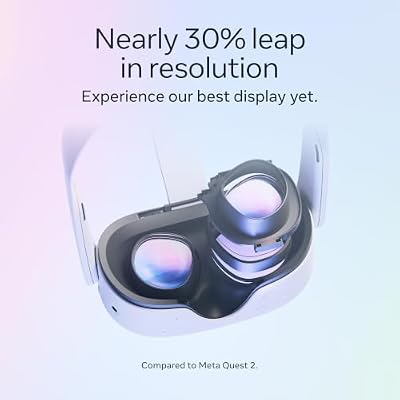
Meta Quest 3 512GB, VR Without Wires, Gorilla Tag Cardboard Monkenaut Bundle, Amazon Exclusive, 3-Month Trial of Meta Horizon+ Included




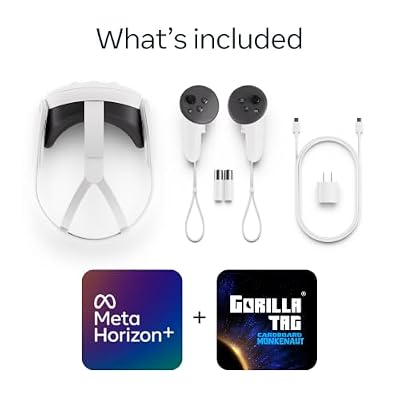
As an Amazon Associate we earn from qualifying purchases. Product prices and availability are accurate as of the date/time indicated.
From a builder’s perspective, the Pro II is the workstation. Four combo XLR inputs with 76 dB of clean gain (enough for any broadcast dynamic without an inline preamp), APHEX-licensed onboard DSP (compressor, big bottom, aural exciter, noise gate, high-pass filter, de-esser) running at hardware latency, 14-track multi-output recording to microSD with simultaneous USB streaming to your DAW, eight SMART pads with bank switching for stings and routing, plus Bluetooth and USB caller integration with independent fader control.
The build advantage of the Pro II over a Scarlett-plus-plugins approach is fundamental: every signal flows through hardware DSP at hardware latency. There’s no scenario where a CPU spike or a plugin crash interrupts the recording. The SD card writes in parallel with the USB stream, so even a PC failure mid-episode leaves you with a clean master.
For builders sizing capacity, the Pro II is the right console if any of these apply: you’ll have three or more in-room participants, you need multiple discrete caller channels, you also stream and want one device handling both workflows, or you want headroom to grow into more complex production without re-buying gear. If none apply, the Duo is the right choice and saves $200.
RØDECaster Duo — the lean build console

HTC Vive Focus Vision — Mixed Reality and PC VR Headset + Controllers — Consumer Edition


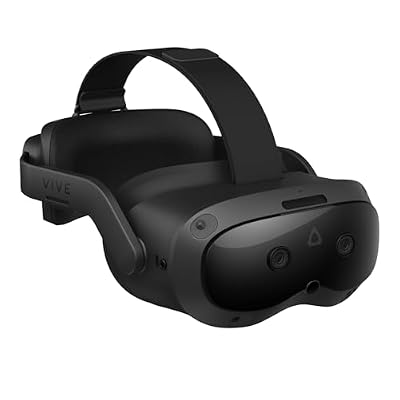


As an Amazon Associate we earn from qualifying purchases. Product prices and availability are accurate as of the date/time indicated.
On a lean solo or duo build, the Duo packs the full Pro II DNA into a smaller, cheaper box. Two combo XLR inputs (still carrying 76 dB clean gain), the identical APHEX processing chain, six SMART pads, the same multi-track SD recording, the same USB streaming, and the same Bluetooth and USB caller integration.
Run the math: a Duo + two MV7+ mics + two PSA1+ arms + two K371 headphones comes to about $1,700 all-in — a complete, no-compromise solo-or-duo podcast workstation. Try to add a third mic, though, and you hit a wall, because the Duo accepts only two XLR inputs. So look ahead: if there’s any realistic chance you’ll need a third channel within the workstation’s lifespan, pay the extra $200 for the Pro II up front.
Shure SM7B — the workhorse alternative
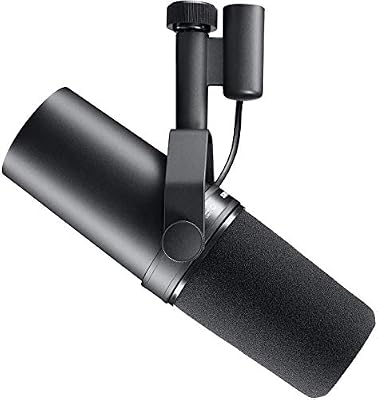
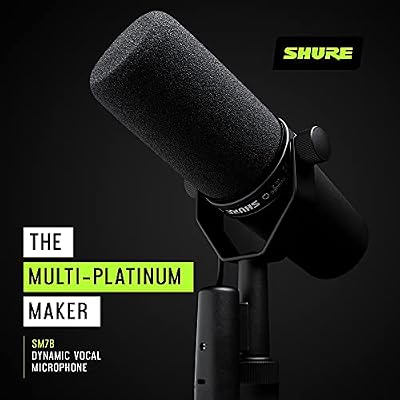
Shure SM7B Dynamic Vocal Microphone for Podcasting & Streaming | XLR studio dynamic mic for broadcast, podcast, recording, gaming and streaming; smooth warm vocals, rugged build




As an Amazon Associate we earn from qualifying purchases. Product prices and availability are accurate as of the date/time indicated.
Want the prestige broadcast mic but not the RE20 price? The SM7B is your answer. Tight cardioid pattern, low sensitivity (a feature, not a bug, when you’re rejecting room noise), a warm but neutral frequency response, and a build that refuses to die. It’s been the broadcast default for decades because its failure modes are graceful — it never sounds bad, even in untreated rooms with unprocessed voices.
Spec consideration for builders: the SM7B is the gain-hungriest mic in this guide. Plan for 60-70 dB of clean preamp gain. The RØDECaster Pro II and Duo supply enough native gain to skip a Cloudlifter; on lesser interfaces, budget the extra $150 for the inline preamp booster, because without it you’ll have noticeable hiss on your tracks.
At 0.79 kg, the SM7B is heavy enough that cheap boom arms physically can’t hold it without sagging or squeaking. The PSA1+ is engineered for exactly this weight class.
Shure MV7+ — the future-proof entry tier

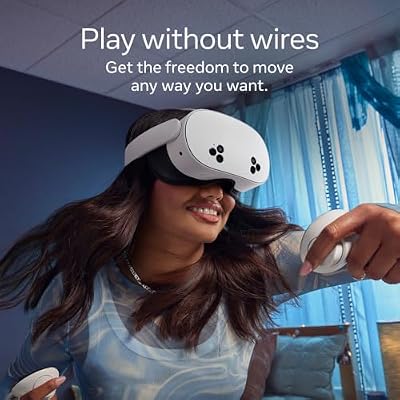
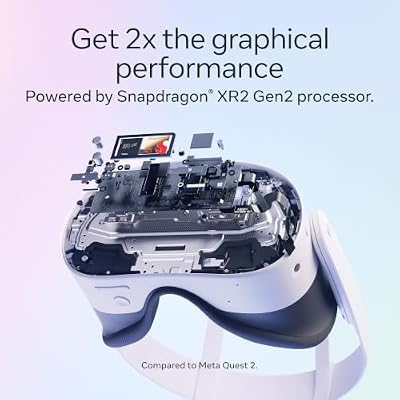
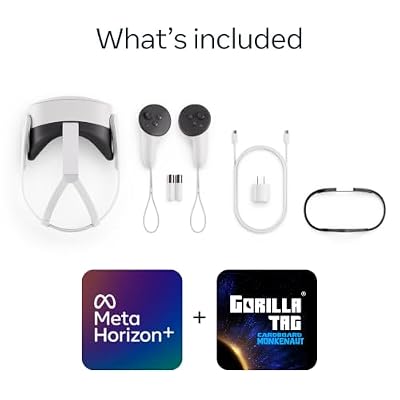
Meta Quest 3S 128GB | Virtual Reality — VR Headset — Gorilla Tag Bundle




As an Amazon Associate we earn from qualifying purchases. Product prices and availability are accurate as of the date/time indicated.
For builders starting on a tighter budget who want a clear upgrade path, the MV7+ is the right entry mic. The USB-C output means it works direct-to-laptop today, no interface required. The XLR output means that when you build out the console, the same mic plugs in and keeps working. There’s no “I’ll buy a real mic later” moment — the MV7+ is the real mic.
Tonally it sits a touch behind the SM7B on warmth and proximity feel, but the gap is narrower than the price difference implies. For a serious solo show, an MV7+ on a PSA1+ arm into a RØDECaster Duo is a complete workstation that gives up nothing on output quality.
Rode PodMic — the budget multi-mic build

Pimax Crystal Super VR Headset, 3840x3840 per Eye, Ultrawide, 140° FOV, Eye- Tracking, Ultra-Sharp for Flight & Racing Simulators & Gaming, DP Connection with PC


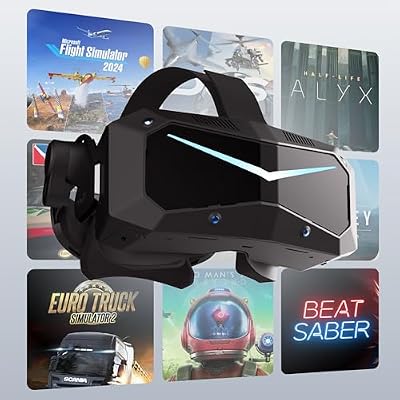


As an Amazon Associate we earn from qualifying purchases. Product prices and availability are accurate as of the date/time indicated.
Building a multi-host panel workstation on a tight budget? The PodMic is how you get there. At $99 it’s a true broadcast dynamic with an integrated swivel mount and a sound that punches well above its price tier. Four PodMics on PSA1+ arms into a RØDECaster Pro II runs roughly $1,400 in mics-and-arms plus the console — a complete four-host workstation for under $2,300.
Builder caveat worth flagging: the PodMic runs lower in sensitivity than the SM7B and wants every dB of gain the console can hand it. On the RØDECaster series it gets there without a Cloudlifter; on weaker interfaces, plan to add one.
Heil PL2T — the boom arm built for premium mics

Stride Rite, Unisex Kid's, Cheyenne 2.0 (Infant/Toddler), Tan, 3, Medium


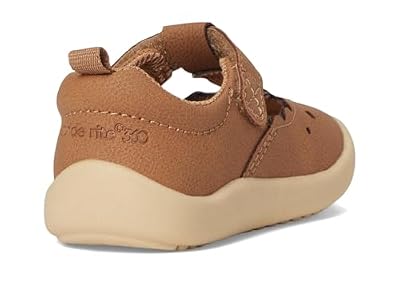


As an Amazon Associate we earn from qualifying purchases. Product prices and availability are accurate as of the date/time indicated.
Heil built the PL2T around the RE20’s weight and center of gravity, and the duo is still the broadcast benchmark. It carries the SM7B without complaint too, and the fully internal cable routing keeps the frame tidy for video podcasts. At $109, it’s the boom arm to spec for premium-mic builds.
Build note: the PL2T clamps to the desk, which is standard. If you need shock-isolated mounting — drum-heavy desks, hosts who stomp — add an isolation mount adapter.
RØDE PSA1+ — the heavy-duty all-rounder arm
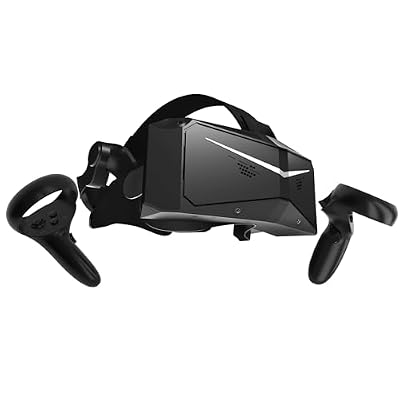
Pimax Crystal Light VR Headset for PC, 2880x2880 per Eye, 8K QLED Display with Local-Dimming, Inside-Out Tracking, PC VR Headset for Flight Sims, iRacing & Gaming (Full Payment Version)


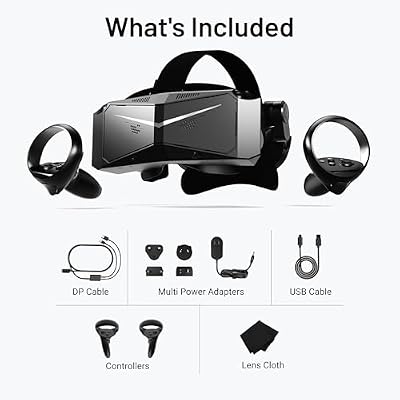
As an Amazon Associate we earn from qualifying purchases. Product prices and availability are accurate as of the date/time indicated.
For builds running SM7Bs or PodMics, or for video podcasts where the arm shows up in frame, the PSA1+ is the right call. Damped springs kill the squeak-on-adjust problem, integrated routing tucks the XLR cleanly through the arm structure, and the build shrugs off years of daily repositioning. At a 2.4 kg load rating, it carries any mic in this guide with room to spare.
AKG K371 — the modern monitoring choice
For builders who want monitoring headphones that stay comfortable through long editing sessions, the K371 is our pick over the venerable MDR-7506. It’s a hair more neutral, a hair more spacious in soundstage, and noticeably comfier over multi-hour stretches thanks to better padding and lower clamp force. The closed-back design keeps bleed out of the mics during recording — non-negotiable for podcasting.
The MDR-7506 is still an excellent alternative at a slightly lower price, and the safer pick if you also need bulletproof durability for travel.
Software pairing for the workstation
RØDE Connect ships free with the RØDECaster series and routes remote callers through the same processing chain. On solo or duo builds, it frequently covers the whole production software need on its own.
Hindenburg Pro is the DAW we point speech-first builders toward. Auto-leveling, a magic compressor, and direct export to podcast platforms — it’s purpose-built for talk content, and the learning curve stays gentle.
Reaper is the power-user’s DAW. Cheap, scriptable, lighter on CPU than Pro Tools, and endlessly customizable. If there’s an engineer on the show, Reaper is what they’ll reach for.
GarageBand on Mac is a perfectly defensible choice for solo creators who just want to ship. Don’t sneer at it; plenty of flagship podcasts edit in GarageBand.
Riverside.fm runs remote interviews with local recording on each participant — the only reliable way to keep internet stutters out of the final cut. Squadcast and Zencastr do functionally the same job as alternatives.
Acoustic treatment is the part of the build most builders skimp on and most regret. Two foam panels behind the host’s chair (where reflections bounce back into the mic), a rug on hard floors, and no glass walls in the visual frame will outperform any post-processing plugin. Budget $200 minimum for acoustic treatment; treat it as part of the workstation.
FAQ — builder edition
Do I need to spec a high-CPU workstation for podcasting? No — podcasting is about the lightest creative workflow there is. Any modern PC or Mac with 8 GB of RAM and a USB 3.0 port handles it fine. Don’t pour money into the computer; route it to the audio chain instead.
Why a hardware console rather than an interface plus DAW plugins? Three reasons. Hardware DSP runs at hardware latency, so a CPU spike never interrupts you. SD card recording gives you power-failure redundancy. And the console offers a one-button workflow for non-technical guests. The interface-plus-plugins route is fine for soloists comfortable with tech; the console is the right call for everyone else.
Is the RE20 worth $150 more than the SM7B? For builders, the Variable-D capsule design (no proximity boom) is genuinely valuable — it removes a variable from your sessions and cuts post-production cleanup. If your hosts move while recording, the RE20 earns back that $150 in saved editing time inside a year.
What’s the single most important spec when building a podcast workstation? Clean preamp gain, full stop. Everything else has workable alternatives; not enough clean preamp gain is the failure that wrecks more podcasts than any other single cause.
Final verdict — the builder’s recommended 2026 workstation
For builders going premium, the workstation we’d build today: Electro-Voice RE20 mics on Heil PL2T arms feeding a RØDECaster Pro II, monitored on AKG K371 headphones. The RE20’s Variable-D capsule removes a recording variable, the PL2T-RE20 pairing is a sixty-year broadcast standard, the Pro II handles up to four channels with broadcast-grade processing, and the K371 stays comfortable for the long editing sessions a serious show demands. Total bill runs around $3,200 for a two-host setup and scales cleanly to four hosts.
On a lean build, drop down to SM7Bs on PSA1+ arms with a RØDECaster Duo, and you’ve got a $1,700 workstation that goes toe-to-toe with $5,000 studios from a few years back.
Three sample builds at different budget tiers
To make the builder framing concrete, here are three end-to-end bills of materials for podcaster workstations at distinct budget tiers. Each is a complete build — everything you need from the microphone to the editing desk — for a two-host show. Scale to more hosts by adding the matching mic, arm, and headphone trio at the marginal per-seat cost noted in each tier.
Lean build (~$1,700 total)
RØDECaster Duo ($499) + two Shure MV7+ mics ($558) + two RØDE PSA1+ arms ($358) + two Sony MDR-7506 headphones ($198) + basic foam panel kit ($100). This is the workstation we’d recommend to anyone starting a serious solo or duo show with a constrained budget but no willingness to compromise on output quality. The MV7+ is the right starting mic because of its USB-XLR flexibility — if the show fails to find an audience, the mic still works direct-to-laptop for other uses. Per-seat scaling cost: about $580 (add a third MV7+, PSA1+, and MDR-7506).
Pro build (~$2,300 total)
RØDECaster Pro II ($699) + two Shure SM7B mics ($798) + two RØDE PSA1+ arms ($358) + two AKG K371 headphones ($298) + acoustic panel kit ($200). This is the workstation we’d build for a flagship duo show with sponsor revenue, or a growing show that might add a third in-room host within the next two years. The Pro II is sized for future growth, the SM7B is the broadcast standard, and the K371 is the comfort upgrade for editor sessions. Per-seat scaling cost: about $730.
Premium build (~$3,200 total)
RØDECaster Pro II ($699) + two Electro-Voice RE20 mics ($1,098) + two Heil PL2T arms ($218) + two AKG K371 headphones ($298) + a comprehensive acoustic treatment package with bass traps ($400) + spare cabling and stands ($200) + redundant SD cards and external SSD backup ($200). This is the rig we’d build for a daily-shipping show, a network production, or a serious one-host show where vocal warmth is the brand itself. The RE20’s Variable-D capsule pays back its cost in editing time over thousands of episodes, and the full acoustic treatment future-proofs the room.
Build pitfalls — what we’ve seen builders get wrong
A handful of recurring build mistakes show up often enough to call out explicitly.
Spending too much on the PC. Builders coming from streaming or video editing instinctively over-spec the computer for a podcasting workstation. That’s wasted money. Any modern PC with USB 3.0 is sufficient. The audio chain is where the budget belongs.
Skipping acoustic treatment. Builders routinely underrate how much the room itself shapes the output. A $400 mic in a tiled bathroom loses to a $99 mic in a treated room. Treat acoustic treatment as part of the workstation, not a thing you bolt on later.
Buying cheap boom arms with expensive mics. A $30 desk-clamp arm with an SM7B will sag, squeak, and fail within months. Match the arm budget to the mic budget. The PSA1+ at $179 is the floor for the SM7B and heavier mics; the Heil PL2T at $109 is the floor for RE20 use.
Skipping recording redundancy. A single-source recording is one power cut or one yanked USB cable away from catastrophe. The RØDECaster series fixes this by writing to an SD card in parallel with the USB stream. Interface-only rigs need their own redundancy plan — build it in from day one.
Mismatching console scale to show scale. Buy a Pro II for a permanently-solo show and you’ve wasted $200 and desk space; buy a Duo for a show that grows to four hosts and you’re re-buying the console. Forecast the show’s two-year scale and buy the right tier the first time.
Maintenance and lifecycle planning
A podcasting workstation built around the gear in this guide should run 5-8 years before any component fails or goes obsolete. Failure modes to plan for:
Boom arms wear the fastest. Springs eventually weaken; figure on a 5-7 year service life before noticeable sag sets in. The PSA1+ takes replacement spring kits, which stretches its useful life.
Headphone earpads degrade in 2-3 years. Both the MDR-7506 and K371 have cheap replacement earpads that restore comfort and isolation. Replace proactively when comfort drops.
Microphones here are effectively forever. Broadcast dynamics from Shure, Electro-Voice, and RØDE routinely soldier on for 20+ years of normal use. The SM7B you buy in 2026 will outlast the show it records.
Consoles carry an 8-12 year electronic-component lifecycle for the RØDECaster series, judging by comparable prior products. Firmware updates stretch that further; the Pro II has already shipped several major firmware revisions since launch.
Acoustic treatment barely degrades but it does gather dust. Vacuum the foam panels yearly, and swap fabric covers every 5-7 years once they look tired.
Builder’s related reading
- USB vs XLR Mic: The Builder’s Decision Framework
- Trending Streaming Microphones for Builder Setups
- Best PC Specs for Content Creator Workstations
- Podcast Studio Build: Budget vs Premium Tiers Compared
- Acoustic Treatment for Podcasters: Builder’s Guide
- Best Audio Interfaces for Broadcast Dynamic Mics
- Building a Hybrid Podcast and Streaming Workstation
Related Articles
Want to dig deeper? The hand-picked guides below all run on the same scoring rubric we used here.
Frequently Asked Questions
Should I choose a USB or XLR microphone for podcasting?
USB mics are plug-and-play and great for solo beginners, needing no extra hardware. XLR mics connect through an audio interface or mixer, offering better upgrade paths, multi-guest recording, and higher ceiling quality. If you plan to scale to multiple hosts, invest in XLR and an interface early.
Do I need an audio interface for a podcast?
You need one if you use XLR microphones, since it converts the analog signal and supplies phantom power for condenser mics. Look for enough inputs for every host or guest. USB-mic-only setups skip the interface, but an interface unlocks better mics and cleaner multi-track recording.
How do I reduce echo and room noise in a podcast studio?
Treat reflective surfaces with acoustic foam or panels behind and beside the mics, add soft furnishings, and record in a smaller carpeted room. A dynamic microphone plus close mic technique rejects room sound far better than a sensitive condenser, dramatically cutting echo without heavy treatment.
What is the difference between dynamic and condenser mics for podcasts?
Dynamic mics reject background noise and forgive untreated rooms, which is why broadcast studios favor them. Condenser mics capture more detail and air but pick up every keyboard tap and echo, demanding a quiet, treated space. Most home podcasters get cleaner results with a dynamic mic.
How many microphones do I need for interview podcasts?
Give every in-person speaker their own microphone and record each on a separate track so you can edit individual voices later. A two-host show needs two mics and a two-input interface; add inputs per guest. Individual tracks make fixing volume, plosives, and cross-talk far easier.
Ready to decide? Our #1 pick for 2026 is the Production console (4-channel).
Live price & availability on Amazon.
Top picks from this guide
MetaMeta Quest 3S 128GB | Virtual Reality — VR Headset…$350 \xc2\xb7 99/100PimaxPimax Crystal Light VR Headset for PC, 2880x2880 per Eye,…$1,053 \xc2\xb7 99/100MetaMeta Quest 3 512GB, VR Without Wires, Gorilla Tag Cardboard…$598 \xc2\xb7 98/100HTCHTC Vive Focus Vision — Mixed Reality and PC VR…$1,299 \xc2\xb7 98/100