As an Amazon Associate we earn from qualifying purchases at no extra cost to you.

The Short Answer
Yes, a 750W power supply can run the RX 9070 XT under most conditions. In fact, 750W is AMD’s own recommended wattage for this card. A quality 750W unit paired with a mainstream or mid-range processor will handle typical gaming loads with comfortable headroom. However, the answer becomes conditional if you are running a high-TDP CPU (150W+ sustained draw), heavily overclocking the GPU, or relying on a PSU that is old, low-tier, or already near its limits on other rails. For those scenarios, stepping up to 850W removes any doubt.
The Numbers
| Specification | Value |
|---|---|
| Total Board Power (TBP) | 304W |
| Typical gaming draw (board-level, various titles) | Approximately 250W–310W |
| Transient spike behavior (12V PCIe rail) | Brief spikes reported in the 350W–450W range; far milder than early RDNA 3 parts |
| AMD recommended PSU | 750W |
| Power connectors | 2x 8-pin PCIe |
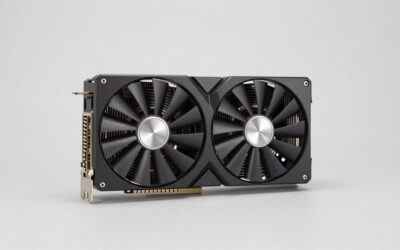
| Reference card dimensions | Approximately 267mm length, 2.5-slot width |
| Interface | PCIe 4.0 x16 (backward compatible with PCIe 3.0) |
| Minimum PSU quality guidance | 80 Plus Bronze or better, modern platform, single or dual 12V rails with adequate amperage |
The 350W–450W transient figures above reflect what reviewers like TechPowerUp and Gamers Nexus observed during launch testing. They represent momentary peaks over milliseconds, not sustained loads. A well-built 750W PSU handles these without issue; a cheap unit with slow OCP response may not.
When the Answer Changes
CPU pairing is the single biggest variable. If you run the RX 9070 XT alongside a Ryzen 9 or Core i9 that sustains 150W–250W under load, combined system draw in CPU-bound scenarios can push the total toward 600W–700W. A 750W unit still technically meets spec, but efficiency degrades at high loads and the margin for transients shrinks. For these pairings, reviewers across Tom’s Hardware and Hardware Unboxed generally advise 850W as a comfort zone.
Overclocking the RX 9070 XT raises TBP by 20W–50W depending on voltage and memory tuning. Power-limit increases via software are less dramatic but still compound with CPU draw. If you intend to overclock both CPU and GPU, 750W enters borderline territory.
Age and quality of the PSU matter significantly. A seven-year-old 750W unit with degraded capacitors may not deliver its rated output, especially on the 12V rail. Multi-rail designs with low per-rail current limits (e.g., 20A on the PCIe rail) can trip OCP under transient spikes even on quality units. Check your PSU’s rail configuration if it is an older model.
BIOS version is rarely a direct PSU concern but can affect power delivery behavior. Some motherboards received updates that adjust PCIe slot power sequencing or Resizable BAR implementation. Keeping firmware current is general good practice and occasionally resolves stability issues that users mistake for PSU inadequacy.
How to Check Your Own System
Start by confirming your PSU’s actual continuous 12V output. The label on the unit’s side panel shows total wattage but also per-rail amperage. A 750W unit delivering 62A on the 12V rail (744W) is healthy. Anything below 58A suggests a design from an earlier era that may struggle with modern GPUs.
Use a wall meter or a reliable in-system monitoring tool to log total system draw during a 30-minute gaming session. If sustained draw stays below 600W, a 750W PSU with at least 80 Plus Bronze certification has adequate headroom. If you observe repeated shutdowns, restarts, or the PSU emitting audible ticking during frame-rate spikes, investigate OCP trip behavior or consider a swap.
Check your connector count. The RX 9070 XT requires two dedicated 8-pin PCIe cables. Do not use a single pigtailed cable (one 8-pin split into two) from a budget PSU, as the gauge and connector quality on the second leg may be insufficient for sustained current.
Safe Options if It Doesn’t Fit
If your 750W unit is old, low-tier, or multi-rail with tight per-rail limits, an 850W 80 Plus Gold unit is the most cost-effective upgrade path. Look for a single 12V rail delivering at least 70A and native PCIe connectors (at least 2x 8-pin, ideally 4x).
If you are unwilling to replace the PSU, reducing CPU power limits via BIOS (setting a lower PL2 or Eco Mode on Ryzen) can bring total system draw well within a healthy 750W envelope with minimal gaming performance impact.
FAQ
Does the RX 9070 XT require a 12VHPWR connector?
No. Unlike many current NVIDIA cards, the RX 9070 XT uses two traditional 8-pin PCIe connectors. No adapter is required with any modern or recent PSU that includes at least two spare 8-pin PCIe cables.
Will a 750W Bronze unit cause instability with the RX 9070 XT?
A quality Bronze unit from a reputable manufacturer (Seasonic, Corsair, EVGA, be quiet!, or equivalent) will run the card without issues. The problem arises with unbranded or very low-tier Bronze units that have poor transient response, tight OCP thresholds, or degraded output after years of use. Certification rating alone does not guarantee build quality.
Can I run the RX 9070 XT on a 650W PSU?
Technically possible with a low-power CPU (65W TDP or below) and no overclocking, but AMD does not recommend it and most reviewers advise against it. Sustained system draw in demanding titles can approach or exceed 550W with midrange CPUs, leaving little margin for transients. You risk shutdowns under load spikes.
Does Resizable BAR or PCIe 4.0 matter for power requirements?
No. Resizable BAR is a memory-mapping feature and has no meaningful effect on power draw. PCIe 4.0 vs. PCIe 3.0 slot power delivery is identical in practice for graphics cards, as both provide up to 75W through the slot. The card’s external connectors supply the bulk of its power regardless of generation.
Sources and Methodology
The power consumption ranges, transient spike observations, and system-level draw estimates in this article reflect measurements reported in launch and follow-up reviews from TechPowerUp, Tom’s Hardware, Gamers Nexus, Hardware Unboxed, and TechSpot. No figures are attributed to this publication. Where outlets reported game-by-game variance, ranges represent the envelope across all tested titles. Recommended wattage aligns with AMD’s official specifications for the reference design. This article reflects the product landscape as of 2026.