- Top Pick: AMD RYZEN 7 9800X3D 8-Core, 16-Thread Desktop Processor
- Best Value: Sapphire 11348-03-20G Pulse AMD Radeon™ RX 9070 XT Gaming Graphics Card with 16GB GDDR6, AMD RDNA 4
- Premium Choice: ASUS TUF Gaming B850-PLUS WiFi AMD AM5 B850 ATX Motherboard, 14+2+1 80A Stages, AI Ready, DDR5, PCIe 5.0, 3X M.2, Wi-Fi 7, 2.5Gb LAN, DisplayPort, HDMI™, USB 10Gbps & 20Gbps Type-C®, BIOS Flashback™
ARC Raiders is an Unreal Engine 5 extraction shooter, and it behaves like one: Nanite geometry and Lumen lighting load the graphics card hard at 1440p and 4K, while the game thread, dozens of raiders, and roaming ARC machines lean on the CPU during large-scale fights. A build for it needs both halves strong, because a fast GPU with a mediocre processor will stutter every time a squad and a Bastion converge. This build targets 1440p at high refresh with settings maxed and a genuinely playable 4K experience with FSR 4, using the best gaming CPU available and a near-flagship Radeon with 16GB of memory. Expect roughly $1,850 to $2,100 depending on GPU pricing.
Parts List
| Part | Model | Approx. price | Why |
|---|---|---|---|
| CPU | AMD Ryzen 7 9800X3D | $470-500 | Cache smooths UE5’s game thread in big fights |
| GPU | Sapphire Pulse Radeon RX 9070 XT 16GB | $650-750 | Near-flagship raster with 16GB for UE5 |
| Motherboard | ASUS TUF Gaming B850-Plus WiFi | $200-230 | Robust VRM, PCIe 5.0, Wi-Fi 7 |
| RAM | G.Skill Trident Z5 Neo RGB 32GB DDR5-6000 CL30 | $120-140 | Low-latency EXPO kit tuned for Ryzen |
| SSD | WD Black SN850X 2TB | $150-180 | Fast DRAM drive for UE5 asset streaming |
| PSU | Corsair RM850e | $120-140 | Headroom for a 300W-class GPU |
| Case | Fractal Design North | $130-150 | Strong airflow with a living-room look |
AMD Ryzen 7 9800X3D

Unreal Engine 5 games punish weak game threads, and the Ryzen 7 9800X3D’s 96MB of L3 cache is the best defense available. TechPowerUp, Gamers Nexus, and Hardware Unboxed all placed it at the top of their gaming charts, typically 15-25 percent ahead of the non-X3D 9700X and further ahead in cache-sensitive engines. In ARC Raiders that translates to flatter frame times when a full server converges on an extraction point. It ships without a cooler, so plan a dual-tower or 240mm liquid cooler. Swap option: the Ryzen 7 9700X to save money if you play mostly at 4K where the GPU leads.
As an Amazon Associate we earn from qualifying purchases at no extra cost to you.




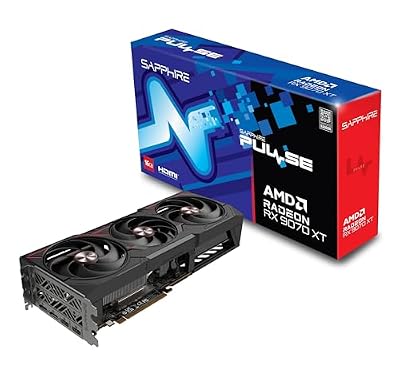
Sapphire Pulse Radeon RX 9070 XT 16GB
The RX 9070 XT is the value flagship for rasterization. Hardware Unboxed and Gamers Nexus found it trading blows with the RTX 5070 Ti while carrying 16GB of VRAM, which UE5’s Nanite and Lumen at 1440p and 4K appreciate. FSR 4 quality mode is genuinely good and gives 4K a comfortable margin. Sapphire’s Pulse cooler is quiet and around 320mm long, so check case clearance. It draws over 300W under load. Swap option: the MSI GeForce RTX 5070 Ti Ventus 3X OC 16G if you prefer DLSS 4 and lower power draw for similar performance.
ASUS TUF Gaming B850-Plus WiFi
The TUF Gaming B850-Plus WiFi offers a PCIe 5.0 x16 slot, a PCIe 5.0 M.2 slot, Wi-Fi 7, 2.5-gigabit Ethernet, and a VRM that handles any AM5 processor including future X3D parts without breaking a sweat. ASUS’s BIOS makes enabling EXPO a single click and its military-grade component branding is backed by solid thermals. It is the sensible tier between budget B650 and expensive X870E. Swap option: the MSI MAG B850 Tomahawk WiFi if you find it cheaper on the day; the two are close competitors.
G.Skill Trident Z5 Neo RGB 32GB DDR5-6000 CL30
DDR5-6000 CL30 is the proven sweet spot for Ryzen, and the 9800X3D benefits from the low latency in frame-time consistency. G.Skill’s Trident Z5 Neo is an EXPO-certified pair of 16GB sticks with a heatspreader that clears most dual-tower coolers; check your cooler’s memory clearance if it overhangs the first slot. Thirty-two gigabytes covers ARC Raiders, Discord, and a browser with room to spare. Swap option: the same kit in 64GB if you also edit video or run a dedicated server, though the game alone will not use it.
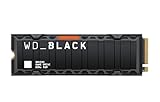
WD Black SN850X 2TB
Unreal Engine 5 streams assets constantly, and the SN850X’s DRAM cache and strong sustained performance keep texture pop-in to a minimum. Two terabytes hold Windows, ARC Raiders, and a large library. It runs warm under sustained load, so mount it under the board’s included M.2 heatsink. WD’s firmware and dashboard software are mature. Swap option: the Samsung 990 Pro 2TB if you find it at a similar price; both are top-tier PCIe 4.0 drives, and a PCIe 5.0 SSD adds nothing to game loading.
Corsair RM850e
The RX 9070 XT can spike past 300W and the 9800X3D adds around 120W under load, so the Corsair RM850e’s headroom keeps the fan quiet and leaves room for transient spikes. It is fully modular, ATX 3.1 compliant, and 80 Plus Gold rated with multiple PCIe 8-pin cables for the Radeon and a native 12V-2×6 cable should you swap to an NVIDIA card. Swap option: the Corsair RM1000e if you plan on an RTX 5090 in the future; otherwise 850W is right.
Fractal Design North
The Fractal Design North looks like furniture and cools like a mesh case. Its wood-slat front hides a full mesh intake with two 140mm fans included, and the interior supports graphics cards up to roughly 355mm and CPU coolers up to about 170mm, which accommodates the Pulse RX 9070 XT and a dual-tower cooler. Build quality and cable routing are excellent. Swap option: the Lian Li Lancool 207 if you want maximum airflow at a lower price and do not care about aesthetics.
Compatibility Check
Socket: the Ryzen 7 9800X3D and ASUS TUF Gaming B850-Plus WiFi are both AM5, and B850 boards support Zen 5 out of the box. RAM type: AM5 is DDR5 only and the Trident Z5 Neo kit is EXPO-certified for DDR5-6000. PSU headroom: the RX 9070 XT is rated around 304W and the 9800X3D around 120W at peak, so the system approaches 500W under load and the RM850e runs at a comfortable 60 percent. GPU length: the Sapphire Pulse RX 9070 XT is about 320mm, inside the North’s roughly 355mm clearance with the front fans installed. Case clearance: a 240mm liquid cooler fits the top, or a dual-tower air cooler up to about 170mm; the SN850X mounts under the board’s PCIe 5.0 M.2 heatsink.
Expected Performance
1080p
ARC Raiders on epic settings runs roughly 130-160 fps, CPU-bound in the biggest fights, based on the RX 9070 XT’s positioning in Hardware Unboxed’s and TechPowerUp’s Unreal Engine 5 testing. Escape from Tarkov holds around 140-170 fps outside Streets. Call of Duty: Warzone lands near 200-240 fps on balanced settings. Cyberpunk 2077 ultra without ray tracing runs roughly 150-170 fps.
1440p
ARC Raiders on epic settings lands around 95-115 fps natively and 120-145 fps with FSR 4 quality. Escape from Tarkov holds roughly 120-145 fps on open maps. Warzone runs near 180-220 fps on balanced settings. Cyberpunk 2077 ultra without ray tracing lands around 120-140 fps.
4K
ARC Raiders on epic settings runs roughly 55-65 fps natively and 75-90 fps with FSR 4 quality, a genuinely smooth 4K experience. Escape from Tarkov lands near 75-90 fps. Warzone runs roughly 120-140 fps on balanced settings. Cyberpunk 2077 ultra without ray tracing lands around 65-80 fps, with FSR 4 lifting it past 90.
Upgrade Path
This build is already near the top, so upgrades are about the GPU. An RTX 5090 drops into the PCIe 5.0 slot and the RM850e would need to become the RM1000e; an RTX 5080 fits within the current power budget. The 9800X3D will not need replacing for several years, and a future Ryzen 9 X3D part is a drop-in on this board. Storage expands through the board’s additional M.2 slots, and the case, memory, and motherboard carry forward indefinitely.
FAQ
Is ARC Raiders CPU or GPU bound?
Both. Unreal Engine 5 loads the GPU heavily at 1440p and 4K, while the game thread limits frame rates in large fights, which is why this build pairs an X3D processor with a strong GPU.
Why the RX 9070 XT over the RTX 5070 Ti?
They perform similarly in rasterization, but the RX 9070 XT typically costs less. Choose the RTX 5070 Ti if you value DLSS 4 and lower power draw.
Does this build handle 4K in ARC Raiders?
Yes with FSR 4 quality mode, where you can expect roughly 75-90 fps on epic settings. Native 4K runs around 55-65 fps.
Is 32GB of RAM enough for ARC Raiders?
Yes. The game and background applications fit comfortably in 32GB. Move to 64GB only if you also edit video or run a server.
Sources and Methodology
The frame-rate ranges in this guide are approximate and reflect the relative positioning of the RX 9070 XT and Ryzen 7 9800X3D in launch reviews published by TechPowerUp, Hardware Unboxed, Gamers Nexus, Tom’s Hardware, and TechSpot, including their Unreal Engine 5, Warzone, and Cyberpunk 2077 results. Where ARC Raiders and Escape from Tarkov were not directly tested, we mapped those rankings onto the games’ known scaling behavior. None of these figures were measured by this site, and results vary with settings, drivers, and server load. Prices are approximate and fluctuate.
Top picks from this guide
 SapphireSapphire 11348-03-20G Pulse AMD Radeon™ RX 9070 XT Gaming Graphics…$900 \xc2\xb7 99/100
 CorsairCORSAIR RM850e (2025) ATX 3.1 PCIe 5.1 Ready 850W Power…$116 \xc2\xb7 98/100
 ASUSASUS TUF Gaming B850-PLUS WiFi AMD AM5 B850 ATX Motherboard,…$210 \xc2\xb7 98/100
 SandiskWD_BLACK SN850X 2TB NVMe SSD with Heatsink - M.2 2280,…$438 \xc2\xb7 98/100