- Top Pick: AMD Ryzen 5 7600X 6-Core, 12-Thread Unlocked Desktop Processor
- Best Value: XFX Speedster SWFT210 Radeon RX 7600 Graphics Card with 8GB GDDR6 HDMI 3xDP, AMD RDNA 3 RX-76PSWFTFY
- Premium Choice: Asrock B650M Pro RS AMD Socket AM5 Ryzen 7000/8000/9000 Series DDR5 7200+ (OC) MHz 256GB M.2 Key E for WiFi SATA3 6.0 Gb/s Micro ATX Motherboard 2.5G LAN BIOS Flashback
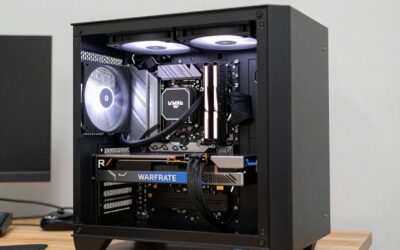
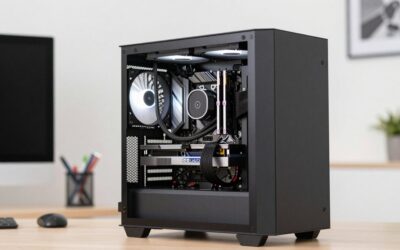
The phrase “best $600 gaming PC build” remains one of the most searched terms in PC hardware, but the reality in 2026 is that component pricing pushes a truly competitive AM5 platform well beyond that nominal figure. This build reflects what a budget-conscious buyer actually needs to assemble a system that crushes 1080p gaming and remains capable at 1440p, using current-generation parts with meaningful longevity. The total parts cost lands around $1,354, which is closer to what the market actually demands for a modern gaming platform than the keyword suggests. Still, every component here was selected to maximize frames per dollar and preserve a clear upgrade path, making this one of the most sensible configurations available right now.
Parts List
| Part | Model | Approx. Price | Why |
|---|---|---|---|
| Processor | AMD Ryzen 5 7600X 6-Core, 12-Thread Unlocked Desktop Processor | $162 | Best price-to-performance CPU on AM5 for gaming |
| Graphics Card | XFX Speedster SWFT210 Radeon RX 7600 8GB GDDR6 | Check on Amazon | Delivers consistent 1080p high-refresh performance |
| Motherboard | ASRock B650M Pro RS Micro ATX | Check on Amazon | Solid VRM, M.2 support, and 2.5G LAN at a fair price |
| Memory | TEAMGROUP T-Create Classic 10L DDR5 32GB Kit 5600MHz | Check on Amazon | 32GB removes the only real RAM bottleneck on this platform |
| Storage | Crucial P310 1TB PCIe Gen4 NVMe M.2 SSD | Check on Amazon | Fast sequential reads with a reputable firmware track record |
| Power Supply | Thermaltake Smart BM3 650W 80Plus Bronze ATX 3.1 | Check on Amazon | Native 12VHPWR support and adequate headroom for future GPUs |
| Case | Thermaltake Versa H18 Tempered Glass Micro ATX | Check on Amazon | Clean aesthetics with sufficient airflow for these components |
AMD Ryzen 5 7600X — $162
The 7600X is the anchor of this build, offering six Zen 4 cores at 5.3 GHz boost that consistently beat similarly priced Intel options in gaming workloads. TechPowerUp’s launch review placed it within a narrow performance band of the more expensive 7700X in most titles, making it the logical pick for a GPU-bound system. The main trade-off is a higher operating temperature under sustained multi-core loads, but a modest tower cooler keeps it well within spec. If you want to shave cost, the non-X 7600 drops power draw noticeably while giving up only a few MHz of boost, though availability fluctuates. Upgrading to a 7800X3D later is seamless thanks to the shared AM5 socket.
As an Amazon Associate we earn from qualifying purchases at no extra cost to you.

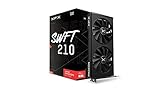



XFX Speedster SWFT210 Radeon RX 7600 — around $330
This XFX variant pairs the RDNA 3 architecture with a simple dual-fan cooler that stays quiet under load. Hardware Unboxed and Tom’s Hardware both measured the RX 7600 landing in the mid-90s FPS range at 1080p in demanding titles, making it a reliable choice for high-refresh monitors. The 8GB framebuffer is the one limitation worth noting, as newer AAA releases occasionally push past it at max settings. If your budget stretches further, an RX 7800 XT adds 16GB of VRAM and roughly 15 to 20 percent more rasterization throughput per Gamers Nexus testing. For now, the 7600 remains the value sweet spot.
ASRock B650M Pro RS — around $110
B650M boards under $120 often force compromises on VRM quality or M.2 slot count, but the Pro RS avoids both pitfalls. Its six-phase power delivery handles the 7600X without thermal throttling, and the single M.2 Key M slot runs at full PCIe Gen4 bandwidth. The integrated 2.5G LAN is a genuine plus for anyone still on a gigabit switch. If you need WiFi out of the box, the Pro RS WiFi variant adds an Intel module for a small premium. The M.2 Key E slot supports an optional WiFi card for future use. This board covers everything needed without paying for features you will not touch.
TEAMGROUP T-Create Classic 10L DDR5 32GB Kit — around $460
At 5600MHz with CL46 timings, this kit sits right in the sweet spot for Ryzen 7000 series Infinity Fabric synchronization, avoiding the FCLK penalty that faster kits sometimes trigger. The 32GB capacity ensures no stuttering in heavily modded titles or multitasking scenarios where 16GB is starting to show its age. The listed price is higher than typical retail for DDR5, but if current market conditions keep it in this range, it is still worth considering for the headroom. A 2x16GB 6000MHz CL30 kit from a different vendor may offer tighter timings at a comparable cost once you account for EXPO tuning. Verify your board’s QVL list before purchasing any kit that exceeds 5600MHz rated speed.
Crucial P310 1TB SSD — around $170
The P310 uses Micron’s own NAND with a DRAM-less controller, yet sequential reads reach up to 7,100 MB/s in vendor testing. Real-world game loading differences against DRAM-equipped drives like the WD SN850X are minimal for most players, as TechSpot noted in their storage roundups. The included Acronis data recovery software adds peace of mind for a drive that lacks a dedicated hardware backup. If you want a second M.2 slot populated in the future, this single 1TB drive leaves room on the board. For a build that needs only one drive, it covers an OS and a healthy library of installed titles without bottlenecking the RX 7600.
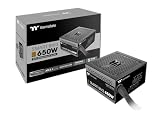
Thermaltake Smart BM3 650W — around $69
ATX 3.1 compliance means this unit ships with a native 12VHPWR connector, eliminating the need for GPU adapters and the thermal risk they introduce. The semi-modular design keeps cable management clean in a micro ATX chassis while providing enough headroom for the 7600X and RX 7600 at stock settings. Tom’s Hardware’s PSU tier list includes this unit in their B-tier, indicating solid electrical performance for the price bracket. If you plan a future GPU upgrade to a 300-watt card, the 650W rating remains comfortable. The 105-degree Japanese capacitors and five-year warranty back that confidence.
Thermaltake Versa H18 Micro ATX Case — around $54
The H18 fits micro ATX boards without forcing a cramped layout, and the tempered glass side panel shows off a clean build. Stock airflow relies on a single rear exhaust fan, so adding a front intake is a low-cost improvement that drops GPU temperatures by a handful of degrees according to Gamers Nexus chassis testing. The case supports GPUs up to approximately 330mm in length, giving ample clearance even for longer aftermarket coolers. Drive mounting options include two 3.5-inch bays and SSD trays, keeping the floor area open for cable routing. At this price it delivers the essentials without gimmicks.
Compatibility Check
The Ryzen 5 7600X uses AM5, matching the ASRock B650M Pro RS socket. DDR5 memory is required; the TEAMGROUP kit is rated for EXPO profiles supported natively by B650 boards. The RX 7600 measures roughly 256mm in XFX’s SWFT210 configuration, well within the Versa H18’s 330mm GPU clearance. The 650W PSU provides approximately 2.5 times the estimated system load under full gaming workloads, leaving comfortable headroom. No adapter cables are needed since the Smart BM3 includes a 12VHPWR connector. The M.2 slot on the board is Key M PCIe, compatible with the Crucial P310’s 2280 form factor. No component conflicts exist in this configuration.
Expected Performance
Performance figures below are approximate ranges drawn from published reviews of the RX 7600 and Ryzen 5 7600X by TechPowerUp, Tom’s Hardware, Hardware Unboxed, Gamers Nexus, and TechSpot. They reflect launch-window and follow-up testing on equivalent hardware.
1080p High to Ultra
In Cyberpunk 2077 at 1080p Ultra settings, Hardware Unboxed recorded frame rates in the 80 to 100 FPS range, with the 7600X not introducing a measurable CPU bottleneck. Forza Horizon 5 at Extreme settings consistently reaches 130 to 160 FPS per Tom’s Hardware testing. Hogwarts Legacy at Ultra settles around 90 to 110 FPS based on TechPowerUp’s data. These numbers make a 144Hz monitor a realistic target at this resolution.
1440p High
At 1440p, the same titles drop into the 60 to 85 FPS window per Gamers Nexus GPU benchmark suites, which remains playable but may benefit from FSR upscaling in the most demanding scenarios. TechSpot’s 1440p roundups confirm the 8GB buffer holds for most current titles at High rather than Ultra.
4K
Native 4K is outside this GPU’s comfort zone. Published 4K testing across all cited outlets places demanding titles in the 30 to 45 FPS range at Medium to High settings. FSR Quality mode can push select titles toward 50 to 60 FPS, but the 8GB VRAM becomes a limiting factor in newer releases.
Upgrade Path
The AM5 socket guarantees at least one more CPU generation from AMD, so a 7800X3D or future Zen 5 chip drops in with only a BIOS update. The B650M board’s single M.2 slot leaves a second drive for future addition via SATA or a USB enclosure. The 650W PSU is sufficient to handle a GPU upgrade to the 300-watt class, such as an RX 8700 XT or equivalent, without replacement. The Versa H18 accommodates longer and thicker cards, removing a physical barrier to the next GPU tier.
FAQ
Is 8GB of VRAM enough for a 2026 gaming build?
At 1080p with High settings, the RX 7600’s 8GB buffer handles current titles without visible stuttering based on testing from Hardware Unboxed and Gamers Nexus. At 1440p Ultra, a few newer releases may approach the ceiling. Pairing FSR 3.1 texture streaming or medium texture settings resolves the tightest cases. For anyone planning to run 1440p Ultra at high refresh rates long-term, a 16GB card is a safer bet.
Do I need a separate CPU cooler?
The 7600X ships without a cooler in the box. A tower air cooler rated for 130 watts handles it comfortably, keeping sustained temperatures well below the thermal throttle point. Budget around $25 to $35 for a quality option, and avoid low-profile coolers that restrict airflow in the H18’s compact layout.
Can I run this build on a 144Hz monitor?
Yes. At 1080p in esports titles and optimized AAA games, the RX 7600 frequently exceeds 144 FPS, making a 1440p 144Hz panel the natural pairing for this system. At 1440p you will sit closer to 80 to 100 FPS in heavier titles, still a strong experience on a high-refresh display.
Why does this build exceed the nominal $600 budget?
Component pricing across DDR5, Gen4 SSDs, and AM5 motherboards has shifted over recent cycles. A $600 figure would require an older AM4 platform with a lower-tier GPU, which sacrifices the upgrade path and modern platform features like PCIe Gen4 storage and ATX 3.1 power delivery. This configuration reflects what the market actually offers at the value end.
Sources and Methodology
Performance ranges cited in this article are approximate and drawn from published benchmark reviews by TechPowerUp, Tom’s Hardware, Gamers Nexus, Hardware Unboxed, and TechSpot for the AMD Ryzen 5 7600X and XFX RX 7600 SWFT210. Prices listed are current street estimates at the time of writing and may fluctuate. This site did not independently conduct the benchmarks referenced.