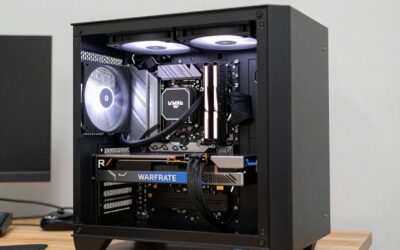
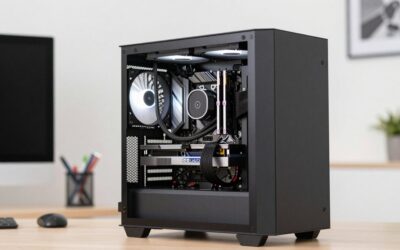
Delta Force is a well-optimized Unreal Engine 4 shooter with two personalities. Operations extraction mode is modest on hardware, but 64-player Warfare with vehicles and destruction loads the CPU heavily, and the whole game is meant to be played at 144Hz or higher. A build for it needs a strong multi-core processor that keeps frame times flat in the biggest battles, a GPU that drives 1440p at high refresh without upscaling, and fast memory. This build uses Intel’s 20-core Core Ultra 7 with DDR5-6400 and an RTX 5070 to target 240 fps at 1080p and 165 fps at 1440p with settings high, plus a capable 4K experience. Expect roughly $1,600 to $1,850 depending on GPU pricing in 2026.
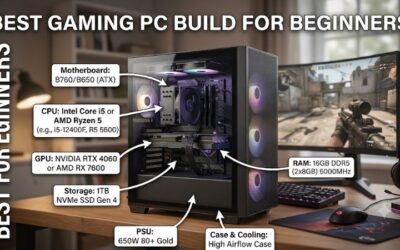
Parts List
| Part | Model | Approx. price | Why |
|---|---|---|---|
| CPU | Intel Core Ultra 7 265K | $300-350 | 20 cores for 64-player Warfare and streaming |
| GPU | Gigabyte GeForce RTX 5070 Gaming OC 12G | $570-620 | 1440p high refresh with Reflex |
| Motherboard | MSI MAG Z890 Tomahawk WiFi | $280-320 | Strong VRM, PCIe 5.0, Wi-Fi 7, Thunderbolt 4 |
| RAM | Corsair Vengeance 32GB DDR5-6400 CL32 | $120-140 | Matches Core Ultra’s native memory speed |
| SSD | Crucial T500 2TB | $140-170 | Fast PCIe 4.0 with room for a library |
| PSU | MSI MAG A750GL PCIE5 | $100-120 | ATX 3.1, native 12V-2×6, quiet |
| Case | Corsair Frame 4000D | $95-115 | Modular, airy, and easy to build in |
Intel Core Ultra 7 265K
Delta Force’s Warfare mode scales across many threads, and the Core Ultra 7 265K’s eight performance cores plus twelve efficiency cores keep frame times flat while a stream, Discord, and a browser run alongside. Hardware Unboxed and Gamers Nexus placed its gaming performance close to the Ryzen 7 9700X, a step behind AMD’s X3D chips, but its multithreaded strength and native DDR5-6400 support suit this game’s load profile. It ships without a cooler, so plan a dual-tower or 240mm liquid cooler. Swap option: the AMD Ryzen 7 9800X3D on an AM5 board if pure gaming frame rate is the only goal.

Intel Core Ultra 7 Desktop Processor 265K - 20 cores (8 P-cores + 12 E-cores) up to 5.5 GHz
Included for 'Best Gaming PC Build for Delta Force in 2026: Full Parts List and Expected FPS' because the listing specifies 20 cores (8 P-cores + 12 E-cores) up to 5.5 GHz, details this guide uses to compare options.
View on Amazon
GIGABYTE GeForce RTX 5070 WINDFORCE OC SFF 12G Graphics Card, 12GB 192-bit GDDR7, PCIe 5.0, WINDFORCE Cooling System, GV-N5070WF3OC-12GD Video Card
Included for 'Best Gaming PC Build for Delta Force in 2026: Full Parts List and Expected FPS' because the listing specifies 12GB 192-bit GDDR7 and PCIe 5.0, details this guide uses to compare options.
View on Amazon
MAG Z890 Tomahawk WiFi II Motherboard, ATX - Supports Intel Core Ultra Processors (Series 2), LGA 1851 - DDR5 Memory Boost 4 x DDR5 (9200+ MT/s OC), 1 x PCIe 5.0 x16, 1 x M.2 Gen5, 5G LAN, Wi-Fi 7
Included for 'Best Gaming PC Build for Delta Force in 2026: Full Parts List and Expected FPS' because the listing specifies ATX and Supports Intel Core Ultra Processors (Series 2), details this guide uses to compare options.
View on Amazon
Crucial T500 PCIe Gen4 NVMe 2TB SSD, Up to 7,400MB/s, TLC NAND, Laptop & Desktop (PC) Compatible, for Creatives and Gamers, Solid State Drive, Includes 1Mo Adobe CC – CT2000T500SSD8
Included for 'Best Gaming PC Build for Delta Force in 2026: Full Parts List and Expected FPS' because the listing specifies Up to 7 and 400MB/s, details this guide uses to compare options.
View on Amazon
MSI MAG A750GL PCIE5, Fully Modular Compact Gaming 750W Power Supply, 80+ Gold, ATX 3.1 & PCIe 5.1 Ready, Native Dual-Color 12V-2x6 Cable, 10 Year Warranty
Included for 'Best Gaming PC Build for Delta Force in 2026: Full Parts List and Expected FPS' because the listing specifies Fully Modular Compact Gaming 750W Power Supply and 80+ Gold, details this guide uses to compare options.
View on AmazonGigabyte GeForce RTX 5070 Gaming OC 12G
The RTX 5070 is the right card for 1440p Delta Force at 165Hz with settings high and no upscaling. TechPowerUp’s launch review placed it 20-30 percent ahead of the RTX 5060 Ti class, and NVIDIA Reflex keeps input latency low in close fights. Gigabyte’s Gaming OC cooler is quiet with a modest factory overclock and is around 300mm long. Twelve gigabytes of VRAM is ample for this Unreal Engine 4 title at any resolution. Swap option: the Sapphire Pulse Radeon RX 9070 XT 16GB if you want 240Hz at 1440p or native 4K high refresh.
MSI MAG Z890 Tomahawk WiFi
The Z890 Tomahawk WiFi gives the Core Ultra 7 a robust VRM, a PCIe 5.0 x16 slot, two PCIe 5.0 M.2 slots, Wi-Fi 7, 5-gigabit Ethernet, and Thunderbolt 4. Z890 is required for memory overclocking above the CPU’s default, which the DDR5-6400 kit uses, and MSI’s BIOS makes enabling XMP a single click. It is the sensible tier below the premium Z890 boards. Swap option: an MSI B860 board to save money if you run the memory at its default speed and skip Thunderbolt.
Corsair Vengeance 32GB DDR5-6400 CL32
Intel Core Ultra processors officially support DDR5-6400, and this Corsair Vengeance kit hits that speed with tight CL32 timings, which helps Unreal Engine 4’s CPU-bound moments in 64-player battles. It is a low-profile, XMP-certified pair of 16GB sticks that clears any air cooler. Thirty-two gigabytes covers the game, OBS, and a browser comfortably. Swap option: a DDR5-7200 kit if you want to push further on Z890, though the gain in Delta Force is small and the 6400 kit is the sweet spot.
Crucial T500 2TB
The Crucial T500 is a fast PCIe 4.0 drive with DRAM that loads Delta Force’s large Warfare maps quickly and runs cool under the board’s heatsink. Two terabytes hold Windows, the game, and a full library of other shooters. Its random read performance is among the best in its class. Swap option: the Samsung 990 Pro 2TB or WD Black SN850X 2TB, both direct competitors, if they are cheaper on the day; a PCIe 5.0 drive adds nothing to game loading.
MSI MAG A750GL PCIE5
This system peaks around 450W under gaming load with the Core Ultra 7 running unrestricted, so the MSI MAG A750GL PCIE5 runs at an efficient, quiet mid-load. It is fully modular, ATX 3.1 compliant, 80 Plus Gold rated, and includes a native 12V-2×6 cable for the RTX 5070. MSI’s GL series has built a solid reputation for value and reliability. Swap option: the Corsair RM850e if you plan to move to an RX 9070 XT or RTX 5080 later and want the headroom.
Corsair Frame 4000D
The Corsair Frame 4000D is a modular mid-tower with a mesh front, three included fans, and support for graphics cards up to roughly 430mm and CPU coolers up to about 170mm. Its InfiniRail fan mounts and removable panels make it exceptionally easy to build in, and airflow is excellent. It also supports a 360mm radiator up top for the Core Ultra 7. Swap option: the Lian Li Lancool 207 for a lower price and a bottom-intake design that feeds the GPU directly.
Compatibility Check
Socket: the Core Ultra 7 265K is an LGA1851 processor and the MSI MAG Z890 Tomahawk WiFi is an LGA1851 board; they are a native match. RAM type: LGA1851 is DDR5 only and the Corsair Vengeance DDR5-6400 kit is XMP-certified for one-click speed on Z890. PSU headroom: the RTX 5070 is rated around 250W and the Core Ultra 7 265K can draw up to 250W under all-core load, so the system peaks near 450W in worst cases and the 750W unit retains headroom. GPU length: the Gigabyte Gaming OC RTX 5070 is about 300mm, far inside the Frame 4000D’s roughly 430mm clearance. Case clearance: coolers up to about 170mm or a 360mm top radiator fit, and the T500 mounts under one of the board’s PCIe 5.0 M.2 heatsinks.
Expected Performance
1080p
Delta Force on high settings runs roughly 200-240 fps in Warfare mode and higher in Operations, based on the RTX 5070 and Core Ultra 7’s positioning in TechPowerUp’s and Hardware Unboxed’s testing. Call of Duty: Warzone lands near 170-210 fps on balanced settings. Apex Legends sits near its 300 fps cap on competitive settings. Counter-Strike 2 runs roughly 280-350 fps.
1440p
Delta Force on high settings holds roughly 150-185 fps in Warfare mode. Warzone on balanced settings lands near 145-175 fps. Apex Legends at high settings runs around 210-250 fps. Counter-Strike 2 stays above 240 fps.
4K
Delta Force on high settings runs roughly 90-110 fps natively and 120-145 fps with DLSS 4 quality. Warzone on balanced settings lands near 90-110 fps. Apex Legends at high settings runs around 130-150 fps. Counter-Strike 2 lands roughly 170-200 fps.
Upgrade Path
The GPU is the clear upgrade: an RX 9070 XT or RTX 5080 drops into the PCIe 5.0 slot and brings 240Hz at 1440p or native 4K high refresh; pair a flagship with an 850W unit. The LGA1851 socket has limited CPU upgrade options, so the Core Ultra 7 is meant to last the life of the board, and its 20 cores will. Storage expands through the additional PCIe 5.0 M.2 slots, and the case, memory, and power supply carry forward.
FAQ
Is Delta Force CPU or GPU intensive?
Balanced. Warfare mode with 64 players loads the CPU at 1080p high refresh, while 1440p and 4K shift the limit to the GPU. This build covers both.
Can this PC run Delta Force at 240Hz?
Yes at 1080p on high settings, where it holds roughly 200-240 fps. At 1440p it targets 165Hz; an RX 9070 XT upgrade would reach 240Hz.
Why Intel instead of AMD for this build?
The Core Ultra 7 265K’s 20 cores handle Warfare mode plus streaming comfortably at a competitive price. A Ryzen 7 9800X3D delivers higher pure gaming frame rates if you do not stream.
Does Delta Force support DLSS 4?
Yes, along with FSR 4 and XeSS. Quality-mode upscaling helps at 4K; leave frame generation off in competitive play to avoid added latency.
Sources and Methodology
The frame-rate ranges in this guide are approximate and reflect the relative positioning of the RTX 5070 and Core Ultra 7 265K in launch reviews published by TechPowerUp, Hardware Unboxed, Gamers Nexus, Tom’s Hardware, and TechSpot, including their Warzone, Apex Legends, and Counter-Strike 2 results. Where Delta Force was not directly tested, we mapped those rankings onto the game’s known Unreal Engine 4 scaling. None of these figures were measured by this site, and results vary with mode, settings, and drivers. Prices are approximate and fluctuate.