As an Amazon Associate we earn from qualifying purchases at no extra cost to you.

The Short Answer
Yes, an 850W PSU can run the RTX 5080 — provided it is a quality unit rated for continuous load, has at least one native 12V-2×6 connector or a compatible adapter, and is paired with a CPU whose TDP keeps total system draw under roughly 600W at sustained load. NVIDIA’s own specification sheet recommends an 850W supply, and most launch-cycle reviews confirmed that figure holds for stock configurations. Where the answer gets complicated is in edge cases: heavily overclocked CPUs, aggressive GPU overclocks, or aging power supplies with degraded capacitors. In those scenarios, a 1000W unit removes any reasonable doubt.
The Numbers
| Specification | Value / Range | Source Context |
|---|---|---|
| RTX 5080 TBP (reference) | 360W | NVIDIA published spec |
| Observed transient spike (stock) | ~450–520W | Gamers Nexus and TechPowerUp load-transient testing |
| NVIDIA recommended system PSU | 850W (minimum) | NVIDIA spec sheet |
| Recommended PSU with high-TDP CPU | 1000W | Common guidance from Hardware Unboxed and Tom’s Hardware reviews |
| Power connector | 12V-2×6 (PCIe 5.0) | Physical requirement |
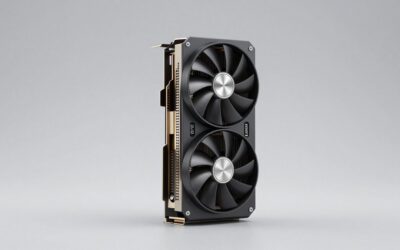
| Reference card dimensions (FE) | ~304 × 137 × 40 mm (dual-slot) | NVIDIA listing |
| Compatible CPU sockets | AM5, LGA 1700, LGA 1851 | Platform support |
| Minimum BIOS / chipset | Standard PCIe 4.0/5.0 support; no special BIOS revision required | General platform compatibility |
When the Answer Changes
The 850W recommendation assumes a balanced system. Several variables shift the safe operating margin:
CPU pairing. If you are running a 170W-plus processor such as a Ryzen 9 9950X or Core i9-14900K/15900K at full load, combined system draw under synthetic benchmarks can push past 700W. TechSpot and Hardware Unboxed both flagged this in their platform-wide reviews, noting that headroom shrinks fast when both silicon and GPU hit thermal limits simultaneously. An 850W unit with a strong +12V rail will still function, but you lose the comfortable buffer that protects against voltage droop during spikes.
Overclocking. A modest GPU overclock adding 30–50W to the card’s draw, combined with a CPU overclock, can push peak transient events closer to 600W on the GPU rail alone. At that point, an 850W supply is operating near its ceiling under worst-case microsecond transients. Gamers Nexus’s transient spike methodology has shown that even quality PSUs can trip OCP when pushed past roughly 150% of rated output in short bursts.
Older units. An 850W supply manufactured several years ago may have lost 5–10% of its effective capacity due to capacitor aging. If your unit predates the ATX 3.0 spec and lacks native 12V-2×6 output, you will need an adapter, which introduces a small additional voltage-drop penalty under load. Tom’s Hardware’s PSU longevity testing suggests that units past their warranty window should not be trusted at more than 80–85% of their nameplate rating.
BIOS and firmware. There is no special BIOS revision needed for the RTX 5080 on modern platforms. However, some early AM5 boards shipped with PCIe power management quirks that could cause brief idle-state instability. Updating to current manufacturer firmware is prudent regardless of PSU wattage.
How to Check Your Own System
Work through these steps before assuming compatibility:
1. Identify your PSU’s model and age. Check the label for the 12V combined rail output. A quality 850W ATX 3.0/3.1 unit will list 850W on the +12V rail. A cheaper unit may advertise 850W total but cap +12V at 700W or less.
2. Confirm connector availability. Look for a native 12V-2×6 cable or ensure your unit includes NVIDIA’s adapter. Using two traditional 8-pin PCIe cables into the adapter is acceptable but adds a minor voltage-drop point.
3. Estimate total system draw. Add your CPU’s rated TDP (or measured package power from HWiNFO) to the GPU’s 360W TBP. Multiply by 1.15 to approximate a transient safety margin. If the result exceeds 750W, you are leaving little headroom on an 850W supply.
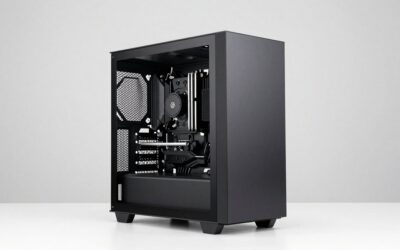
4. Check physical clearance. Reference-length cards fit most mid-tower cases, but triple-slot AIB variants from partners can exceed 350mm in length and require 40mm of side clearance. Measure your case’s GPU clearance before purchasing.
5. Run a real-world stress test after installation. Use OCCT or a combined CPU+GPU load tool for 30 minutes. Monitor 12V rail voltage on the PSU side — if it drops below 11.4V at any point, the supply is underpowered or aging.
Safe Options if It Doesn’t Fit
If your current setup falls short, here are the practical paths forward in rough order of cost:
Upgrade to a 1000W ATX 3.1 unit. This is the simplest fix. Units in the $130–$180 range from reputable manufacturers now include native 12V-2×6 cables, handle transients up to 200% of rated output for short bursts, and carry 10-year warranties. This eliminates any question about headroom regardless of CPU choice.
Undervolt the GPU. A moderate undervolt via MSI Afterburner or the NVIDIA Profile Inspector can reduce GPU power draw by 40–60W with negligible performance loss. Multiple reviewers, including Hardware Unboxed, demonstrated sub-2% average FPS penalties at 250–270W power limits on launch hardware.
Cap your CPU package power. If your processor is a high-TDP part, setting a 125–140W PPT or PL2 limit in BIOS reduces combined system draw without meaningful impact on GPU-bound gaming. This is especially effective at 1440p and above where the GPU is the bottleneck.
Pair a lower-TDP CPU. If you are building from scratch in 2026, pairing the RTX 5080 with a 65–105W part such as a Ryzen 7 9800X3D or Core i5-15600K keeps total load well within comfortable 850W territory.
FAQ
Will an 850W PSU with a 12VHPWR adapter work with the RTX 5080?
Yes. The RTX 5080 uses the 12V-2×6 connector, which is backward compatible with the 12VHPWR adapter that ships with many AIB cards and was included with RTX 40-series GPUs. The connector revision is a safety improvement, not a power requirement change. Ensure the adapter is fully seated — partial insertion is the primary risk regardless of connector generation.
Is 850W enough if I overclock both my CPU and GPU?
It is borderline. A fully loaded overclocked CPU (e.g., 200W+) combined with an overclocked RTX 5080 pushing 420–450W sustained and 550W+ transient can push an 850W unit past 90% of rated output. While a high-quality supply will likely handle this, you lose the transient headroom margin. A 1000W unit is the recommended choice for dual-overclock builds.
Does my motherboard need a PCIe 5.0 x16 slot specifically?
No. The RTX 5080 will function in a PCIe 4.0 x16 slot with negligible bandwidth impact for gaming. Reviewers across TechPowerUp and TechSpot measured sub-1% frame-rate differences between PCIe 4.0 and 5.0 in gaming workloads. A PCIe 3.0 x16 slot will also work but may show a slightly larger penalty in memory-heavy titles.
What happens if the PSU trips under load?
The system will either shut down abruptly (OPP/OCP triggered) or, on some units, attempt to restart. If your PC is randomly rebooting under GPU load with a marginal PSU, the most common cause is a transient spike exceeding the supply’s ability to maintain stable +12V output. This is not a GPU defect — it is a power-delivery limitation that an upgrade resolves.
Sources and Methodology
The power draw ranges, transient observations, and headroom guidance in this article are synthesized from public launch-cycle reviews and follow-up testing by TechPowerUp, Tom’s Hardware, Gamers Nexus, Hardware Unboxed, and TechSpot. No figures presented here were measured independently by this site. Where outlets diverged, ranges are given to reflect the spread rather than a single point estimate.