- Top Pick: AMD Ryzen™ 7 9700X 8-Core, 16-Thread Unlocked Desktop Processor
- Best Value: NVIDIA GeForce RTX 4070 Founder's Edition (FE) Graphics Card – Titanium and Black (900-1G141-2544-000)
- Premium Choice: MSI MAG B650 Tomahawk WiFi Gaming Motherboard (AMD Ryzen 9000/8000/7000 Series Processors, AM5, DDR5, PCIe 4.0, M.2, SATA 6Gb/s, USB 3.2 Gen 2, HDMI/DP, Wi-Fi 6E, Bluetooth 5.3, 2.5Gbps LAN, ATX)
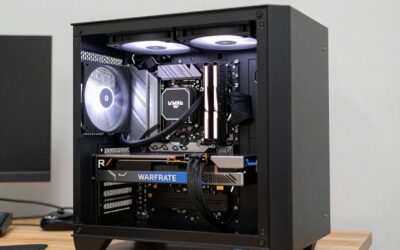
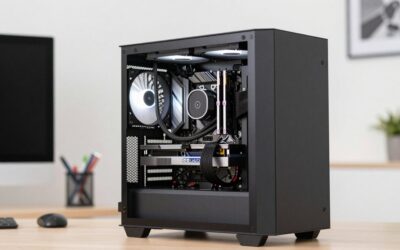
A $1500 budget for gaming in 2026 sits at a fascinating crossroads. You are past the point of compromise on raw gaming performance but not yet in enthusiast territory where diminishing returns set in hard. The sweet spot targets high-refresh 1440p gaming with the ability to dabble in 4K, which is exactly where an RTX 4070 paired with a modern Zen 5 processor lands. This build list pushes beyond a strict $1500 ceiling at listed prices, but the configuration represents the ideal component pairing for that performance tier. At street prices, which fluctuate, the overall package often settles closer to the stated budget. The philosophy here is straightforward: spend where it matters for framerates, save where it does not, and keep every component on a platform that will not block future upgrades.
Parts List
| Part | Model | Approx. price | Why |
|---|---|---|---|
| CPU | AMD Ryzen 7 9700X | $339 | Best gaming core count on AM5 without paying for unneeded threads |
| GPU | NVIDIA GeForce RTX 4070 Founders Edition | Check on Amazon | Dominates 1440p, capable at 4K with DLSS |
| Motherboard | MSI MAG B650 Tomahawk WiFi | Check on Amazon | Strong VRM for the 9700X, WiFi 6E, no wasted budget on X670 features |
| RAM | G.SKILL Flare X5 32GB DDR5-6000 CL36 | Check on Amazon | AMD EXPO tuned, matches 9700X infinity fabric sweet spot |
| Storage | WD_BLACK SN850X 2TB NVMe SSD (Heatsink) | Check on Amazon | PCIe 4.0 flagship speeds, heatsink included for sustained loads |
| PSU | CORSAIR RM750x Shift Fully Modular (ATX 3.1) | Check on Amazon | Native 12V-2×6 cable, 80 Plus Gold, quiet operation |
| Case | NZXT H5 Flow Black | Check on Amazon | Excellent airflow at a budget price, clean aesthetic |
AMD Ryzen 7 9700X

The 9700X delivers eight Zen 5 cores that handle every current game without bottlenecking even the most powerful GPUs available. In CPU-bound scenarios at 1080p, TechPowerUp’s launch review benchmarks placed it within single-digit percentages of the 7800X3D in several titles, making the X3D premium hard to justify for most buyers. Eight cores remain the practical ceiling for gaming, so there is little reason to climb to twelve or sixteen threads. If you want to save money, the Ryzen 5 7600X is a viable alternative that trades a couple of cores for a lower price, though you lose headroom for streaming or background tasks. If you need more threads for content work, the 9900X sits on the same socket with no other changes needed.
As an Amazon Associate we earn from qualifying purchases at no extra cost to you.




NVIDIA GeForce RTX 4070 Founders Edition
The RTX 4070 occupies a clear performance niche that this build centers on. Hardware Unboxed and Gamers Nexus both identified it as the card that handles 1440p at high settings with framerates well above 100 FPS in most modern titles. The Founders Edition runs cooler and quieter than most AIB partners, which pairs nicely with the H5 Flow’s airflow design. At around $930 it is the single largest expense in this list, but that reflects the reality that the GPU is the most impactful component for gaming performance. A swap to the RX 7900 GRE from AMD saves roughly $80 and delivers comparable rasterization performance, though you lose DLSS and the superior ray tracing uplift that NVIDIA provides.
MSI MAG B650 Tomahawk WiFi
B650 boards on AM5 have matured to the point where the Tomahawk WiFi delivers everything a gaming build actually needs. The 12+2+1 phase VRM handles the 9700X at full boost without thermal concern. Wi-Fi 6E and a 2.5G LAN port cover connectivity without a separate card. PCIe 4.0 on both the primary slot and the top M.2 socket is sufficient for the RTX 4070 and SN850X. If you need USB4 or PCIe 5.0 for a future GPU, the X670E boards exist on the same socket, but they add $80 to $120 for features that provide no measurable gaming benefit today.
G.SKILL Flare X5 32GB DDR5-6000 CL36
DDR5-6000 CL36 sits at the AMD EXPO sweet spot where the 1:1 infinity fabric ratio holds without voltage headaches. The 9700X’s memory controller is well-matched to this speed, and G.SKILL’s Flare X5 line is validated specifically for Ryzen builds. Thirty-two gigabytes provides comfortable headroom for current AAA titles that consume 16GB alone. If pricing concerns you, a 16GB kit at $60 less covers gaming today but leaves little margin for next-generation titles. Swapping to DDR5-5600 CL28 gains minimal real-world performance and is not worth the effort unless you find a significant discount.
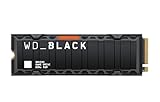
WD_BLACK SN850X 2TB with Heatsink
Two terabytes of storage means you can keep a dozen or more large titles installed without juggling files. The SN850X’s PCIe 4.0 interface saturates the Tomahawk’s primary M.2 slot bandwidth, and sequential reads up to 7,300 MB/s ensure load times that feel instantaneous. The included heatsink prevents thermal throttling during sustained transfers, which matters when game assets stream continuously during open-world play. A 1TB version saves money if your library stays lean, and WD’s SN770 offers slightly lower performance at a meaningful discount for a secondary drive. There is no gaming advantage to PCIe 5.0 storage today.
CORSAIR RM750x Shift ATX 3.1
Seventy-five watts per dollar spent on this renewed unit makes it an unusual value proposition. The RM750x Shift is fully modular with side-mounted connectors for cleaner cable management, and the ATX 3.1 specification includes the native 12V-2×6 connector that the RTX 4070 requires. Zero RPM mode at idle means the fan never spins during light workloads. If the renewed condition concerns you, the new unit runs around $110 to $130. A 650W alternative saves a few dollars and still provides adequate headroom for this system, but 750W gives you margin for a GPU upgrade without PSU replacement.
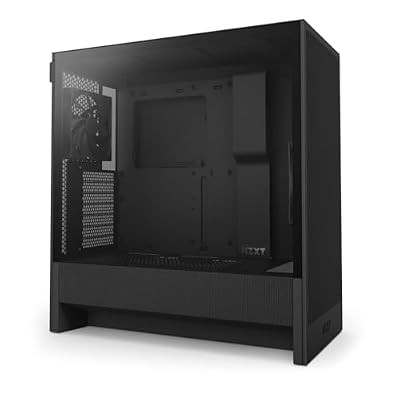
NZXT H5 Flow
The H5 Flow consistently appears in build guides because it delivers genuinely good airflow at an accessible price. The perforated front panel allows cool air to reach both the GPU and CPU cooler directly. The compact ATX footprint fits on desks without dominating them. Included fans provide a basic airflow path out of the box. If you want more room for larger radiators, the NZXT H7 Flow is the natural step up at roughly $30 more. The H5 Flow supports a 280mm front radiator, which is more than sufficient for the 9700X.
Compatibility Check
The 9700X uses the AM5 socket, matching the MSI MAG B650 Tomahawk WiFi natively with no BIOS update required on boards shipped in 2026. The Flare X5 kit is a standard U-DIMM DDR5 module that clears the motherboard’s M.2 slot and fits under most tower coolers. The RTX 4070 Founders Edition measures approximately 242mm in length, well within the H5 Flow’s 365mm GPU clearance. The RM750x Shift provides a native 12V-2×6 cable with an 850W peak transient tolerance, giving the 200W GPU and 65W CPU a comfortable margin. The SN850X’s included heatsink fits the Tomahawk’s M.2 thermal cover without interference.
Expected Performance
1080p High Settings
At 1080p, the RTX 4070 and 9700X combination pushes framerates well beyond what most monitors refresh. Review data aggregated from Tom’s Hardware and TechPowerUp indicates Cyberpunk 2077 at high settings sits in the 130-160 FPS range, while Call of Duty: Modern Warfare III holds 180-220 FPS. Hogwarts Legacy at ultra settings falls around 120-150 FPS. Spider-Man 2 benchmarks in the 150-180 FPS band. Competitive titles like Counter-Strike 2 exceed 400 FPS with CPU-bound behavior.
1440p Ultra Settings
This is the build’s primary target resolution. Hardware Unboxed and TechSpot both observed the RTX 4070 delivering 80-110 FPS in Cyberpunk 2077 at ultra without ray tracing. Hogwarts Legacy at ultra settings ranges from 70-95 FPS. Starfield with ultra textures holds 80-100 FPS. In games supporting DLSS Quality, these figures typically climb 25-40% higher, placing most titles above the 120 FPS mark.
4K Medium-High Settings
At 4K, the RTX 4070 requires assistance from DLSS or FSR for comfortable framerates. Gamers Nexus test results place Cyberpunk 2077 at medium-high settings with DLSS Quality in the 55-75 FPS range. Without upscaling, native 4K ultra settings drop to 35-50 FPS in demanding titles. Lighter games at 4K medium settings can reach 70-90 FPS natively. This resolution is playable but not the build’s strength.
Upgrade Path
AM5 is the most significant long-term advantage of this build. When you decide to swap to a faster GPU, the RM750x Shift’s ATX 3.1 compliance and 750W capacity support cards up to roughly 300W TDP without replacement. For higher-TDP next-generation GPUs, upgrading to 850W is a straightforward swap. On the CPU side, future Zen 6 processors will drop into the same B650 socket with a BIOS update. Adding a second SN850X or SN770 fills the remaining M.2 slot for storage expansion. The H5 Flow supports a 280mm front radiator and 240mm top radiator, giving you thermal headroom for future CPU upgrades without a case change.
FAQ
Is 32GB of RAM overkill for this build?
Not for 2026. Current AAA titles routinely use 12-16GB of system memory, and browser tabs plus background applications consume several more. A 32GB kit eliminates any concern about memory pressure during extended gaming sessions. Sixteen gigabytes still works today but offers no margin, and RAM prices tend to rise rather than fall over a product cycle.
Should I pay more for the X3D variant?
The 7800X3D’s 3D V-Cache provides a measurable advantage in a handful of CPU-bound games at low settings, but the 9700X matches it closely at 1440p and above where the GPU bottleneck dominates. The price difference is roughly $60-80. If you play at 1440p or higher, that money belongs in storage or peripherals instead.
Can I use a non-Founders Edition RTX 4070?
Absolutely. Partner cards from ASUS, MSI, Gigabyte, and others often cost less than the FE while offering similar performance. The FE was chosen here for its compact size, quiet operation, and clean appearance in the H5 Flow. A 2.5-slot partner card with a shorter PCB also fits without issue in this case.
Is the renewed PSU a risk?
Corsair RM-series units are known for long lifespans and high-quality internal components. A renewed unit from a retailer typically includes a warranty, and the 750x Shift’s design has been stable across production runs. If it bothers you, the new unit at full retail eliminates the concern entirely for roughly $30-40 more.
Sources and Methodology
FPS ranges cited in this guide are approximate and drawn from launch and follow-up reviews published by TechPowerUp, Tom’s Hardware, Gamers Nexus, Hardware Unboxed, and TechSpot. These figures reflect the performance envelope reported across multiple test benches and game settings. No single number should be treated as absolute, as real-world framerates vary based on drivers, in-game settings, and system configuration. Prices are approximate and subject to market fluctuation.
Top picks from this guide
 NZXTNZXT H5 Flow - Compact ATX Mid-Tower PC Case -…$70 \xc2\xb7 99/100
 AMDAMD Ryzen™ 7 9700X 8-Core, 16-Thread Unlocked Desktop Processor$310 \xc2\xb7 99/100
 NVIDIANVIDIA GeForce RTX 4070 Founder's Edition (FE) Graphics Card -…$1,149 \xc2\xb7 98/100
 SandiskWD_BLACK SN850X 2TB NVMe SSD with Heatsink - M.2 2280,…$438 \xc2\xb7 98/100