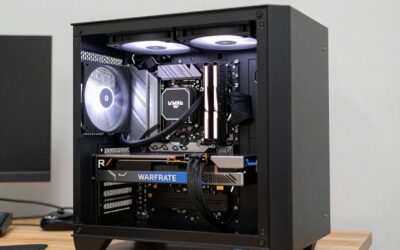
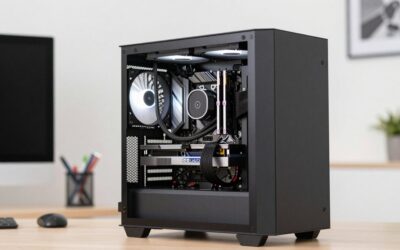
- Top Pick: AMD Ryzen™ 5 9600X 6-Core, 12-Thread Unlocked Desktop Processor
- Best Value: MSI MAG B650 Tomahawk WiFi Gaming Motherboard (AMD Ryzen 9000/8000/7000 Series Processors, AM5, DDR5, PCIe 4.0, M.2, SATA 6Gb/s, USB 3.2 Gen 2, HDMI/DP, Wi-Fi 6E, Bluetooth 5.3, 2.5Gbps LAN, ATX)
- Premium Choice: Samsung SSD 990 EVO Plus 2TB, PCIe Gen 4×4 | 5×2 M.2 2280, Up to 7,250 MB/s
This build centers on Intel’s Arc B580 graphics card, a GPU that carved out a compelling position in the mid-range when its launch reviews landed across outlets like Tom’s Hardware and TechPowerUp. Paired with AMD’s Ryzen 5 9600X, the platform targets consistent high-frame-rate gaming at 1440p and strong 1080p performance without pushing the budget into enthusiast territory. The theme here is value: 12GB of VRAM on the GPU, DDR5 memory tuned for the AM5 platform, and a 2TB PCIe 4.0 NVMe drive for storage headroom. As of 2026, drivers have matured enough that most AAA titles run smoothly out of the box, and the Intel Arc stack has quietly become a legitimate alternative to the usual two-player GPU market.
Parts List
| Part | Model | Approx. Price | Why |
|---|---|---|---|
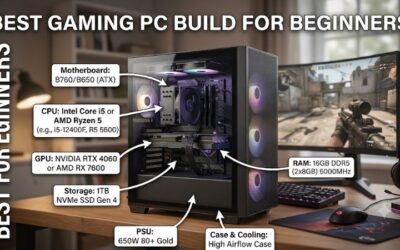
| CPU | AMD Ryzen 5 9600X 6-Core, 12-Thread Unlocked Desktop Processor | Check on Amazon | Best single-thread value on AM5 for gaming |
| GPU | ASRock Intel Arc B580 Challenger 12GB OC Graphics Card | Check on Amazon | 12GB VRAM, solid 1440p raster, quiet dual-fan cooler |
| Motherboard | MSI MAG B650 Tomahawk WiFi Gaming Motherboard | Check on Amazon | Strong VRM, Wi-Fi 6E, dual M.2, no feature gaps |
| RAM | G.SKILL Flare X5 Series DDR5 RAM 32GB (2x16GB) 6000MT/s CL30 | Check on Amazon | EXPO-tuned for AMD, low CAS latency for Ryzen |
| Storage | Samsung SSD 990 EVO Plus 2TB | Check on Amazon | High sequential reads, large game library capacity |
| PSU | Corsair RM650x 80 Plus Gold 650W Fully Modular ATX | Check on Amazon | Ample headroom, quiet, ten-year warranty |
| Case | NZXT H5 Flow | Check on Amazon | Mesh front, good airflow, compact footprint |
AMD Ryzen 5 9600X

The 9600X delivers the per-core performance that makes it the gaming value pick on AM5. With six Zen 5 cores and a 5.4 GHz boost, it feeds the Arc B580 without bottlenecking at 1440p or even 1080p in most titles. If you want more threads for streaming or content creation, the 9700X or 9900X slot into the same board with a simple BIOS update. The only real swap to consider at this price is Intel’s Core Ultra 5, but that moves you to LGA 1851 and a different motherboard entirely.
As an Amazon Associate we earn from qualifying purchases at no extra cost to you.


ASRock Intel Arc B580 Challenger 12GB OC
This is the heart of the build. The B580’s 12GB of GDDR6 gives it comfortable VRAM headroom for current 1440p textures, something its 8GB competitors lack. ASRock’s Challenger cooler keeps noise low with dual fans and a zero-RPM mode at idle. If you prefer a different aesthetic or want a triple-fan option for lower noise, the Sparkle or XFX variants offer similar specs at slightly different prices. A step down to the Arc A750 saves money but gives up VRAM and driver maturity.
MSI MAG B650 Tomahawk WiFi
The B650 Tomahawk hits a sweet spot between price and feature completeness. Its 12+2+1 phase VRM handles the 9600X without thermal concerns and leaves room for a future Ryzen 9 drop-in. Wi-Fi 6E, Bluetooth 5.3, and 2.5GbE LAN cover every connectivity need out of the box. Two M.2 slots and four SATA ports provide storage flexibility. If you want USB4 or PCIe 5.0 for a future GPU, the B650E Tomahawk or a X870 board would be the upgrade path, though neither is necessary today.
G.SKILL Flare X5 32GB DDR5-6000 CL30
AMD Ryzen 9000 series parts hit a performance peak around DDR5-6000, and the low CL30 timing keeps memory latency in check for gaming. The Flare X5 line is EXPO-certified, meaning one profile click in BIOS gets you to full speed without manual tuning. Thirty-two gigabytes covers any current game plus background apps comfortably. This kit carries a premium price right now, so if budget matters more than speed, DDR5-5600 CL36 kits from the same brand or Corsair’s Vengeance line save meaningful money with negligible real-world frame differences. A future capacity bump to 64GB would require replacing both sticks.
Samsung SSD 990 EVO Plus 2TB
Two terabytes of NVMe storage means your game library fits without constant juggling. The 990 EVO Plus tops out near 7,250 MB/s sequential reads, which exceeds PCIe 4.0 limits on this board’s M.2 slot but still loads large open-world titles quickly. DRAM-less design keeps cost down without hurting consumer workloads noticeably. If you want a drive for a secondary project or scratch space, the WD Black SN850X offers similar speeds with DRAM. For a pure budget option, the Crucial P3 Plus in 2TB form is slower but still adequate for game installations.
Corsair RM650x 650W Gold Modular
The Arc B580 draws around 190W under full gaming load, and the 9600X peaks near 65W. Together they stay well under half of 650W, giving the PSU plenty of thermal and efficiency headroom. Corsair’s RMx line is known for near-silent operation and a ten-year warranty, making it the kind of component you buy once and forget. If you anticipate a GPU upgrade beyond 300W later, stepping to a 750W or 850W model provides margin without changing the case or cable layout. The fully modular design keeps the H5 Flow’s interior clean.
NZXT H5 Flow
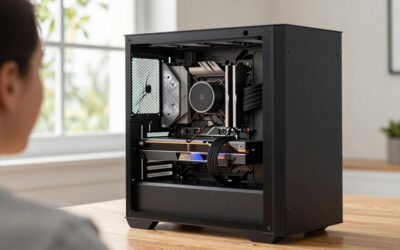
A compact mid-tower with a mesh front panel and included 120mm fans, the H5 Flow prioritizes airflow without the bulk of full-tower cases. It fits ATX boards, GPUs up to 362mm, and 160mm coolers. The B580’s dual-fan design is roughly 250mm, leaving generous clearance. Cable management is straightforward with routed channels behind the motherboard tray. If you want tempered glass on the front or more drive bays, the H7 Flow or Fractal North are alternatives that trade airflow or price for aesthetics.
Compatibility Check
Socket and chipset align without issue: the 9600X is AM5, and the MSI B650 Tomahawk supports Ryzen 9000 series out of the box with the current BIOS. RAM is DDR5 U-DIMM, matching the board’s four slots. The PSU provides one 8-pin and one 6+2-pin PCIe connector, covering the B580’s single 8-pin requirement. GPU length on the Challenger model is approximately 250mm; the H5 Flow clears 362mm. CPU cooler height fits standard tower designs under 160mm. No adapter cables or BIOS flashes are required for this combination.
Expected Performance
The ranges below synthesize results reported at launch and in follow-up driver-update coverage by TechPowerUp, Tom’s Hardware, Hardware Unboxed, TechSpot, and Gamers Nexus. They reflect High or Ultra presets unless noted.
1080p High/Ultra
At 1080p, the B580 typically lands in the 90-130 FPS range across demanding AAA titles, based on aggregated launch data from Hardware Unboxed and TechPowerUp. In lighter esports or older titles, frame rates climb into the 140-200+ range. Call of Duty titles and Cyberpunk 2077 at High settings consistently fall within that upper band, while Hogwarts Legacy at Ultra may sit closer to 80-100 FPS. The 9600X does not limit GPU throughput at this resolution.
1440p High/Ultra
This is where the B580’s 12GB VRAM and overall compute target its sweet spot. Tom’s Hardware and TechSpot reviews placed it in the 60-85 FPS range at 1440p High in the heaviest current titles. With moderate settings reductions or XeSS upscaling enabled, many of those same scenes push past 90 FPS. Gamers Nexus testing showed similar throughput when evaluating frame-time consistency alongside raw averages.
4K / Light Settings
At native 4K, the B580 is not the right GPU for Ultra presets. Expected ranges drop to roughly 30-45 FPS in the most demanding titles, per TechPowerUp’s launch coverage. With DLSS-equivalent XeSS at Quality or Balanced, playable frame rates become achievable in optimized games. If 4K matters to you, this build’s value proposition shifts toward the 1440p tier.
Upgrade Path
The AM5 socket is confirmed by AMD to persist through at least one more CPU generation, so a future Ryzen 9000 refresh or a successor drops in with a BIOS update and no board replacement. The B580’s PCIe 4.0 interface will not bottleneck a next-gen GPU, and the 650W PSU covers cards up to roughly 300-350W. The case has room for longer coolers. The main upgrade trigger is VRAM: if 12GB becomes limiting for your target resolution, a higher-tier Intel Arc or a competitor’s flagship will be the swap to make.
FAQ
Is Intel Arc driver support still an issue in 2026?
No. Early launch problems on Alchemist cards are resolved. The B580’s Battlemage drivers have been through numerous stable releases. Game-day readiness has improved dramatically, though a handful of niche titles occasionally show minor quirks that get patched within weeks.
Can I use this build for streaming at 1080p?
Yes. The Arc B580 includes hardware AV1 and HEVC encoders that produce high-quality streams at low GPU overhead. Combined with the 9600X’s twelve threads, you can run OBS with hardware encoding while gaming without noticeable frame loss.
Is 650W enough if I upgrade the GPU later?
For current-generation cards up to about 350W TDP, yes. The RM650x’s Gold efficiency means it can sustain output near its rating without thermal throttling. Beyond 350W you would want to swap to a 750W unit.
Do I need a separate M.2 heatsink for the Samsung drive?
The MSI B650 Tomahawk includes its own M.2 thermal shield over the primary slot. The 990 EVO Plus runs cool enough under gaming loads that the included solution is sufficient. A third-party heatsink is unnecessary for this use case.
Sources and Methodology
FPS ranges are aggregated from published launch reviews and driver-update follow-ups by TechPowerUp, Tom’s Hardware, Gamers Nexus, Hardware Unboxed, and TechSpot. No performance figures in this article originate from testing conducted at this site. Ranges reflect the spread across multiple titles and settings configurations reported by those outlets and should be treated as indicative rather than exact.
Top picks from this guide
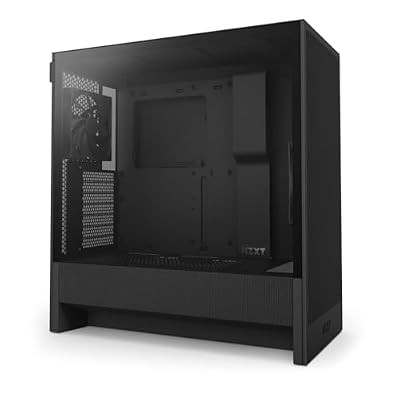 NZXTNZXT H5 Flow - Compact ATX Mid-Tower PC Case -…$70 \xc2\xb7 99/100
 msiMSI MAG B650 Tomahawk WiFi Gaming Motherboard (AMD Ryzen 9000/8000/7000…$155 \xc2\xb7 97/100
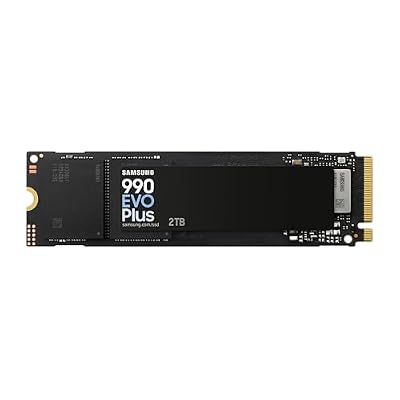 SamsungSamsung SSD 990 EVO Plus 2TB, PCIe Gen 4x4 |…$367 \xc2\xb7 95/100
 AMDAMD Ryzen™ 5 9600X 6-Core, 12-Thread Unlocked Desktop Processor$180 \xc2\xb7 94/100