🛒 Best Price Today on Amazon
Prime members get fast, free shipping on everything above, plus member-only deals. New members get a 30-day free trial — cancel anytime.
Cable Management: Aesthetics and Airflow
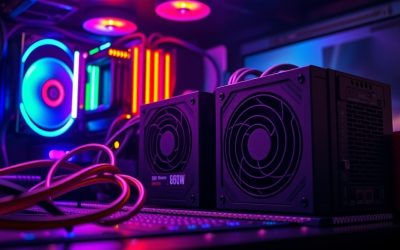
Good cable management isn’t just about looking tidy behind a glass panel — it directly improves airflow by clearing obstructions between intake fans and components. A build with cables blocking GPU airflow can run 5–10°C hotter than a well-managed one. This guide covers the tools, routing strategies, and practical techniques for a professional-looking build in 2026.
As an Amazon Associate we earn from qualifying purchases at no extra cost to you.




Essential Cable Management Tools
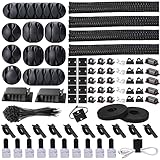
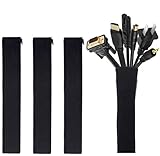
- Velcro cable ties — reusable, don’t damage cables, easy to adjust (avoid zip ties)
- Cable management channels — built into most modern cases behind the motherboard tray
- Cable extensions with sleeves — replace stock PSU cables with modular sleeved extensions for a cleaner look
- Velcro strips — attach cable bundles to chassis routing points
- Long screwdriver / zip-tie gun — reach tight spots behind the motherboard tray
Cable Management Strategy: Route Behind the Motherboard Tray
Modern mid-tower and full-tower cases hide a channel behind the motherboard tray with cutouts to feed cables through. The goal: run every cable behind the tray and only bring it through to the front at the exact point it connects. That keeps the visible side of the case nearly cable-free.
Routing Priority Order
- 24-pin ATX power: Route behind tray from PSU, bring through cutout at right side of motherboard
- CPU EPS power (8-pin): Route behind tray, bring through top-left cutout near CPU socket
- GPU power cables: Bring through right-side cutout near PCIe slots — shortest path to GPU connectors
- SATA / storage cables: Route entirely behind tray, connect from back
- Fan headers: Group all fan cables and route behind tray to fan hub or motherboard headers
- Front panel connectors: Most cases pre-route these during manufacture
Tips for Specific Cable Types
GPU Power Cables (12VHPWR / 16-pin)
RTX 5000 series uses the 12VHPWR 600W connector. Route the cable with a gentle curve — never bend it sharply within 35mm of the connector. NVIDIA explicitly warns against 90-degree bends near the connector head. If your case makes straight routing tricky, use a right-angle 12VHPWR adapter.
Modular PSU: Only Use Cables You Need
With a modular PSU, only connect the cables you actually use. Don’t cram unused SATA, Molex, or spare GPU cables behind the tray “just in case.” Clean builds run exactly the cables needed and nothing more.
RGB Cables: The Hidden Mess
RGB components add ARGB data cables (3-pin 5V) on top of the power connections. Bundle the RGB cables together in their own group. Route them to your ARGB controller or motherboard headers through the back channel. A fan hub (Lian Li L-Connect, NZXT RGB Hub) merges multiple RGB cables into one connection, slashing the cable count.
Before and After: What Good Cable Management Achieves
| Metric | Poor Cable Management | Good Cable Management |
|---|---|---|
| GPU temperature | 80–85°C | 72–78°C |
| Case airflow | Partially blocked | Unobstructed |
| Aesthetics (glass panel) | Cable spaghetti | Clean, professional |
| Upgrade accessibility | Difficult to reach parts | Easy component swaps |
Does cable management actually improve temperatures?
What is the best cable management tool?
How do I hide cables in a PC with no cable management holes?
Should I use the included PSU cables or get sleeved extensions?
Frequently Asked Questions
Why is cable management important in a gaming PC?
Good cable management improves airflow by keeping cables out of the path of fans and components, which helps cooling and performance. It also makes the build look clean, reduces dust buildup, and makes future upgrades and troubleshooting far easier. Tidy cables prevent accidental disconnections and strain, contributing to a more reliable and better looking system overall.
What tools do I need for cable management?
Basic cable management needs Velcro straps or zip ties, which are reusable and gentle on cables, plus the case’s built in tie down points and rear channels. Cable combs, extension cables with sleeving, and adhesive clips help for show builds. A modular power supply also greatly reduces clutter by letting you use only the cables you need.
How do I route cables behind the motherboard tray?
Route bulky cables like the 24 pin, CPU power, and GPU power through the case’s grommets and into the rear channel behind the motherboard tray, then secure them to tie down points with Velcro. Group cables by destination, keep bends gentle, and use the depth behind the tray to hide excess length before closing the side panel.
Does cable management actually improve cooling?
Yes, tidy cables improve cooling by clearing obstructions from intake and exhaust fans and the GPU, allowing smoother, unobstructed airflow through the case. Loose cables can block fans, trap heat, and disrupt air paths. While the temperature drop is usually a few degrees rather than dramatic, cleaner airflow contributes to lower, more stable component temperatures over time.
Is a modular power supply worth it for cable management?
A modular power supply is very worthwhile for clean builds because it lets you connect only the cables you actually need, eliminating a tangle of unused wires. Fully modular units offer the most flexibility, while semi modular ones keep essential cables attached. The reduced clutter improves airflow, appearance, and ease of building, making it a popular choice.
Ready to decide? Our #1 pick for 2026 is the GPU temperature.
Live price & availability on Amazon.