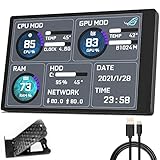
- Top Pick: WOWNOVA English Version Computer Temp Monitor, ARGB PC Case Display, IPS USB Mini Screen, CPU RAM HDD Data Monitor
- Best Value: NZXT Kraken 280-280mm AIO Liquid CPU Cooler, LCD – Black
- Premium Choice: GSCOLER ARGB GPU Support Bracket with CPU & GPU Temp/Usage Display, Adjustable Height Anti Sag GPU Stand with Magnet & Non-Slip Base, Universal Graphics Card Support, RGB GPU Brace / Video Card Holder
If you have ever opened a monitoring app mid-game and seen a number climbing past 70 degrees, you have probably wondered whether your processor is in danger. Understanding what is a normal CPU temp is one of the most useful things a PC builder can learn, because temperature affects performance, stability, and the long-term health of your hardware. The good news is that modern processors are far more resilient than most people assume.
As an Amazon Associate I earn from qualifying purchases.
As an Amazon Associate we earn from qualifying purchases at no extra cost to you.





🛒 Best Price Today on Amazon
Prime members get fast, free shipping on everything above, plus member-only deals. New members get a 30-day free trial — cancel anytime.
What Is a Normal CPU Temp in 2026?
A normal CPU temp depends heavily on what the computer is doing at any given moment. At idle, when the desktop is open and no demanding applications are running, most modern CPUs sit somewhere between 30 and 45 degrees Celsius. Under light workloads such as browsing or watching video, expect the low-to-mid 50s. During gaming or content creation, a normal CPU temp climbs into the 60 to 80 degree range, and brief spikes into the mid-80s during heavy all-core rendering are completely acceptable. The critical threshold, known as TjMax, is typically 95 to 100 degrees, at which point the chip throttles itself to prevent damage. In practice, a healthy system rarely reaches that ceiling, so if your temperatures stay below 85 degrees under sustained load, you have nothing to worry about. The key numbers to remember are simple: under 50 idle, under 85 under load, and never sitting pinned at 100.
Cooling Hardware That Keeps a Normal CPU Temp
The single biggest factor in keeping temperatures reasonable is your cooler. Whether you choose a large air tower or a liquid AIO, the goal is to move heat away from the die faster than the processor produces it. Below is a comparison of dependable coolers and monitoring accessories that help builders maintain a normal CPU temp across a range of budgets and case sizes.
| Product | Best For | Standout Feature | Rating |
|---|---|---|---|
| Noctua NH-D15 Air Cooler | Silent high-end air cooling | Dual-tower heatsink rivals many AIOs | 4.9/5 |
| ARCTIC Liquid Freezer III 360 | Enthusiast liquid cooling | Thick radiator with VRM fan | 4.8/5 |
| Thermalright Peerless Assassin 120 | Budget builders | Flagship performance at a low price | 4.8/5 |
| Cooler Master Hyper 212 | Compact mainstream rigs | Proven single-tower reliability | 4.6/5 |
| Corsair iCUE H150i Elite AIO | RGB-focused showcase builds | Integrated pump display and software | 4.7/5 |
How Ambient Room Temperature Affects Your Readings
Your CPU temperature is always measured relative to the air around it. A cooler pulling in 20-degree air will report noticeably lower numbers than the same cooler in a 30-degree summer room. This is why a normal CPU temp in winter might read 62 degrees under load while the identical workload hits 72 degrees in July. If your readings suddenly jump by several degrees, check whether the room itself has warmed up before assuming a hardware fault. For a deeper look at seasonal effects, our guide to optimal CPU temperature breaks down the math in more detail.
Why Thermal Paste and Contact Pressure Matter
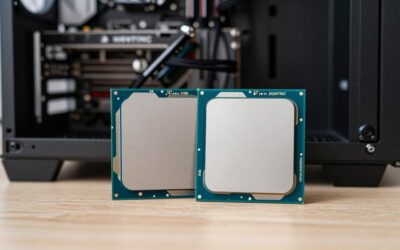
Between the CPU and the cooler sits a thin layer of thermal paste that fills microscopic gaps and conducts heat. Old, dried, or unevenly applied paste can raise temperatures by 10 degrees or more. If your system is a few years old and running hotter than it used to, reapplying quality paste is one of the cheapest fixes available. Proper mounting pressure is equally important, so make sure your cooler is seated firmly and evenly. You can read our CPU temperature troubleshooting steps for a full walkthrough.
Airflow and Case Design
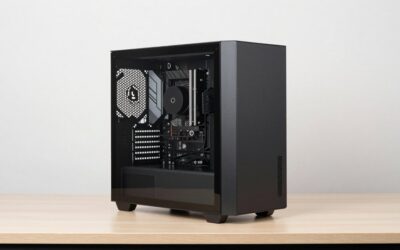
Even the best cooler struggles inside a case with poor airflow. Heat that builds up around the socket gets recycled back into the cooler, pushing readings higher. A balanced configuration of intake and exhaust fans keeps fresh air flowing across the components. Mesh front panels dramatically outperform solid glass fronts for raw cooling, though they trade a little acoustic dampening. Our case airflow fundamentals article explains how to set up a positive pressure layout that also reduces dust buildup.
Monitoring Software to Track a Normal CPU Temp
You cannot manage what you cannot measure. Free tools such as HWiNFO64, Core Temp, and HWMonitor report per-core temperatures in real time, while many motherboards include their own utilities. Watching these numbers during a stress test tells you whether your cooling is adequate. If you are comparing components before a build, our best PSU for gaming roundup and average CPU heat comparison pair well with temperature planning to ensure your whole system runs cool and stable.
Frequently Asked Questions
Is 80 degrees a normal CPU temp while gaming?
Yes, 80 degrees under a heavy gaming load is completely within the safe range for virtually every modern desktop processor. Manufacturers design these chips to operate reliably up to around 95 to 100 degrees, so an 80-degree reading leaves a comfortable buffer. As long as the temperature stabilizes rather than continuing to climb, your system is performing exactly as intended.
What is a normal CPU temp at idle?
At idle, a normal CPU temp typically falls between 30 and 45 degrees Celsius, depending on your cooler, case airflow, and room temperature. If your idle numbers regularly exceed 50 degrees, it may indicate background processes keeping the CPU busy, aging thermal paste, or restricted airflow inside the case that is worth investigating before it worsens.
Should I worry if my CPU hits 90 degrees?
Occasional brief spikes to 90 degrees during intense rendering or stress testing are not immediately dangerous, since the chip only begins throttling near 95 to 100 degrees. However, if your processor consistently sits at 90 under normal gaming, you should improve cooling, reapply thermal paste, or increase case airflow to add headroom and preserve long-term stability.
Does a higher CPU temp reduce lifespan?
Sustained operation near the thermal limit can gradually accelerate wear over many years, but the effect is modest for temperatures kept below 85 degrees under load. For the vast majority of users, a processor will become obsolete long before heat-related degradation matters. Keeping temperatures reasonable mainly protects performance and stability rather than dramatically extending hardware life.