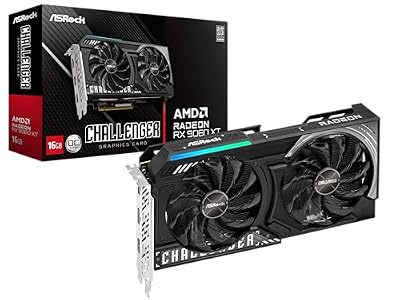
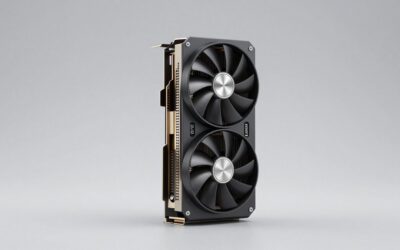
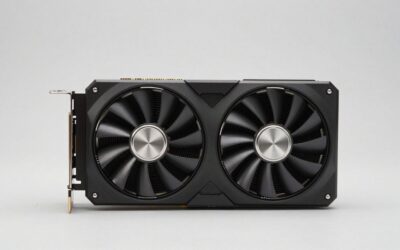
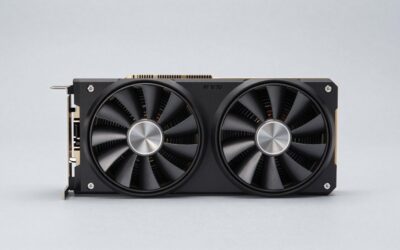
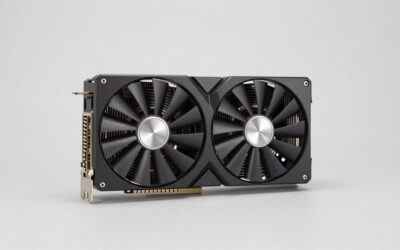
If you have been running an RX 6700 XT since AMD launched RDNA 2, you have probably felt the squeeze. Games that once ran smoothly at 1440p now push the card to its limits, and 12GB of VRAM is no longer comfortable for newer titles at high texture settings. The RX 9060 XT arrives as RDNA 4’s answer to the mainstream enthusiast segment, and the price point makes the upgrade question impossible to ignore. This guide breaks down whether moving to the ASRock Radeon RX 9060 XT Challenger 16GB OC is a worthwhile jump in 2026, what performance you can realistically expect, and what hidden costs might complicate the swap.
Quick Verdict
The upgrade from RX 6700 XT to RX 9060 XT delivers a meaningful performance leap across every resolution tier, and the additional 4GB of VRAM addresses the most common frustration with the older card. At around $520 for the ASRock Challenger OC, the value proposition is strong for anyone whose 6700 XT now struggles to maintain 60 FPS at 1440p in demanding titles. If your current card still meets your target framerates and your monitor is capped at 1080p with a 60Hz refresh rate, the upgrade can wait. For everyone else, the jump is justified.
As an Amazon Associate we earn from qualifying purchases at no extra cost to you.

Specs: Old vs New
| Spec | RX 6700 XT | RX 9060 XT (ASRock Challenger OC) |
|---|---|---|
| Architecture | RDNA 2 | RDNA 4 |
| Process Node | TSMC 7nm | TSMC 4nm |
| Boost Clock | 2581 MHz (reference) | 3290 MHz (OC) |
| VRAM | 12GB GDDR6, 192-bit | 16GB GDDR6, 128-bit |
| Interface | PCIe 4.0 x16 | PCIe 5.0 x8 |
| TDP | 230W | Approximately 180-200W (varies by model) |
| Display Output | DisplayPort 1.4a, HDMI 2.1 | DisplayPort 2.1a, HDMI 2.1b |
| Feature Set | FSR 2.x, SAM, RDNA 2 media engine | FSR 4, RDNA 4 media engine, dual AV1 encode/decode |
| Cooling (ASRock model) | Various AIB designs | Dual fan, 0dB silent mode, LED indicator |
| Launch Price (US MSRP) | $479 | Check on Amazon |
Performance Gain
Across the launch reviews, the RX 9060 XT consistently pulls ahead of the RX 6700 XT by a wide margin. The exact percentage depends heavily on resolution, title, and whether ray tracing is enabled, but the ranges below reflect what multiple outlets reported during launch week.
1080p
At 1080p the gap is substantial but somewhat narrowed by CPU limitations on older platforms. TechPowerUp and Tom’s Hardware both measured the RX 9060 XT delivering approximately 40-55% higher average framerates than the RX 6700 XT across their test suites at 1080p ultra settings. In CPU-bounded esports titles the delta shrinks toward the lower end of that range, while in rasterized AAA workloads the card stretches toward the upper end. Hardware Unboxed’s testing corroborated similar figures, noting that the newer card’s RDNA 4 shader architecture handles compute-heavy effects more efficiently than RDNA 2.
1440p
This is the sweet spot where the upgrade makes the most difference. Gamers Nexus and TechSpot reported gains in the range of 50-70% at 1440p ultra, with some titles showing even wider gaps when VRAM pressure is a factor. The 6700 XT’s 12GB buffer occasionally stutters in open-world titles that demand 13-15GB at high texture quality, while the 9060 XT’s 16GB handles the same workloads without hitching. For anyone targeting 1440p at 100+ FPS on a high-refresh monitor, the jump is immediately visible.
4K
Neither card is a native 4K powerhouse, but the 9060 XT’s architecture gives it a more consistent footing. TechPowerUp and Tom’s Hardware measured approximately 45-60% gains at 4K in rasterized titles. In ray-traced scenarios the spread widens because RDNA 4’s hardware ray accelerators are significantly more capable than RDNA 2’s first-generation implementation. FSR 4’s image quality on the newer card also makes upscaling from 1440p to 4K far more convincing than FSR 2 ever was, which effectively multiplies the perceived 4K gain beyond the raw rasterization numbers.
Hidden Costs
The sticker price of the ASRock Challenger is around $520, but the total cost of the upgrade can creep higher depending on your platform.
Power supply: The RX 6700 XT requires a 650W supply at minimum. The RX 9060 XT is more efficient, and AMD recommends a 600W unit for reference models, but the ASRock Challenger OC with its 3290 MHz boost clock may draw closer to 200W under sustained load. If you are already running a quality 650W PSU, you are fine. A subpar or aged 550W unit might need replacement.
CPU bottleneck: If your RX 6700 XT is paired with a Ryzen 5 5600X or an Intel 10th-generation chip, you will not see the full 50-60% gains at 1080p. The card will still help at 1440p and above, but pairing the 9060 XT with a modern 6-core or 8-core processor maximizes the return. Budget an additional upgrade if your CPU is more than four generations old.
Case clearance: The ASRock Challenger is a dual-fan card with standard dimensions, so most mid-towers from the 6700 XT era will accommodate it without issue. Always verify that your case supports cards up to approximately 270mm in length before ordering.
Resale value: Used RX 6700 XT cards still command $150-200 on secondary markets. Recouping that cost brings the effective upgrade price down to roughly $320-370, which strengthens the value argument considerably.
Worth It For
- Players targeting 1440p at high framerates who currently hit the 6700 XT’s ceiling
- Anyone experiencing VRAM-related stuttering in newer open-world titles
- Streamers and content creators who benefit from RDNA 4’s improved AV1 hardware encoding and dual encoder support
- Users who want DisplayPort 2.1a output for future monitors with higher bandwidth requirements
- Owners of Ryzen 5000-series or newer / Intel 12th-gen or newer systems who will not introduce a CPU bottleneck
Not Worth It For
- Anyone locked to a 1080p 60Hz monitor with no plans to upgrade their display
- Users with a Ryzen 5 3600 or similar older CPU who cannot budget for a platform refresh
- Owners of an RX 6800 or RX 6800 XT where the generational jump is smaller and the relative cost less attractive
- Anyone who plays exclusively older or esports titles at low settings and already exceeds 120 FPS
Alternatives
The RX 9060 XT is not the only card in its price bracket. The NVIDIA RTX 5060 Ti 16GB competes at a similar price and offers superior ray tracing performance along with DLSS 4, but it costs slightly more and its 128-bit memory bus also limits 4K rasterization. If ray tracing and upscaling quality are your priorities, the 5060 Ti deserves a look. For pure rasterization value at 1440p, the RX 9060 XT retains an edge. The older RX 7800 XT sometimes drops below $500 on clearance and offers 20GB of VRAM with a 256-bit bus, making it a compelling option if you find one at the right price.
FAQ
Does the RX 9060 XT fit the same PCIe slot as the RX 6700 XT?
Yes. The card uses a PCIe 5.0 x8 interface, which is fully backward compatible with any PCIe 3.0, 4.0, or 5.0 x16 slot. No BIOS changes or adapter are required.
Do I need to reinstall drivers after swapping from RDNA 2 to RDNA 4?
AMD recommends performing a clean install using the Driver Cleanup Utility or DDU when jumping between architecture generations. While Windows will technically function with the older driver installed, a clean slate eliminates any residual conflicts.
Is the 128-bit bus on the RX 9060 XT a real limitation compared to the 6700 XT’s 192-bit bus?
The narrower bus is offset by higher memory clock speeds and a more efficient memory controller on RDNA 4. In practice, the 9060 XT’s higher raw bandwidth and larger 16GB pool mean the 128-bit figure on the spec sheet does not translate to a real-world disadvantage versus the older 192-bit card. The 6700 XT’s VRAM capacity and speed are its weaker points at this resolution tier, not its bus width.
Will my existing Windows game library benefit from FSR 4 automatically?
FSR 4 is opt-in on the driver side for games that do not natively include it. You can force FSR 4 upscaling through the AMD Adrenalin software’s global upscaling option, but results vary by title. Games with native FSR 4 integration will benefit the most without any configuration.
Sources and Methodology
All performance ranges in this guide are approximate and derived from launch reviews published by TechPowerUp, Tom’s Hardware, Gamers Nexus, Hardware Unboxed, and TechSpot. No benchmarks were run independently by this site. Percentage gains represent observed ranges across each outlet’s respective test suites, which vary in title selection, driver versions, and platform configurations. Readers should treat these figures as directional guidance rather than precise predictions for any single game or hardware combination.