The RTX 5090 is the most powerful consumer GPU NVIDIA has ever shipped — and at roughly $2,000 over the RTX 5080, it had better earn that premium. The RTX 5080 is no slouch itself, a serious 4K/high-frame-rate card. This comparison sorts out which flagship tier fits your goals and budget, and whether the RTX 5090’s extreme performance is worth the eye-watering price gap in 2026.
| Spec | RTX 5080 | RTX 5090 |
|---|---|---|
| CUDA Cores | 10,752 | 21,760 |
| VRAM | 16GB GDDR7 | 32GB GDDR7 |
| Memory Bandwidth | 1,792 GB/s | 1,792 GB/s |
| TDP | 360W | 575W |
| GPU MSRP | ~$999 | ~$1,999 |
| Prebuilt Premium | $2,999–$3,200 | $4,999+ |
| Performance Lead | Baseline | ~70% faster |
🛒 Best Price Today on Amazon
Prime members get fast, free shipping on everything above, plus member-only deals. New members get a 30-day free trial — cancel anytime.
As an Amazon Associate we earn from qualifying purchases.


The Performance Reality at 4K
The RTX 5090 packs more than double the CUDA cores of the RTX 5080 (21,760 vs 10,752) and 32GB GDDR7 against 16GB. At 4K Ultra in real terms, that works out to roughly 60–75% higher average frame rates when you’re GPU-bound. The RTX 5090 runs 95–115fps natively at 4K Ultra in Cyberpunk 2077 RT Ultra where the RTX 5080 manages 60–75fps. In Flight Simulator 2024 at 4K Ultra High, the RTX 5090 holds 80–100fps versus 55–70fps on the RTX 5080.
The RTX 5090’s 32GB GDDR7 is flat-out overkill for gaming in 2026 — no current title needs more than 16GB VRAM at 4K Ultra. That VRAM headroom pays off in creative work (AI inference, 3D rendering, high-res video editing), not gaming.
Where the RTX 5090 Is Clearly Worth It
The RTX 5090 makes real sense for: native 4K/144fps gaming across every title with no DLSS (doable in most games today); future-proofing toward 8K or VR; pro AI/ML inference on consumer hardware; high-end GPU-accelerated 3D rendering; and creators who want top performance across both gaming and production. If your PC pulls double duty for gaming and professional creative work, the RTX 5090’s 32GB VRAM and extra CUDA cores for AI acceleration deliver genuine professional value.
Where the RTX 5080 Makes More Sense
For gaming alone, the RTX 5080 hits 4K/60fps+ natively in basically every AAA title and 4K/120fps+ with DLSS 4 Quality — enough to fully feed any current 4K/144Hz monitor without paying for headroom you’ll never use. At $1,800–$2,000 less in prebuilt form, the RTX 5080 is the sensible call for gamers chasing the best 4K experience with no pro workload to justify the RTX 5090 premium.

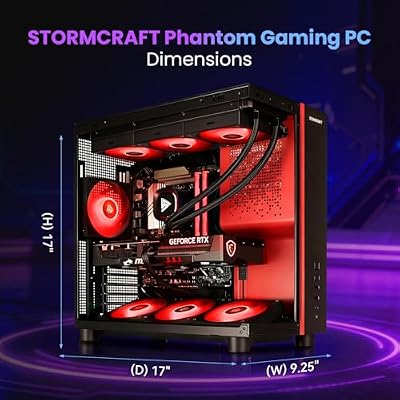
STORMCRAFT Phantom RTX 5080 Gaming PC Ryzen 7 9800X3D 32GB DDR5 2TB SSD | AMD Ryzen 7 5.2GHz,6000MHz RAM,B850 Chipset,850W PSU,360mm AIO,RGB Keyboard Mouse,WiFi BT HDMI AI Prebuilt Gaming Desktop




As an Amazon Associate we earn from qualifying purchases. Product prices and availability are accurate as of the date/time indicated.
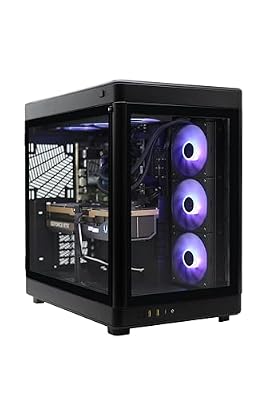
ZOTAC MEK Gaming PC Desktop, NVIDIA GeForce RTX 5090 32GB GDDR7, AMD Ryzen 7 9700X Up to 5.5GHz, 32GB DDR5, 2TB NVMe SSD, 1200W 80+ Gold PSU, WiFi 7, Windows 11 Pro


As an Amazon Associate we earn from qualifying purchases. Product prices and availability are accurate as of the date/time indicated.
Prebuilt Options at Each Tier
RTX 5080 Prebuilts
The STORMCRAFT Phantom RTX 5080 at $2,999 is the value pick — pairing the RTX 5080 16GB with the AMD Ryzen 7 9800X3D, the fastest gaming CPU out there. The ZOTAC MEK Gaming Ultra RTX 5080 at $3,148 delivers similar performance with ZOTAC’s build quality. Both serve up 4K gaming that fully saturates current 4K/144Hz displays.
RTX 5090 Prebuilts
The ZOTAC MEK Gaming Ultra RTX 5090 at $4,999 is the flagship consumer prebuilt — 32GB GDDR7, Intel Core i9-14900K, 64GB DDR5. It’s a workstation-grade machine that also games beautifully — if that $5K price fits your budget and use case.
Frequently Asked Questions
How much faster is the RTX 5090 than the 5080?
The RTX 5090 is roughly 30 to 40 percent faster than the 5080 in demanding 4K titles, thanks to far more cores and memory bandwidth. The gap widens with ray tracing and at 4K, but shrinks at 1440p where other components can limit both cards.
Is the RTX 5090 worth the extra cost?
Only for specific users. If you game at 4K with maxed ray tracing, run heavy AI or 3D workloads, or want the highest frame rates possible, the 5090 justifies its premium. For most gamers the 5080 delivers excellent 4K performance at a much better price-to-performance ratio.
Do I need a 5090 for 4K gaming?
No. The RTX 5080 already handles 4K high-refresh gaming very well, especially with DLSS upscaling and frame generation enabled. The 5090 gives extra headroom for native 4K, path tracing, and future titles, but the 5080 is more than capable for the vast majority of players.
How much power and PSU do these cards need?
The 5090 draws considerably more power than the 5080 and typically wants a 1000W or higher power supply, while the 5080 is comfortable on a quality 850W unit. Both use the 12V-2×6 connector, so ensure your PSU supports it and your case has room and airflow.
How much VRAM does each card have?
The RTX 5090 carries substantially more VRAM than the 5080, which matters for 4K texture-heavy games, high-resolution modding, and professional AI and rendering workloads. For standard 4K gaming the 5080’s memory is sufficient, but creators handling large datasets benefit from the 5090’s larger buffer.
Ready to decide? Our #1 pick for 2026 is the CUDA Cores.
Live price & availability on Amazon.