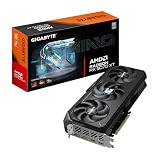
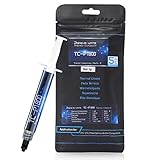
- Top Pick: NINJA GREASE 【Ninja 060】 Silicone-Free Thermal Paste for CPU & GPU,Laptop & Console, High Thermal Conductivity, Non-Conductive, Copper-Safe, Made in Japan,(1.5g)
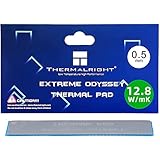
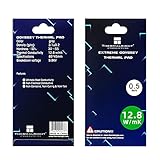
- Best Value: Thermalright Odyssey Thermal Pad 12.8 W/mK Non-Conductive 85x45x2.5mm
- Premium Choice: 18W/m•K 5g High-Performance CPU/GPU Thermal Paste – PC Gamer Thermal Grease
Understanding CPU safe temperature limits protects your processor from the performance loss and potential damage that comes with overheating. Modern chips are surprisingly resilient, but knowing exactly where the safe boundaries lie helps you decide when a reading is fine and when it demands action. This guide defines safe temperature ranges for idle and load, explains the thermal limits built into your CPU, and recommends cooling gear that keeps your processor firmly inside the safe zone.
As an Amazon Associate I earn from qualifying purchases.
As an Amazon Associate we earn from qualifying purchases at no extra cost to you.





🛒 Best Price Today on Amazon
Prime members get fast, free shipping on everything above, plus member-only deals. New members get a 30-day free trial — cancel anytime.
What Is a CPU Safe Temperature?
A CPU safe temperature is any reading that stays comfortably below the processor’s thermal limit, known as Tjmax, which sits around 95°C to 105°C for most modern desktop chips. In practical terms, idle temperatures of 30°C to 45°C are perfectly safe, everyday use in the 45°C to 60°C range is safe, and heavy load temperatures up to about 85°C are still within the safe zone. The processor only begins to protect itself by throttling when it approaches its Tjmax, so a chip running in the 70s or low 80s during gaming is operating safely with headroom to spare. Sustained readings above 90°C are not immediately dangerous but signal that cooling improvements would give you a healthier safety margin and more consistent performance.
| Product | Best For | Standout Feature | Rating |
|---|---|---|---|
| Noctua NH-D15 Air Cooler | Maximum safe air cooling | Dual-tower design keeps temps low | 4.9/5 |
| ARCTIC Liquid Freezer III 360 | High-heat CPUs | Large radiator with VRM fan | 4.8/5 |
| Thermalright Peerless Assassin 120 SE | Budget safe cooling | Premium performance at a low price | 4.8/5 |
| Corsair iCUE H100i Elite 240 | RGB liquid cooling builds | Quiet pump and bright cap | 4.6/5 |
| be quiet! Dark Rock 4 | Silent operation | Very low noise under load | 4.6/5 |
Understanding CPU Safe Temperature Limits (Tjmax)
Every processor has a maximum junction temperature, or Tjmax, that defines its absolute safe ceiling. For most current AMD and Intel desktop CPUs, Tjmax lands between 95°C and 105°C, and the chip automatically throttles its clocks the moment it reaches that point to prevent harm. This built-in protection means a CPU will slow itself down rather than damage itself, so brief touches near the limit are not catastrophic. Still, running far below Tjmax with a capable air cooler keeps clocks stable and performance consistent. Knowing your specific chip’s Tjmax lets you set a realistic safe target rather than guessing.
Safe CPU Temperatures at Idle and Under Load
Safe temperatures differ sharply between idle and load because power draw changes dramatically. At idle, a safe CPU sits at 30°C to 45°C, reflecting minimal activity. Under a full load like gaming or rendering, safe temperatures extend up to roughly 85°C, since the chip is working hard and generating far more heat. A quality liquid cooling AIO makes staying within these safe ranges effortless even during long sessions. If your idle temperatures are unusually high, that points to a cooling fault, while high load temperatures usually mean your cooler or airflow needs an upgrade to restore a comfortable safe margin.
How to Keep Your CPU at a Safe Temperature
Keeping your processor in the safe zone comes down to good cooling and clean components. Match your cooler to your CPU’s heat output, and ensure balanced intake and exhaust airflow with quality case fans. Clean dust from filters and heatsinks every few months, since buildup steadily raises temperatures. Reapplying thermal paste every couple of years restores efficient heat transfer. Monitoring software confirms your results, letting you verify that both idle and load readings stay safely below Tjmax. These simple maintenance habits keep the majority of systems comfortably within safe limits year-round.
What to Do When Temperatures Exceed Safe Limits
If your CPU regularly approaches or exceeds safe limits, act before performance suffers. Start by confirming your cooler is mounted firmly and all fans are spinning, then clean any dust that has accumulated. Reapplying thermal paste resolves many overheating cases caused by dried compound. If good maintenance still cannot keep temperatures safe, upgrading to a more capable tower cooler or larger AIO provides the extra headroom your processor needs. Undervolting through Curve Optimizer or your BIOS can also lower temperatures while maintaining performance, giving demanding chips a safer, cooler operating point.
Frequently Asked Questions About CPU Safe Temperature
What is the maximum safe temperature for a CPU?
The maximum safe temperature for most modern desktop CPUs is around 95°C to 105°C, known as Tjmax. At this point the processor throttles to protect itself. For healthy long-term operation, aim to keep load temperatures below 85°C, which leaves a comfortable safety margin below the thermal limit.
Is 85°C a safe temperature for a CPU?
Yes, 85°C is still within the safe operating range for most processors under a heavy load, since it sits below the roughly 95°C to 105°C thermal limit. While safe, improving cooling to bring peaks into the 70s gives you more headroom and steadier boost clock performance during demanding tasks.
Will a CPU be damaged by reaching its safe temperature limit?
Reaching Tjmax briefly will not damage a modern CPU because it automatically throttles its clock speed to reduce heat and protect itself. However, constantly running at the limit causes performance loss and stresses surrounding components over time, so keeping temperatures well below the ceiling is the healthier long-term approach.
How can I check if my CPU is at a safe temperature?
Use free monitoring software such as HWiNFO64 or Core Temp to read real-time and peak temperatures. Run a demanding task for about 20 minutes and note the maximum. If your CPU idles in the 30s or 40s and peaks below 85°C, it is operating safely within its limits.